Trumps, rings, and a final in New Jersey: the pageantry of a Trump-era World Cup
Donald Trump will hand the trophy to the winner of Sunday's World Cup final between Spain and Argentina at MetLife Stadium. The ceremony itself has become part of the story.
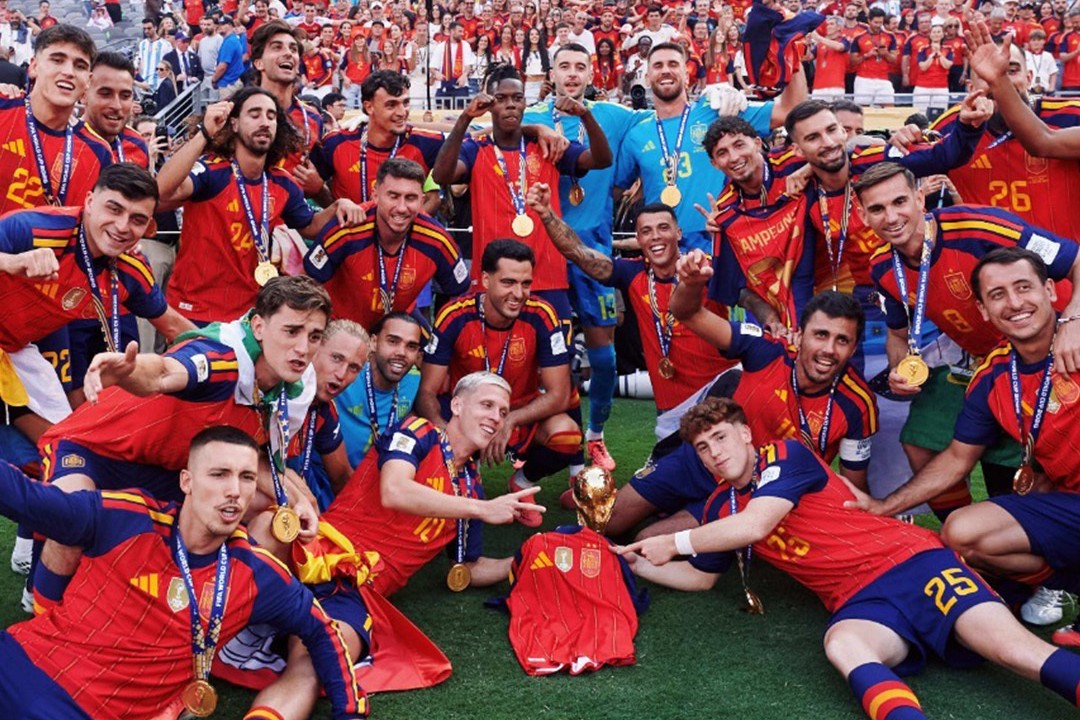
At 08:40 UTC on 17 July 2026, BBC Sport reported that Donald Trump will present the trophy to the winner of the FIFA World Cup final on Sunday, and that rings will be handed to the victorious side. The match, between Spain and Argentina, is scheduled for MetLife Stadium in New Jersey. (LiveMint, via Telegram at 09:39 UTC the same day, identified the two finalists and the venue; a separate LiveMint dispatch at 05:43 UTC noted that Spain duo Lamine Yamal and Pedro Porro had trained separately on the eve of the game, raising fitness questions.)
The ceremony has become part of the story. A sitting US president walking a world champion onto a podium at the national stadium is not a neutral backdrop. It reads the room in two directions at once: as confirmation that this tournament, distributed across three host nations, has been folded into the visual grammar of American political theatre, and as a reminder that FIFA's commercial centre of gravity now sits inside the United States regardless of who occupies the White House. Trophy-lift ceremony and presidential optics are no longer separate events. They are the same event.
What the pageantry actually buys
Finals have always had ceremonial furniture: medals, trophies, anthems. The addition here is the ring. BBC Sport described winners' rings as a new piece of hardware for the champions; the framing, by Trump-era American-sports default, carries the cadence of a Super Bowl winner's bling rather than a European football tradition. The gesture is small, but the symbolism is not. A champion's ring is a keepsake designed to be worn, photographed, and argued over for decades. It binds the 2026 title to the moment and the moment to a specific administration's idea of spectacle.
Trump's attendance is the second variable. The sitting US president presenting the trophy places the federal government inside the broadcast frame at the moment when the global audience is largest. The BBC story frames confirmation; the LiveMint wire frames the actor and venue. Neither outlet editorialises about what it does to the optics of a host nation's chief executive centre-stage at a sport that, in much of its audience, is read as a counterweight to American commercial dominance.
A final that almost did not look like this
Spain-Argentina was not the match most pre-tournament models ranked as the modal final. The two sides arrive at MetLife having navigated knockout football that took out several pre-tournament favourites; the path through is what made the pairing possible rather than any preordained script. Within that path, Spain's injury list, including the separate-trainer session flagged by LiveMint at 05:43 UTC for Lamine Yamal and Pedro Porro, is the most concrete near-term variable. Argentina's depth on the wings and through the middle is the structural variable. Sunday's pitch will resolve both, and the resolution will land on a field that doubles as a stage.
The geopolitical backdrop nobody asked for
A US-hosted World Cup in 2026 was always going to collide with US political calendar and a sitting president's instinct for presence. That the collision has produced not just attendance but trophy-lifting duty sharpens the read. The handshake line, the photo, the gesture to the crowd: each is a frame that will circulate on platforms FIFA does not control, in countries where the United States is a domestic political argument rather than a sporting neutral. A president who frames winners and losers as a civic reflex now sits inside the single most-watched sporting ritual of the year.
The counter-read is straightforward and worth stating. FIFA, not the White House, owns the broadcast. FIFA owns the trophy, the medals, the rings. The president's presence is a guest appearance inside someone else's production. Whether that reading lands depends on how the broadcast is cut, and on how much airtime the ceremony absorbs relative to the ninety minutes that preceded it. The evidence so far says the cut will be generous to the pageantry. BBC's reporting treats the rings as part of the sports bulletin; LiveMint's lead line leads with the president, not the football.
What to watch on Sunday
Three things, in order of how directly the sources license them. The first is the Yamal-Porro fitness call and how far into the match Spain need them. The second is whether the trophy-and-rings sequence is filmed as a single uninterrupted frame or sliced up; the framing of the broadcast will determine which version of the optics travels. The third, and the one this publication will be watching in the slow news cycle after the final whistle, is how the winning squad's post-match politics, especially from an Argentina dressing room accustomed to using football as a political megaphone, interact with the ceremony they have just walked through.
The trophy will be lifted. The rings will be fitted. The question worth asking is not who wins, but whose image of the moment survives the editing suite.
How Monexus framed this: where wires led with the football and then the ceremony, Monexus treats the ceremony itself as the news, because the football cannot be reported ahead of kickoff and the ceremony is already on the record.