Sall's homecoming exposes Senegal's unfinished succession
A former president campaigning for the UN's top job lands in Dakar to meet his successor. Civil society is not amused.
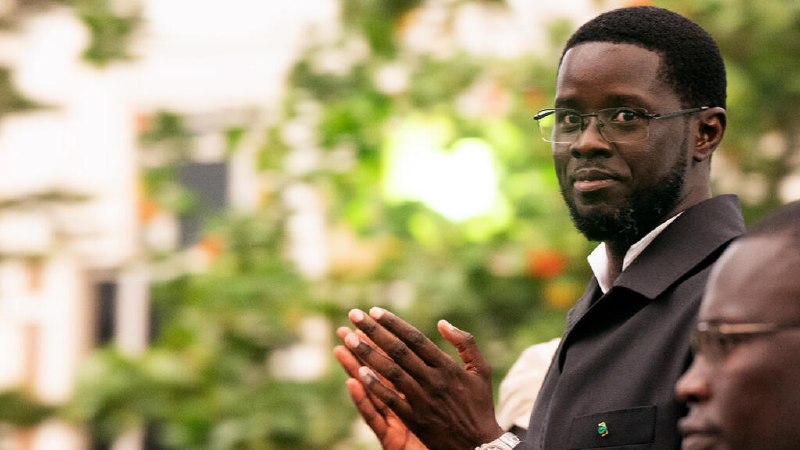
Macky Sall walked back into Dakar on 17 July 2026 for a brief sit-down with the man who beat him. The reason given for the visit was not Senegalese: the former president is campaigning to become the next secretary-general of the United Nations, and a courtesy call on his successor, Bassirou Diomaye Faye, was slotted into the itinerary. The reception he got from civil society was anything but courteous.
What looked like a routine diplomatic courtesy has become a referendum on Sall's twelve years in power and on the thin line, in Senegalese politics, between rehabilitation and accountability. Faye's government, elected in March 2024 on an explicitly anti-Sall platform, now has to decide whether a former head of state seeking a global post gets the red carpet or a reserved silence.
The visit, in plain detail
According to reporting from 17 July, Sall arrived in the Senegalese capital on Friday as part of a campaign swing tied to his UN bid. The meeting with Faye was described as brief. The AfricaNews wire that carried the dispatch framed it as a stop on a longer itinerary rather than a substantive bilateral, and noted that the encounter drew immediate criticism from the former president's political opponents. Faye's office has not, in the available reporting, publicly characterised the substance of the discussion; the meeting appears to have been treated by both sides as protocol rather than policy.
That procedural framing matters. Sall did not return to Dakar as a private citizen on holiday. He returned as an official candidate for the most powerful bureaucratic post in the multilateral system. Every handshake in front of a camera is, in that context, a credential.
Civil society draws the line
The louder signal came from outside the presidential palace. A coalition of civil rights groups opposed to the meeting accused Sall of returning to a country whose civic space he spent twelve years narrowing. Reporting from 16 July, the day before Sall's arrival, documented that opposition in advance: groups condemning what they described as repression under Sall's rule publicly objected to the reception the former president was about to receive from his own successor.
The objection is not abstract. Sall's last years in office were marked by the arrest and prosecution of the opposition figure Ousmane Sonko, by the disqualification of Sonko's party lists ahead of the February 2024 legislative elections, and by a postponement of the presidential vote that was eventually forced back onto its original calendar by street pressure and a Constitutional Council ruling. Faye, Sonko's chosen prime minister and eventual presidential candidate, won the rescheduled election on a pledge to roll back that record. For the civic groups now speaking up, Sall's homecoming reads as an attempt to convert former-office prestige into international rehabilitation before Senegal's domestic audience has fully processed what came before.
A campaign, not a coronation
The UN angle is the part of the story most likely to be lost in the Senegalese domestic coverage, and it is the part with the longest shelf life. Sall is one of several African figures reported to be in the running to succeed António Guterres, whose second term ends in late 2026. The continental rotation argument, that Africa has not held the secretary-general post since Boutros Boutros-Ghali in the 1990s, is a real structural claim. It has been made by African Union institutions and by individual African heads of state for the better part of two decades, and it is not weakened by the fact that the candidate advancing it carries domestic baggage.
What weakens Sall's claim is precisely the material his domestic critics are now amplifying. A former head of state campaigning for a post defined by moral authority cannot afford to be the subject of an active civic-repression file in his home country. The brief Dakar meeting with Faye does not resolve that file. It arguably deepens it: by being received, Sall is implicitly endorsed by the very government that came to power on the promise of correcting his record.
What remains unresolved
Two questions are open, and the available reporting does not settle either. First, whether the Faye government's reception of Sall is a one-off courtesy to a former head of state or the opening move of a quieter reconciliation between the two camps. Faye's political base, anchored in Sonko's Pastef party, has reasons to want distance. Sall, whose allies still hold influence inside Senegalese institutions, has reasons to want proximity. The brief length of the meeting points toward the former; the willingness to schedule it at all leans toward the latter.
Second, whether Sall's UN bid survives the next round of continental vetting. The African Union's own process for selecting a common African candidate has historically been opaque, and the front-runner from West Africa carrying a contested domestic record is a complication the AU will have to manage publicly. Senegal's civic groups have made clear they intend to keep that complication in view.
The picture, then, is of a former president who needs international standing more than he needs domestic quiet, and of a successor government that needs to demonstrate that its predecessor's legacy is a closed chapter rather than a continuing one. The 17 July handshake in Dakar does not close the chapter. It puts a bookmark in it.
How Monexus framed this: a domestic Senegalese political story carrying an international multilateral payload. The wire line focused on Sall's UN bid and the protocol of the Faye meeting. Monexus foregrounds the civil-society objection, the 2024 electoral backdrop, and the structural rotation argument so that the UN candidacy and the domestic accountability question are read together, not in sequence.