Tokyo opens the gates: Japan's crypto reclassification meets its first big onshore test
Tokyo has reclassified crypto as a financial instrument and cleared the path for Bitcoin ETFs. Now SBI Group and Ondo Finance are testing what onshore tokenisation actually looks like.
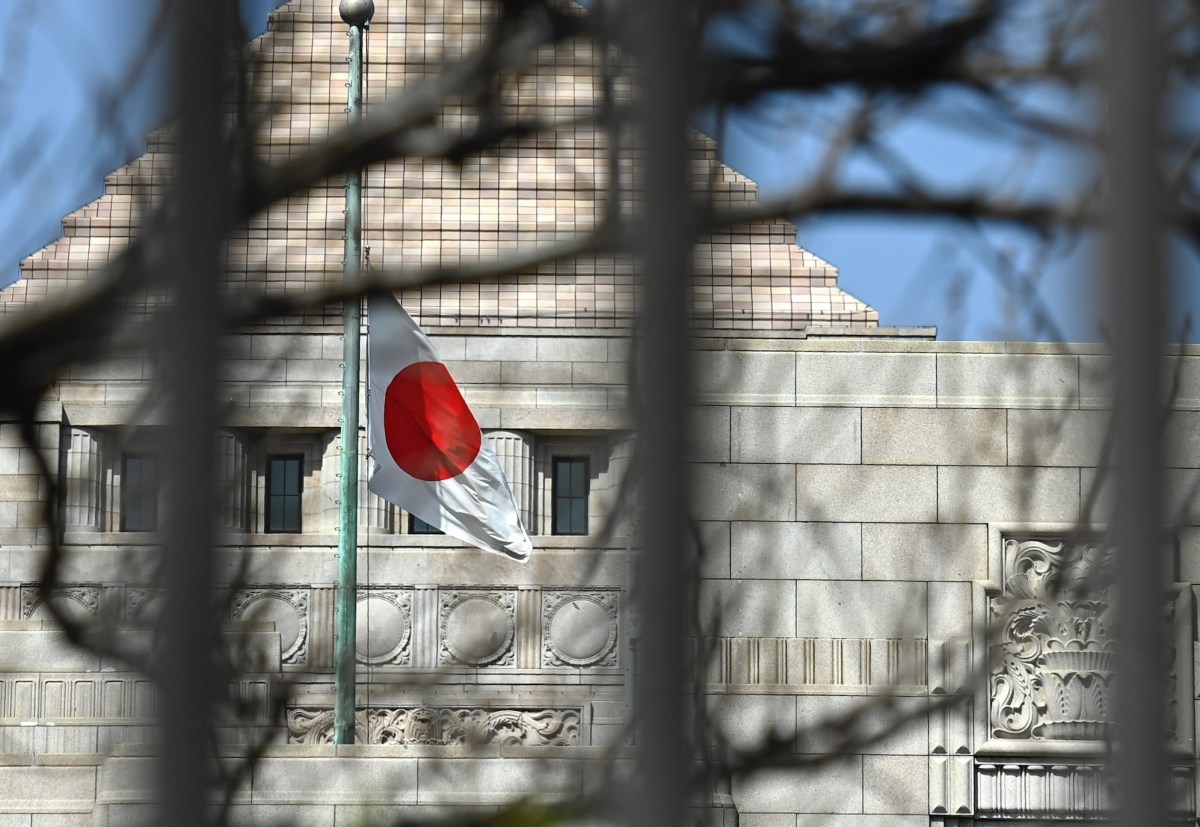
Japan's parliament passed a bill on 2026-07-15 that reclassifies crypto as a financial instrument, opening the door to Bitcoin exchange-traded funds and codifying a flat tax rate of around 20% on disposals, according to Cointelegraph reporting carried over Telegram at 08:25 UTC. Less than thirty hours later, at 14:22 UTC on 2026-07-16, the same wire carried word that Ondo Finance had signed a partnership with Japan's SBI Group to tokenise Japanese assets and settle them on-chain using the JPYSC stablecoin. Two announcements, same week, same country, opposite ends of the policy stack: a statute in the Diet and a private contract in a boardroom. Read together, they sketch what the new regime will actually have to absorb.
The argument here is straightforward. Tokyo has spent four years arguing with itself over how to treat crypto: as a payment method, as a speculative asset, or as something closer to a security. The bill resolved that debate in the securities direction. The SBI-Ondo tie-up is the first stress test of how that resolution plays out when a foreign issuer wants to land tokenised products in the world's third-largest economy, denominated in a yen-pegged stablecoin, settled on infrastructure that no Japanese regulator has yet finished approving.
What the bill actually does
The legislation is narrow in scope and wide in consequence. By treating crypto as a financial instrument, Japan pulls digital assets inside the perimeter of the Financial Services Agency's existing supervisory toolkit: disclosure rules, conduct standards, intermediary registration. The flat 20% rate collapses the patchwork of marginal income treatment that, until now, could push effective crypto taxation well above 55% depending on how holdings were classified. For institutional allocators who had been quietly parking Japan exposure in Singapore or Dubai wrappers, the change is the signal they were waiting for. Bitcoin ETFs become possible because the underlying asset now has a regulatory home that ETF providers can underwrite to. The 20% figure also matches the headline rate on listed equities, which is the comparison Japanese retail investors actually make.
The bill is also a quiet repudiation of the 2018-2022 posture, when the FSA's preferred answer to every exchange hack was to tighten entry rules until only the big four incumbents could survive. That regime produced Mt. Gox-style scarring and a domestic user base that tolerated the platform but never warmed to the asset class. The new approach treats volume and innovation as something to be supervised rather than suppressed, on the assumption that supervision will travel with the technology.
The SBI-Ondo tie-up, examined
Ondo Finance and SBI Group did not disclose the size of the asset pool or the schedule of issuance in the announcement carried by Cointelegraph at 14:22 UTC on 2026-07-16. What the announcement does establish is the direction of travel: a US-registered tokenisation platform (Ondo) entering Japan through a domestic financial conglomerate (SBI) using a yen-denominated stablecoin (JPYSC) for settlement. Each leg of that sentence is a separate regulatory question.
SBI brings the licence stack. The group runs a registered crypto exchange, a securities arm, and a venture book that already includes prior exposure to Ondo's parent ecosystem. Ondo brings the tokenisation templates that have, until now, been deployed mainly against US Treasury bills and short-duration corporates. JPYSC, by design, closes the cross-currency leg of any transaction, which removes the most common reason Japanese institutional desks give for not participating in dollar-denominated tokenised funds.
The arrangement sits inside a wider pattern. SBI has spent two years positioning itself as the bridge between Japanese capital and Asian digital-asset infrastructure, with stakes in regional exchanges and custody providers. The Ondo deal is consistent with that posture: a way to give Japanese balance sheets an onshore-compliant route into a product category that has, until now, defaulted to offshore wrappers.
Why this is harder than it looks
The structural problem is that the bill and the partnership were not designed together. The Diet voted on a framework; SBI signed a contract. The framework says crypto is a financial instrument. The contract says an offshore-issued token, settled in a yen stablecoin, backed by Japanese assets, will trade on infrastructure that crosses at least two of those categories at once. None of those pieces is illegal under the new regime. None of them is unambiguously legal either, because the implementing rules have not been written.
That gap matters for three reasons. First, the stablecoin question: JPYSC's redemption mechanics, reserve composition, and issuer location have to satisfy whatever stablecoin-specific standards the FSA eventually publishes. If JPYSC is treated as an e-money instrument, the path is short. If it is treated as a fund, the disclosure load is heavier and the timetable lengthens. Second, the tokenisation question: an Ondo-issued product that holds Japanese assets, settles in JPYSC, and lists on a Japanese venue has to decide whether the token itself is a security, a fund interest, or a structured product. Each label brings a different disclosure regime. Third, the intermediary question: SBI's crypto exchange licence covers trading, not necessarily the role of fund administrator or transfer agent for a tokenised product. That role has to be allocated, approved, and capitalised before any real flow begins.
There is also a sequencing problem the FSA will recognise from its 2017-2019 experience. If the agency waits for perfect rules before letting any onshore tokenisation proceed, capital parks itself in Singapore and Hong Kong while the rules are being written. If the agency lets product launch first and writes rules in response, it ends up chasing practices it did not sanction. The new bill tilts toward the second approach, but only because the alternative has been tried and visibly failed.
The structural read
What we are watching is a sovereign balance-sheet regulator (Japan) and a private tokenisation platform (Ondo, US-incorporated) attempting to align two different theories of what crypto is supposed to be. The Japanese theory, as of last week, is that crypto is a security with payment characteristics. The Ondo theory, inherited from the US institutional market, is that tokenised real-world assets are a settlement-layer improvement on traditional fund structures. JPYSC is the bridge instrument that lets both theories coexist without either having to win outright.
For Asian finance, the read-through is bigger than the deal. Tokyo has now joined Singapore and Hong Kong in offering a defined regulatory perimeter for tokenised assets, but with a domestic capital pool roughly six times Singapore's and a tax framework more friendly than Hong Kong's for retail allocation. If the FSA implements the bill cleanly, Japan absorbs regional flow that has been parking in Swiss and UAE wrappers. If implementation stumbles, the same flow quietly reroutes to whichever jurisdiction writes its rules first.
There is also a quieter dollar-politics angle. Stablecoins denominated in non-dollar currencies are the slow-moving counter-weight to the dominance of USDC and USDT in offshore crypto settlement. A yen stablecoin with a Japanese banking-grade issuer, clearing through a Japanese-licensed venue, is the kind of plumbing that makes it possible for a Japanese institutional desk to hold tokenised assets without touching the dollar leg at all. The Ondo partnership is not a campaign against dollar stablecoins; it is, more precisely, an experiment in whether the alternative actually clears.
What to watch next
The honest answer is that the next six months will be quieter than the last week suggests. SBI and Ondo have to convert an announcement into a product. The FSA has to convert a statute into enforceable rules covering stablecoins, tokenised funds, and the intermediary roles each requires. Japanese institutional desks have to decide whether the post-tax, post-rules economics justify the operational lift of on-chain settlement rather than the existing off-chain fund structure that already works.
The two dates that matter are the FSA's stablecoin consultation deadline, which the sources do not specify, and the first listing of a Bitcoin ETF on a Japanese venue, which the new bill permits but has not yet produced. If the ETF lands before the stablecoin rules are final, expect the FSA to be cautious on the SBI-Ondo product until the framework catches up. If the stablecoin rules land first, expect the SBI-Ondo product to move faster than the ETF market, because the institutional demand for tokenised assets denominated in yen is the part of the new regime that already has a counterparty waiting.
What remains genuinely uncertain is whether JPYSC can clear at institutional scale during Japanese trading hours, given the timezone gap with US reserve custodians and the limited history of yen-denominated stablecoins under stress. The sources do not resolve that question. The market will, when it does.
Desk note: Monexus frames this as a regulatory-and-infrastructure story rather than a price story. The Cointelegraph wire led with the statutory reclassification; the same wire's second item showed the first private-sector test case. Both belong in the same piece, because neither makes sense without the other.
Wire provenance
This editorial synthesis draws on the following public wire/social posts:
- https://t.me/cointelegraph
- https://t.me/cointelegraph