Israeli ground sweep into southern Lebanese towns marks a new phase of the ceasefire's erosion
Combing operations in Haddatha, Beit Yahoun and the detonation near Zawtar Al Sharqiya point to an Israeli interpretation of the November framework that few of its signatories publicly anticipated.
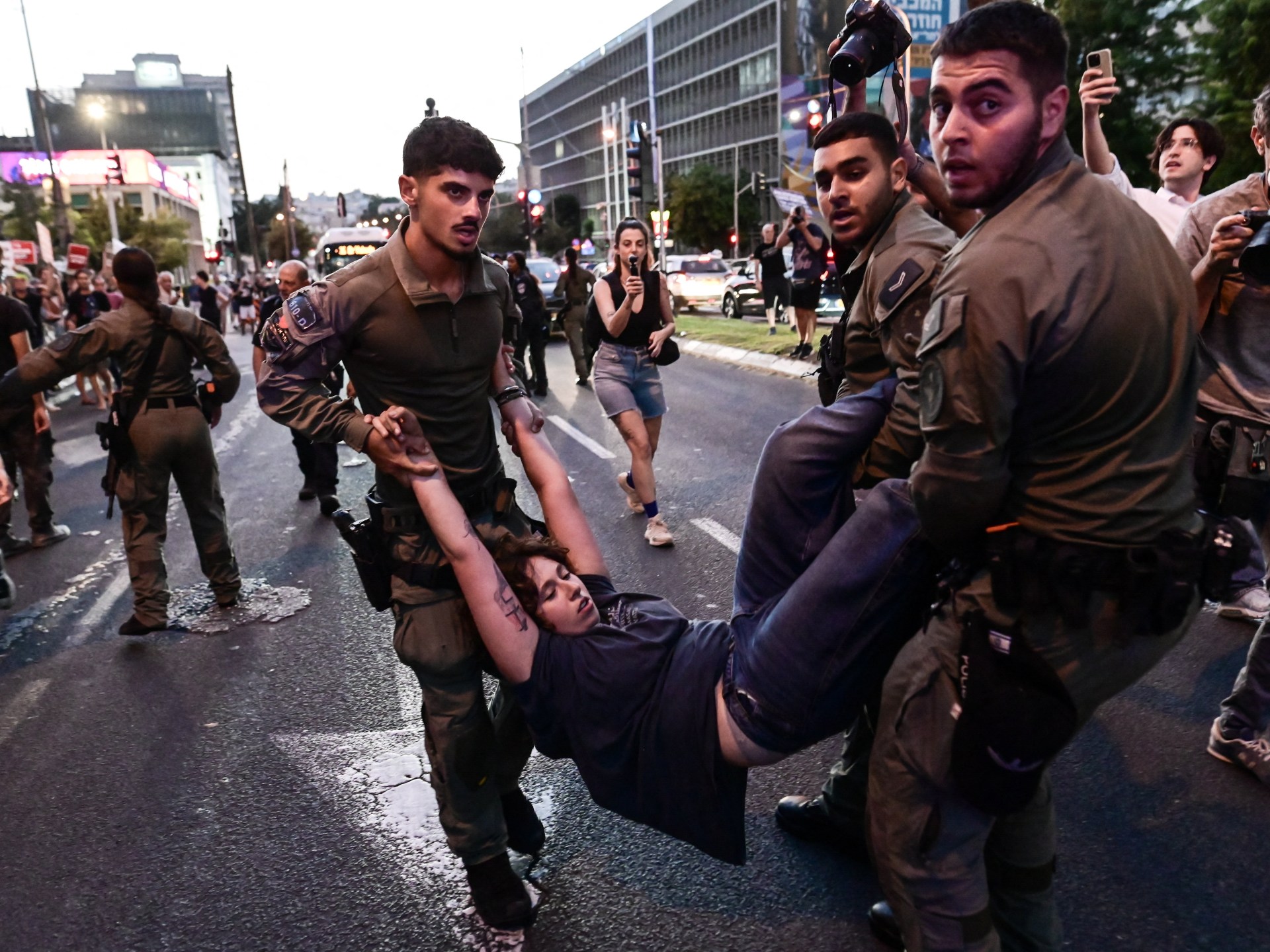
At 10:14 UTC on 17 July 2026, two Lebanese field channels, The Cradle Media and its companion handle, broadcast near-identical video of Israeli troops conducting what they described as combing operations towards the southern Lebanese towns of Haddatha and Beit Yahoun. Forty minutes earlier, the @wfwitness channel had posted its own footage of an Israeli detonation inside the occupied Lebanese town of Zawtar Al Sharqiya, framed as activity in a "pilot zone area," alongside reporting on Israeli sweeping operations in Beit Yahoun. Taken together, the three posts describe a single tactical episode: ground forces moving through villages just north of the Litani, with engineering assets being used to clear structures in their path.
What looks like a routine clearing operation is, on the ground, a stress test of the ceasefire understanding that halted the 2024 war. Each detonation, each patrol, each door kicked in is a definitional question: who counts as a Hezbollah asset, what counts as a military site, and how much southern Lebanese territory can the IDF enter before the political framework collapses. The November deal was sold as a withdrawal in exchange for disarming the armed presence north of the border. The events of 17 July suggest Israel is interpreting the agreement's second clause far more aggressively than its American, French, or Lebanese co-signatories anticipated.
A "pilot zone" by any other name
The language matters. A "pilot zone," as cited by @wfwitness, is not a category that appears in the publicly released text of the November 2024 arrangement, and the term implies a controlled experiment: a defined geography inside which Israel retains freedom of action to test whether the other party's commitments are being honoured. Zawtar Al Sharqiya sits in the Bint Jbeil district, deep inside the area the ceasefire understanding placed off-limits to Israeli ground forces. That a detonation operation, not a brief incursion or a flagged patrol, was conducted there is a qualitatively different action from the routine "warning strikes" the IDF has carried out elsewhere along the frontier since the deal took hold.
The Cradle's video adds a second data point: troops sweeping southwards towards Haddatha and Beit Yahoun, also in Bint Jbeil, with the operation described as a "combing" rather than a "targeted" raid. Combing is the term Israeli forces have historically used for village-by-village clearance, the kind of operation that involves house entries, identification checks, and the discovery or destruction of caches. It is not a term used for a pinprick strike against a specific target.
What the wire says, and what it doesn't
The reports originate exclusively with Lebanese and Lebanon-focused Telegram channels. There is no IDF spokesperson briefing in the public source material, no UNIFIL statement, and no wire-service confirmation in the thread. That asymmetry is itself a piece of information. Israel has, since the November ceasefire, intermittently acknowledged operations south of the Litani in carefully hedged language ("precise, targeted activity against Hezbollah infrastructure") without releasing operational detail; Lebanon and Hezbollah, by contrast, tend to release location and unit-level information quickly and let footage do the talking.
A reader working from this thread alone cannot independently verify the unit movements, the detonation's yield, or the specific Hezbollah infrastructure that may have been targeted. What can be verified is that three independent channels, including The Cradle, a recognised regional outlet rather than a single partisan account, ran concurrent footage, and that the geography they describe (Bint Jbeil, Haddatha, Beit Yahoun, Zawtar Al Sharqiya) is consistent with the southern Lebanese frontier area where Israel has retained an active operational posture.
The structural question buried in a single day
Read narrowly, 17 July was three Israeli actions in one district. Read structurally, it is the continuation of a pattern in which Israel is using the language of the ceasefire while steadily widening the geography to which Israeli force may be applied. The United States and France, as co-signatories of the November framework, have so far declined to publicly object to specific Israeli operations south of the Litani, framing each one as a discrete counter-Hezbollah measure. That posture gives Israel the benefit of ambiguity: every operation can be described as compliance with the spirit of the deal, even as the area inside which "compliance" applies expands.
For Lebanon, the cost is not just the immediate property damage in villages like Zawtar Al Sharqiya. It is the slow normalisation of a forward Israeli presence, and the corresponding erosion of the state's ability to claim authority over its own borderland. The Lebanese army, which was the nominal recipient of the ceasefire's monitoring mandate, is not visibly present in any of the 17 July footage. Whether that absence reflects coordination with Israeli forces or a quiet withdrawal from the area is one of the questions that the next 48 hours of reporting will need to answer.
What remains uncertain
The thread does not specify Hezbollah's response, the casualty count inside the affected villages, or whether UNIFIL has issued a public statement. It does not record any Lebanese government reaction, nor any commentary from the office of Prime Minister Nawaf Salam or the Lebanese Armed Forces spokesperson. The detonation's framing as a "pilot zone" activity, if accurate, suggests an Israeli doctrinal category that has not yet been described by mainstream Western outlets, and it is plausible that within 24 hours Israeli or American officials will either confirm the term or distance themselves from it.
What can be said with the available material is that three Lebanese field channels reported simultaneous ground activity in a cluster of Bint Jbeil villages on the morning of 17 July 2026, that engineering assets were used in Zawtar Al Sharqiya, and that the operation's vocabulary ("pilot zone," "combing") goes beyond what the public text of the November understanding has so far been read to permit. Each of those facts is independently reported; none is yet independently corroborated by wire service or official communiqué. The story will move quickly in the next 24 to 48 hours, and any conclusion drawn now should be treated as provisional.
Monexus framed this as a structural test of the November ceasefire, not a tactical incident. Where wire coverage of southern Lebanon tends to flatten each Israeli action into a self-contained counter-Hezbollah strike, this desk treated the location, vocabulary, and concurrent timing as the news.
Wire provenance
This editorial synthesis draws on the following public wire/social posts:
- https://t.me/wfwitness
- https://t.me/TheCradleMedia
- https://t.me/thecradlemedia