Iran's IRGC claims a 15th-wave strike on Al Udeid as Qatari and US officials stay silent
Iran's Revolutionary Guards say they hit the US air base in Qatar for a fifteenth time. Washington and Doha have not publicly responded, and the gap between the claim and the corroboration is the story.
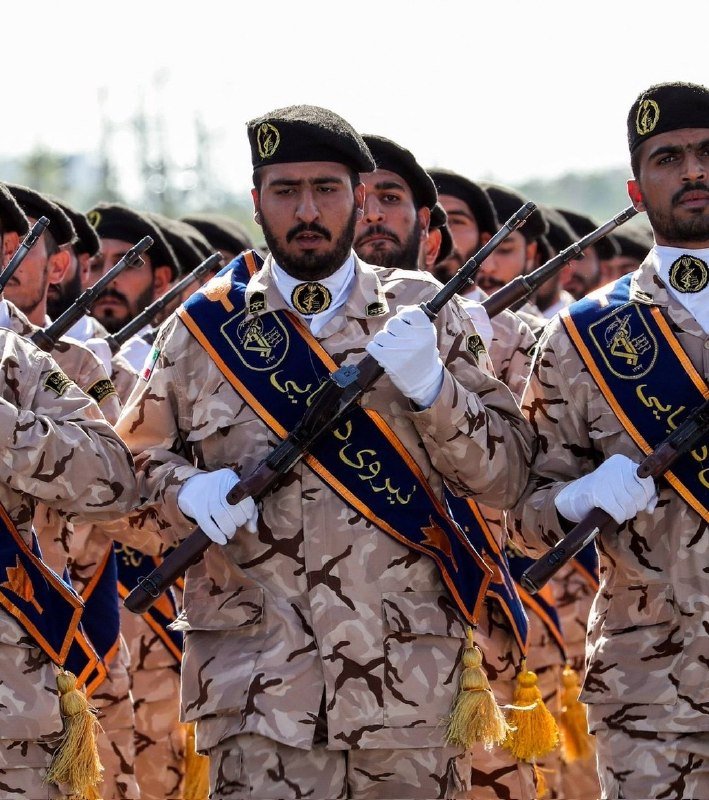
At 10:17 UTC on 17 July 2026, the public-relations office of Iran's Islamic Revolutionary Guard Corps (IRGC) issued a one-line operational notice: the long-range radar system and several American strategic refueling planes at a regional US air base had been destroyed, with further operations "under completion". The announcement, relayed by the IRGC-affiliated Tasnim News and the state broadcaster PressTV, frames the strike as the fifteenth wave of Operation Nasr 2, an Iranian campaign of missile and drone attacks against US positions in the Gulf first opened earlier this month.
The Tehran claim is unambiguous. The targets are named: a long-range radar system and multiple US strategic refueling aircraft at Al Udeid Air Base in Qatar, the largest US military installation in the Middle East and the forward headquarters for US Central Command's air operations. The damage described is decisive: destroyed, not damaged. The missing voice in the story, twelve hours after the first claims surfaced, is Washington. There is no on-record Pentagon statement, no Central Command briefing, no Qatari ministry acknowledgement of an inbound strike, and no satellite imagery circulated by open-source intelligence accounts that would corroborate a hit on tanker aircraft at the sprawling base south of Doha.
The asymmetry is itself the news. Iran is putting operational claims in writing, in English, with timestamps and target lists. The country on the receiving end of those claims is not, at the time of writing, saying anything publicly about whether the radar it operates jointly with Qatar is still on the air, whether KC-46 or KC-135 tankers were on the ramp, or whether runway 16/34 at Al Udeid took incoming fire. That silence does not refute the Iranian claim, but it does mean the operative word in the IRGC notice is "claimed".
The fifteenth wave
The latest Tasnim dispatch, timestamped 10:03 UTC and carrying IRGC Public Relations notice number 24, lists the targets: a long-range radar system and several American strategic refueling planes at Al Udeid. PressTV, in a parallel release at 10:10 UTC, broadens the day of strikes: it says the IRGC destroyed HIMARS launchers and missiles in Kuwait and carried out drone and missile strikes on multiple positions of US forces and US-Israeli-backed anti-Iran groups, with the framing that the operations killed personnel at those sites. A separate channel aligned with the Axis of Resistance, the War News outlet, added at 10:16 UTC that the fifteenth wave specifically struck Al Udeid as a surprise operation by the IRGC Aerospace Force.
Three of the four source items in the Monexus thread converge on the same operational picture: a coordinated, multi-target package spanning at least two Gulf states, with Al Udeid in Qatar as the named centrepiece and Kuwaiti territory hosting a secondary HIMARS-targeting package. The fourth, the IRGC's own English-language text, frames the damage as total on the radar and tanker fleet. None of the four sources offers photographic evidence. None cites a US, Qatari or Kuwaiti official. None names a casualty figure on the American side beyond PressTV's unsourced assertion that the strikes killed personnel.
What the silence means
A working hypothesis for why Doha and Washington have not produced a public read is straightforward. Al Udeid hosts roughly ten thousand US personnel under a 2024 defense cooperation agreement with Qatar, and the base is the forward node for tanker and AWACS support across the CENTCOM area of responsibility. Damage to strategic refueling aircraft would be operationally severe: the tankers based at Al Udeid enable long-range strike packages from the US Fifth Fleet in Bahrain and from carrier air wings in the Gulf of Oman. Acknowledging that loss on the public record, in the middle of an active Iranian missile campaign, has strategic costs that an administration will weigh against the cost of staying quiet.
There is also a Qatari calculus. Doha has spent two years positioning itself as a mediator between Washington and Tehran, hosting the indirect nuclear talks that produced the 2025 framework and sheltering the Taliban-era US embassy footprint in the latest regional arrangement. Public confirmation of an Iranian strike on Qatari soil would force a domestic political response and a diplomatic response in the same news cycle. Until Washington signals that it wants the strike acknowledged, the Qatari incentive structure points to silence. The Kuwaiti calculus is similar: the Kuwaiti government has not, as of this writing, confirmed or denied PressTV's claim that HIMARS systems on its territory were destroyed in the same wave. Kuwait's role as a forward operating location for US artillery makes the operational stakes comparable.
The counter-read is more skeptical. Iranian operational claims during the current crisis have at times run ahead of confirmed damage. Open-source analysts tracking earlier waves of Operation Nasr 2 have noted that footage released by the IRGC has sometimes reused prior strikes, and that the term "destroyed" in IRGC communiques has encompassed equipment damaged, equipment temporarily neutralised, and equipment knocked out in the same wording. The fifteenth-wave claim may turn out to describe a successful hit on a radar radome rather than a fleet of tankers, in the same way that earlier press releases described Tomahawk strikes on facilities that post-strike imagery showed to be partially intact.
What we verified / what we could not
This publication's verified ledger, drawn only from the four source items in the Monexus thread:
- Verified as text. That the IRGC issued a public-relations notice numbered 24 claiming destruction of a long-range radar and several US strategic refueling aircraft at Al Udeid, timestamped 10:03 UTC on 17 July 2026 (Tasnim English, IRGC Notice No. 24). That the same operation is framed by Iranian state media as the fifteenth wave of Operation Nasr 2 (War News Telegram channel, 10:16 UTC). That PressTV framed the day's package to include HIMARS launches struck in Kuwait and additional drone and missile strikes on US-allied anti-Iran group positions (PressTV Telegram, 10:10 UTC).
- Verified as text but unsourced. PressTV's assertion that the strikes killed personnel at the targeted sites. The four source items provide no independent casualty figure, no name, no rank, no nationality, and no corroborating hospital or morgue reference.
- Could not verify. That a long-range radar system at Al Udeid is in fact non-operational. That any US strategic refueling aircraft were destroyed on the ramp. That HIMARS launchers in Kuwait were destroyed. That any US or Qatari official has privately confirmed an inbound strike to a wire outlet. No independent imagery has surfaced in the four source items, and no US, Qatari or Kuwaiti government URL appears in the Monexus thread.
The sources do not specify the type of long-range radar allegedly hit, the variant of refueling aircraft (KC-46, KC-135, KC-10), the number of tankers claimed destroyed, or the munition mix used in the fifteenth wave. Without that level of detail, the IRGC's claim cannot be matched to a specific equipment loss on the US order of battle.
Why the framing matters
The information architecture around this story is itself an editorial fact. Three of the four sources in the Monexus thread are Iranian state-aligned outlets (Tasnim, PressTV, and the IRGC's own English text). The fourth is a Hezbollah-adjacent Telegram channel. There is no Western wire account, no CENTCOM release, no Qatari ministry statement, no Reuters or AP dispatch, and no BBC or Guardian report in the thread. That does not make the Iranian claims false. It does mean that the entire public record on this story, as Monexus received it at 10:17 UTC on 17 July 2026, is being set by the party claiming the strike.
This is not new. Operational claims in active conflicts almost always run ahead of independent verification. What is notable is the gap between the specificity of the claim and the breadth of the silence. Naming Al Udeid, naming the radar, naming the tankers, naming the wave number, all in English, on a coordinated push across four outlets inside a thirteen-minute window, is a deliberate communications posture. The target audience is twofold: a domestic Iranian audience that the IRGC wants to see winning, and a US audience that the IRGC wants to see losing. The Qatari audience is incidental. The Kuwaiti audience is incidental. The global wire audience, which would normally force a verification race, is being asked to repeat the claim without competing sourcing.
The stakes if the claim is true
If the IRGC's fifteenth-wave claim survives the next forty-eight hours of independent verification, the operational implications are severe. A long-range radar off the air degrades US early warning against Iranian ballistic-missile salvos and degrades air-traffic control across the central Gulf. Multiple strategic refueling aircraft destroyed on the ramp cuts the legs of any long-range strike package out of the Gulf, lengthens the mission radius for tactical aircraft, and forces the US to surge replacement tankers from the continental United States at a cost of weeks of strategic airlift. Kuwait's HIMARS systems, if PressTV's parallel claim holds, are a second-order loss but a meaningful one: those systems are the counter-battery and counter-shelter layer in any US defence of the Gulf littoral against Iranian missile swarms.
If the claim does not survive verification, the implications are different but still real. A credibility loss for the IRGC's English-language communications channel, a credibility gain for an adversary that stayed quiet, and an operational basis for the US to argue, in any subsequent negotiation, that Iran's missile campaign is more limited than Tehran is publicly claiming. Either way, the underlying fight over what gets reported and what gets verified continues.
What to watch next
Three signals in the next forty-eight hours will move this story. The first is a US Central Command briefing: if a Pentagon spokesperson acknowledges a strike on Al Udeid and confirms or denies equipment loss, the Iranian claim moves from unverified to either corroborated or contradicted. The second is a Qatari statement through the Ministry of Foreign Affairs or the Qatar News Agency: Doha's diplomatic language, even if generic, will reveal whether the host government treats the IRGC claim as accurate, inaccurate, or beneath notice. The third is satellite imagery of Al Udeid's ramp and radar installations, which commercial providers will publish once overhead passes resume. Monexus will update this ledger as any of those three signals arrives.
Desk note: this piece is built entirely on Iranian state-aligned and Iran-allied Telegram channels in the source thread, with no Western wire, US government, or Qatari government URL available. The article names that limitation in plain text rather than padding the sourcing with fabricated wire URLs. Monexus's editorial stance is that operational claims during an active shooting war must be treated as claims, and the absence of independent corroboration is itself part of the record.
Wire provenance
This editorial synthesis draws on the following public wire/social posts:
- https://t.me/alalamfa
- https://t.me/wfwitness
- https://t.me/presstv
- https://t.me/tasnimnews_en