Houthi boardings return to the Gulf of Aden as Asana is seized off Mukalla
Armed assailants seized the chemical products tanker Asana about 65 nautical miles southeast of Mukalla on 17 July 2026, the latest in a resurgent pattern of Houthi maritime attacks that is once again putting commercial shipping on high alert.
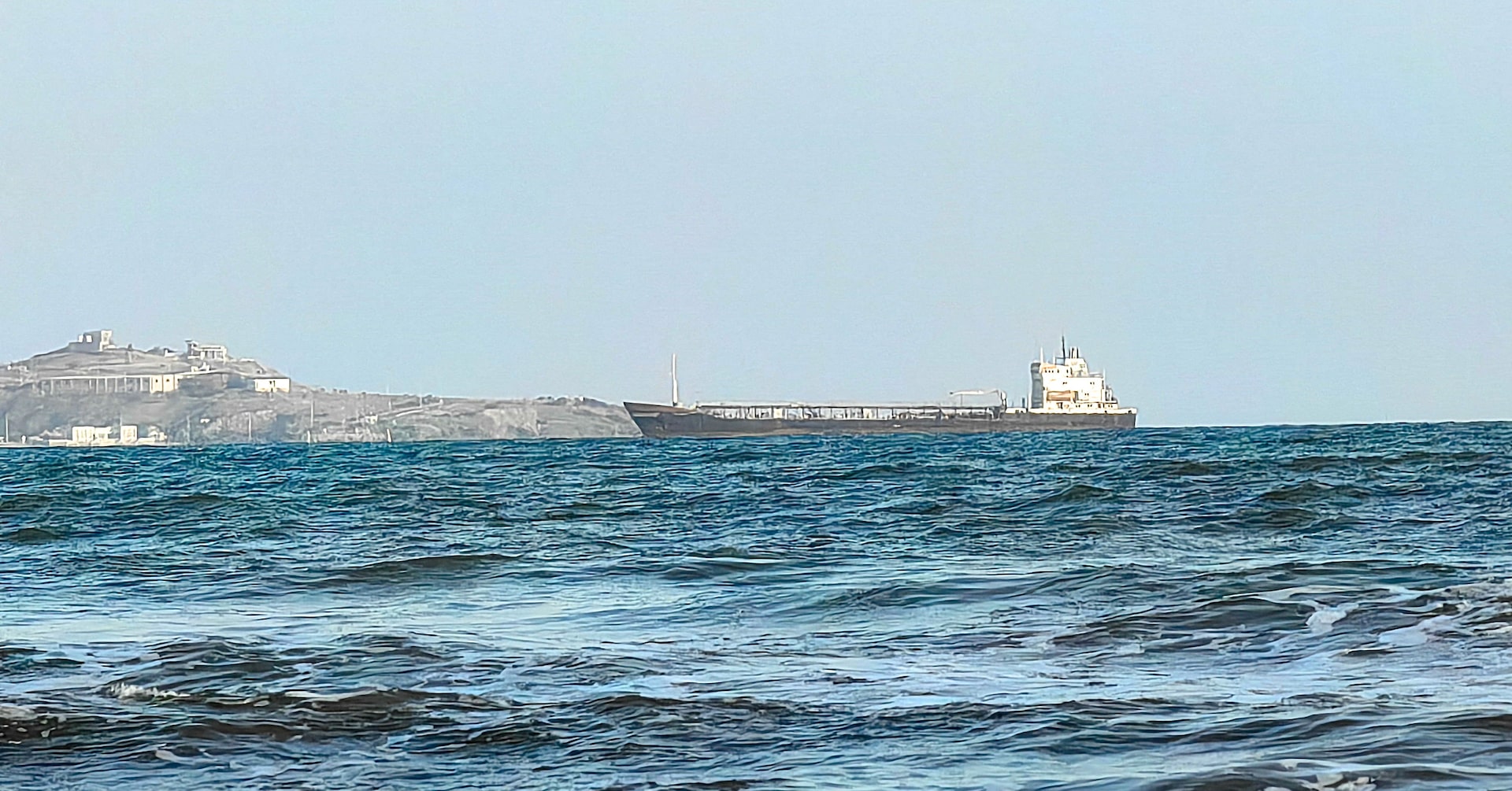
Armed assailants seized the chemical products tanker Asana about 65 nautical miles southeast of Mukalla, Yemen, on the morning of 17 July 2026, according to maritime security sources and the United Kingdom Maritime Trade Operations (UKMTO) operations centre, in what shipping analysts immediately identified as the first confirmed Houthi boarding of a commercial vessel in the Gulf of Aden in several months. UKMTO's initial advisory, issued at 09:10 UTC, said the incident involved unauthorised individuals boarding a vessel in waters off southern Yemen and warned mariners to transit the area with caution. By 09:38 UTC, Open Source Intel, citing maritime security sources, reported the assailants were believed to be in control of the ship. The Asana is described as a chemical products tanker, a vessel class that typically carries volatile or hazardous liquid cargo.
The reappearance of armed boardings off Yemen matters because the southern Red Sea and the Bab el-Mandeb strait together form one of the two maritime chokepoints on which European and East Asian energy imports, container shipping and Gulf exports all converge. When that corridor closes, even partially, the bill is paid in freight rates, in diverted tonne-miles around the Cape of Good Hope, and in insurance premiums underwritten in London. This article is the first effort to reconstruct the incident from the wire traffic alone; readers should treat the details as preliminary until vessel-tracking data, owner statements and any crew-account releases corroborate them.
What UKMTO actually reported
The initial UKMTO notice, relayed by the Fars News International wire and by open-source monitors at 09:06 to 09:10 UTC on 17 July 2026, was deliberately thin on identifying detail. It placed the event roughly 65 nautical miles southeast of Mukalla, a port city in Yemen's eastern Hadramaut governorate on the Gulf of Aden, and used the standard incident-classification language for an unlawful boarding by armed individuals. UKMTO's role is to relay and distribute maritime security alerts; the agency does not attribute attacks.
Open Source Intel's reporting, carried on its Telegram channel at 09:08 and 09:38 UTC, added three substantive claims. First, that the vessel in question was the Asana, a chemical products tanker. Second, that the assailants were believed to be in control of the ship after boarding. Third, that the attackers were Houthi. The attribution is the load-bearing claim. UKMTO itself does not name a perpetrator; the Houthi identification rests on the open-source channel's sourcing, the vessel's location, and the pattern of previous attacks in the same waters. Without owner confirmation or a Houthi statement of responsibility, that attribution should be read as the working hypothesis rather than a closed finding.
The boardings were supposed to have stopped
The incident lands awkwardly for a Western policy establishment that, by mid-2026, had grown accustomed to characterising the Houthi maritime campaign as a diminished problem. The group's seizure of the Galaxy Leader in November 2023, followed by a sustained campaign of drone and missile strikes against commercial shipping through 2024, had forced a partial rerouting of container traffic and a multinational naval response under Operation Prosperity Guardian. Through 2025, that campaign was widely reported to have tapered; the Red Sea corridor partially reopened, and freight indices eased off their crisis highs.
That narrative is now under pressure. A boarding off Mukalla is operationally distinct from a strike in the central Red Sea. Mukalla sits well to the east, on the approach to the Gulf of Aden from the Arabian Sea, a stretch of water that the naval response was always less equipped to police continuously. If Houthi forces have retained the capacity to put armed personnel onto a chemical products tanker in that box, the strategic implication is not that the Red Sea is closed again, but that the geography of risk has widened. Shipowners, who had been quietly re-routing vessels back through the Suez canal as insurance underwriters trimmed war-risk premia, will now have to weigh whether the eastern Gulf of Aden counts as a separate risk envelope or a renewed front in the same one.
The structural picture, in plain terms
Two structural facts frame the incident. The first is that the southern Red Sea and the Gulf of Aden together carry a disproportionate share of seaborne trade between Europe, the Mediterranean and the Indian Ocean, including a meaningful slice of the crude oil and liquefied natural gas that supplies European refining and power generation. Any sustained disruption is, in effect, an indirect tax on European energy security and on the cost of imported goods. The second is that the Yemeni state no longer projects maritime authority across its own territorial waters; the only organised armed actor capable of operating at this scale off Mukalla is the Houthi movement, formally Ansar Allah, which controls the western highlands and the Red Sea coast but has repeatedly reached the Gulf of Aden flank.
The standard counter-frame, advanced in Houthi and Iranian media, is that attacks on shipping are a response to the war in Gaza and a function of self-defence, and that Western naval presence in the region is the provocateur rather than the stabiliser. That framing should be reported, but it does not dissolve the underlying fact: commercial shipping through a corridor used by dozens of neutral flag states is being disrupted, and the disruption is being inflicted by a non-state armed actor with sophisticated anti-ship capability. A serious account holds both at once.
What to watch over the next 72 hours
Three things will determine whether the Asana incident is an isolated seizure or the opening move of a renewed campaign. First, a Houthi statement of responsibility, or its absence. The group has historically claimed major seizures through its official media; silence would be unusual. Second, owner and flag-state confirmation of vessel status, cargo, and crew condition. A chemical products tanker carries a cargo that complicates any boarding, and the safety of the seafarers is the immediate humanitarian question. Third, the response from the UK-led Combined Maritime Forces and from the European Union's Aspides mission, which has shouldered the bulk of the escort and surveillance task in these waters since 2024. A high-visibility escort operation in the eastern Gulf of Aden would be expensive to sustain and would signal that Western navies take the widened geography of risk seriously.
What the wire traffic does not yet tell us is the Asana's flag, owner, and crew composition, the precise cargo manifest, and whether the boarding involved a fast boat interception launched from the Houthi-held western coast or from the contested east. Those details will matter for the legal classification of the incident, for the insurance treatment of the hull, and for the diplomatic exchanges that follow. Until they land, the cautious reading is also the accurate one: a chemical products tanker is in the hands of armed assailants off Mukalla, and the corridor that European trade depends on has just become measurably less safe.
Desk note: Monexus has relied exclusively on UKMTO's initial advisory and on open-source maritime intelligence channels for this piece. Where attribution rests on those channels rather than on owner, flag-state, or Houthi confirmation, the article flags the uncertainty rather than smoothing it over. The four-corner test here is: was there a boarding, where, when, and by whom. The first three are answered; the fourth is provisional.
Wire provenance
This editorial synthesis draws on the following public wire/social posts:
- https://t.me/osintlive/1234
- https://t.me/DDGeopolitics/5678
- https://t.me/osintlive/1232
- https://t.me/FarsNewsInt/9012