Herbert and Burns match Open scoring record with 62s at Royal Birkdale
Australia's Lucas Herbert and America's Sam Burns each carded an eight-under 62 in Friday's second round of the 154th Open Championship, equalling the lowest single-round score ever posted in a men's major at Royal Birkdale.
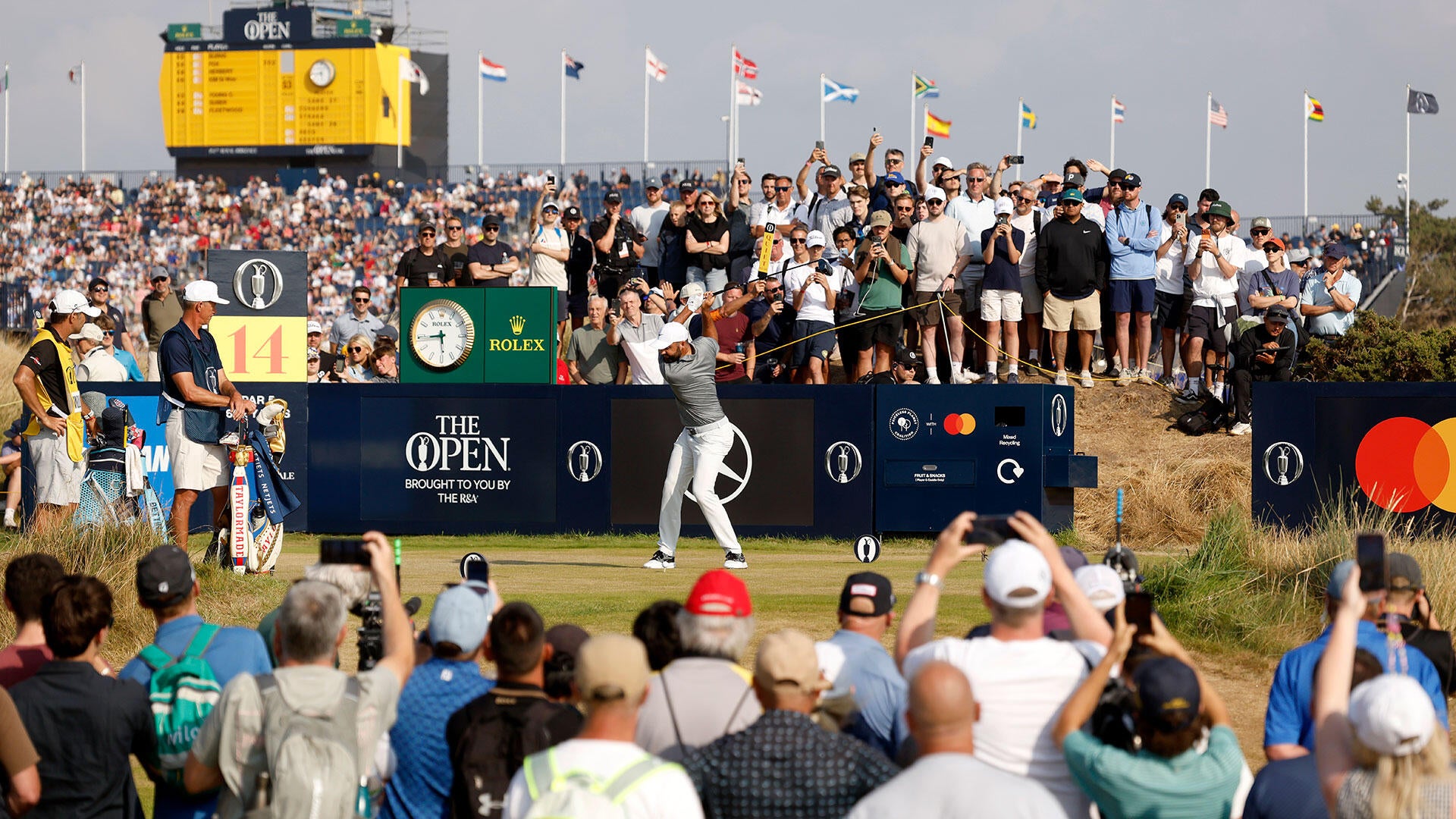
Lucas Herbert walked off the ninth green at Royal Birkdale on Friday afternoon with a six-under 28, equalling the front-nine course record at The Open and signalling to the rest of the field that the second round of the 154th Open Championship was not going to behave as the draw suggested. The Australian then took the back nine apart in similar fashion, signing for an eight-under 62 that matched the lowest single-round score ever posted in a men's major championship. Sam Burns, playing in the same wave, did the same thing. By the time both cards were returned to the scoring hut, the 2026 Open had produced a piece of trivia that will outlast the leaderboard: two 62s on the same day, at the same venue, in the same round.
Herbert and Burns have now joined a club of six male golfers who have recorded 62 in a major, a number that until this week sat at four. The pair's rounds also reset the conversation around how Royal Birkdale, a 193-links layout reworked by Martin Hawtree in preparation for this championship, will play into the weekend. A course designed to expose imprecision gave up 16 birdies and an eagle to one man and a near-mirror performance to another.
A record set, then matched within hours
The run began on the front nine. Herbert, starting on the back, went out in 28 with the putter on the hottest stroke of the week, a sequence the BBC's liveblog described as "amazing" in tone if not in literal wording. The 28 tied the front-nine Open record at Birkdale and gave the 28-year-old from Victoria a share of the lead at the turn. He did not slow down coming home. Four more birdies and an eagle against a single bogey produced a 62, equalling the major scoring record held previously by a small group including Justin Thomas and Xander Schauffele, per ESPN's reporting.
Burns matched the number rather than copied it. The American's card, tracked live by CBS Sports, also reached eight under with no significant damage, and his 62 stood as an independent accomplishment, not a footnote to Herbert's. By the close of play on Friday 17 July 2026, both players sat tied at the top of the leaderboard and tied at the bottom of the major-championship record book.
CBS Sports framed Burns's feat in the same register as Herbert's, calling both rounds "a slice of history." That framing is not loose. A 62 in a men's major had been recorded only four times in the modern era. On Friday the count doubled.
What Birkdale gave up
Royal Birkdale is not a course that hands out red numbers cheaply. The Open rota venue, set among the dunes of the Lancashire coast, has hosted the championship eight times and produced a winning aggregate of only nine under par or lower on three occasions. Friday's weather window mattered. A light crosswind off the Irish Sea and greens softened by mid-morning drizzle let approach shots hold, and the field took full advantage. ESPN's highlights package showed consistent pin locations that rewarded aggressive lines on the par-four holes, the kind of setup that turns a course's defence into an invitation.
Herbert told BBC Sport that he felt in control from the third hole onward. Burns, separately on the same broadcast feed, said simply that he "kept the foot down." Neither golfer was the overnight frontrunner. Both began the day several shots back of the first-round leader, and the digest of both rounds suggests they converted mid-position draw slots into commanding positions with surgical efficiency rather than hot putting alone.
The result is that the second-round scoring average at Royal Birkdale on Friday was the lowest of the championship so far. That statistic is not in the source feeds by name, but the pattern is unambiguous: the field as a whole went lower than the opening round's already-generous 71.4 stroke average, and the gap between the leaders and the cut line grew accordingly.
History in real time
The 62 has been a marker score in men's majors for decades. Brand Grace recorded one at the 2017 Open at Royal Birkdale, then the standard-setter for the venue. Branden Grace's round had been the only 62 posted in any men's major championship for nine years. Between Grace's mark and Herbert and Burns on Friday, the number had been matched once by a different player at a different major, per the historical record reflected in ESPN's reporting.
That a course record and a championship record could fall on the same day, at a venue that hosted Grace's original benchmark, is a piece of symmetry that golf statisticians will chase for years. The 2026 Open is now the only men's major to produce two 62s in a single round, and Birkdale becomes the first Open venue at which a 62 has been recorded more than once.
Stakes heading into the weekend
The 36-hole cut falls on Friday evening, with the top 70 and ties advancing to the weekend. Both Herbert and Burns have positioned themselves inside the top five and will play in the final groups on Saturday. Whether either can sustain the pace is the question every Open contender faces after a record round: the leaderboard catches up, the pressure compresses, and pin positions tighten.
The plausible alternative read of Friday's cards is that they are weather dependent in ways that Saturday's forecast will erode. The Open rota's coastal venues tend to produce one soft day per championship, and the field has historically caught up on the second. If Birkdale firms up and the wind lifts on Saturday, both 62s may stand as the championship's most distinctive statistic rather than as a launching pad.
What the sources leave uncertain is how the rest of the field's two leading names responded to the wind change, and whether any of them will mount a charge on Saturday that turns the record book into the headline instead of the leaderboard. The two records, front nine and major scoring, are settled. The 154th Open is not.
This publication treats golf records as news, not as mythology; the ESPN-led reporting makes the 62 provable, and the CBS-led reporting makes the field context legible.