The CLARITY Act ran out of road. Crypto's Washington moment isn't coming this year.
A Senate bill that industry thought it could land before August recess is now rated more likely to fail than pass. The coalition that built it is holding. The calendar isn't.
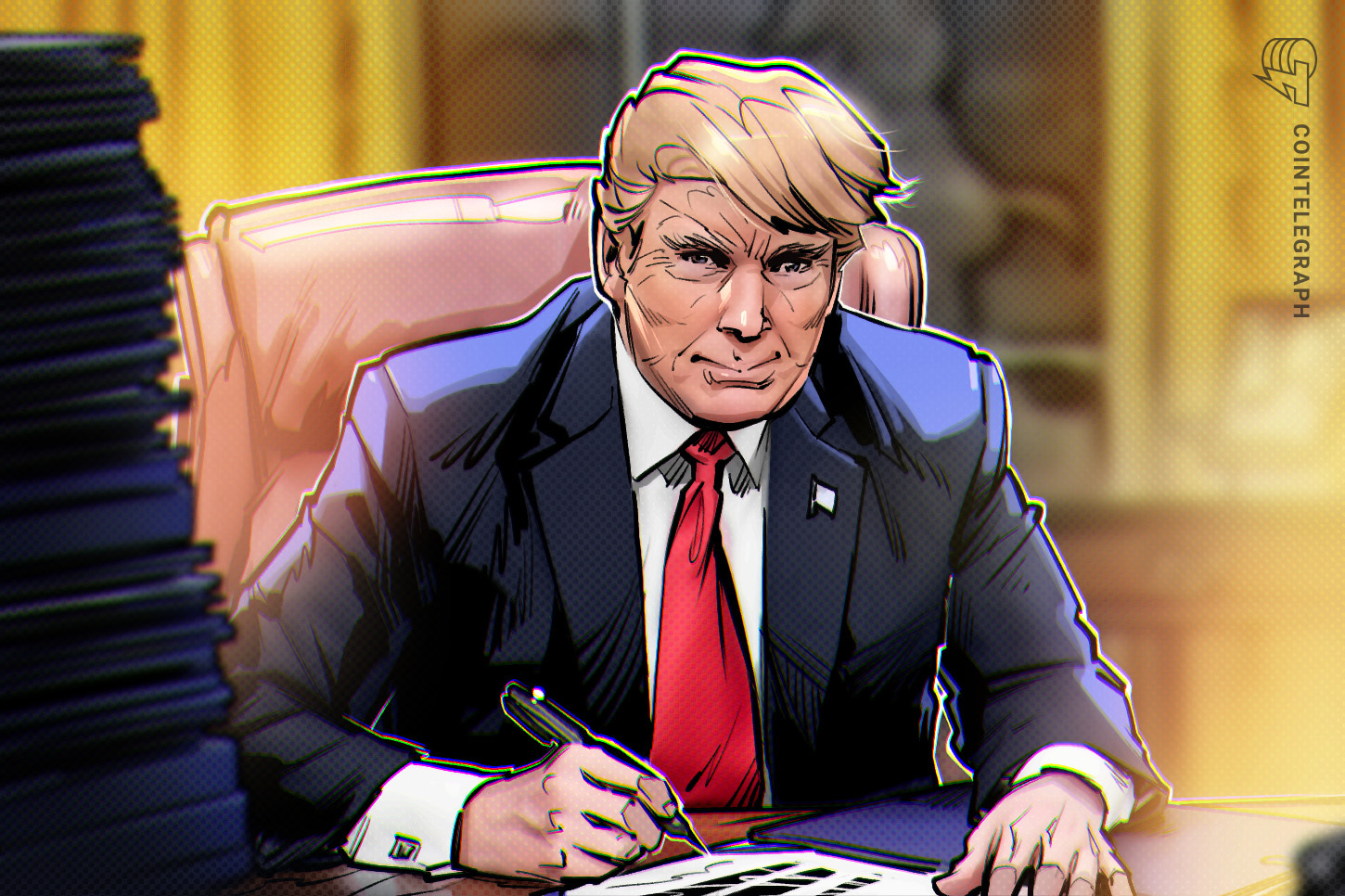
On 17 July 2026, with the United States Senate hours away from a scheduled hearing on the Crypto CLARITY Act, prediction markets put the odds of the bill becoming law at an all-time low. The shift, captured by WatcherGuru's 14:38 UTC dispatch, lands the same week the White House tried to muscle the legislation across the line: President Donald Trump met with US senators on 16 July to push the bill forward, a session first flagged by WatcherGuru at 17:06 UTC the same day and confirmed in Cointelegraph's own report at 04:18 UTC. By 17:38 UTC, the same channel was reporting the bill would not be signed into law this year.
For a sector that has spent eighteen months telling itself Washington was finally ready to legislate, the moment is clarifying. CLARITY was never going to be a one-vote bill. It is a turf war between the Securities and Exchange Commission, the Commodity Futures Trading Commission, the banking lobbies and the digital-asset industry over who decides what a token is. The White House can lean. It cannot write the statute. And the chamber the bill has to clear is one in which, as Politico reported via WatcherGuru at 22:24 UTC on 16 July, the Democratic caucus is not on board.
The hearing is a hearing, not a vote
Congress convened on 17 July to discuss the bill, per WatcherGuru's 14:09 UTC alert. A hearing in committee is the procedural way of telling the industry: we are still talking. It is not the procedural way of telling the market: a floor vote is imminent. The distinction matters because digital-asset lobbying has spent the year conflating the two. Committee mark-ups were treated as inflection points. Senator-level roundtables were treated as crossover events. The CLARITY Act, as drafted, allocates primary market-structure authority over digital assets to the CFTC, narrows the SEC's reach over token trading, and creates a registration pathway for non-security digital commodity intermediaries. None of those provisions is small. None of them is uncontested.
The Senate's August recess now functions as a hard deadline. Bills that have not cleared committee by the time members leave Washington tend to die there. The watch list is short: a markup, a manager's amendment, a floor vote in the Senate, a conference with the House, a signature. That is four moving parts in roughly six weeks of working days, against a bill that has not yet been reported out of committee.
The math problem nobody can solve
The bill's problem is not novelty. It is arithmetic. Senate Democrats have signalled, through Politico's reporting on 16 July, that they are not prepared to support the package as currently drafted. That is a structural statement, not a tactical one. The Senate operates on a 60-vote threshold for most legislation of this consequence. Republicans hold 53 seats. CLARITY therefore needs at least seven Democratic votes to reach 60. The path through the chamber runs straight through the Democratic caucus, and the caucus has, for now, declined to walk it.
The industry counter-narrative is that a tighter, narrower bill could peel off the necessary votes. That is plausible, and it is the version of events most often told to clients of prediction markets. It is also the version of events that has been told for roughly fourteen months without producing a marked-up text. The narrower the bill, the more it pleases one set of bank lobbyists and offends another. The CFTC-jurisdiction question, in particular, is the kind of fight that survives every round of compression. Treasury, the SEC and the banking committees all have views. None of those views are aligned.
What the White House can and cannot do
Trump's 16 July meeting with senators was a presidential attempt to substitute executive energy for legislative coalition. There is a long American tradition of that approach. It works best when the underlying policy is broadly popular and the chamber is procedurally paralysed. CLARITY is neither. The bill is contested by incumbents who have spent years building regulatory authority over the assets in question, and the chamber has functioning procedures for moving legislation. The White House can whip. It can threaten. It can promise. It cannot amend a Senate draft on its own.
The structural pattern here is older than crypto. Incumbent regulators rarely give up jurisdiction in a single legislative cycle. The 2010 Dodd-Frank fight over the CFTC and SEC took more than a year. The 2002 Sarbanes-Oxley bill, comparatively narrow, took months of negotiation. CLARITY is doing both at once, against a calendar that does not bend.
What it means if the bill dies on the vine
If CLARITY does not clear before recess, the practical consequence is that digital-asset regulation in the United States continues to be made by enforcement action. The SEC will continue to bring cases. The CFTC will continue to assert its own reading. The industry will continue to fund litigation budgets rather than compliance budgets. None of this is catastrophic for any single firm. It is corrosive for the sector as a whole, because the cost of regulatory uncertainty compounds.
The forward question is whether a 2027 path opens. That depends on three variables outside the bill's text: the composition of the next Congress, the appetite of the SEC chair to litigate versus negotiate, and the political economy of an industry that has now seen its Washington moment deferred twice. None of those variables is settled.
What the sources do not settle
The sources disagree on framing more than on facts. WatcherGuru, drawing on prediction-market prints, treats the all-time-low odds as the headline. Politico, as relayed through the same channel, treats the Democratic opposition as the operative constraint. Cointelegraph frames the 16 July meeting as a procedural step rather than a turning point. Each framing is consistent with the underlying reporting. The synthesis is that the bill is alive procedurally and dead politically for this calendar year, and that those two facts are likely to coexist through August.
What the sources do not specify, and what this publication cannot responsibly assert, is whether a manager's amendment is imminent, which senators have shifted position, or what specifically the Democratic caucus is demanding in exchange for votes. The reporting has not yet crossed that threshold. Until it does, the honest reading of the public record is that the calendar has won.
Desk note: Where wire coverage framed the 16 July meeting as a turning point, Monexus framed it as a procedural event against a binding deadline, and treated the prediction-market print as evidence of coalition collapse rather than sentiment.
Wire provenance
This editorial synthesis draws on the following public wire/social posts:
- https://t.me/s/WatcherGuru
- https://t.me/s/WatcherGuru
- https://t.me/s/WatcherGuru
- https://t.me/s/WatcherGuru
- https://t.me/s/WatcherGuru
- https://t.me/s/WatcherGuru