Burnham takes the Labour crown: a Greater Manchester mayor steps into 10 Downing Street
Andy Burnham is named Labour leader and inherits the premiership on Monday, with a stated mission to "bring back hope" and a fight against an emboldened Conservative opposition still ahead.
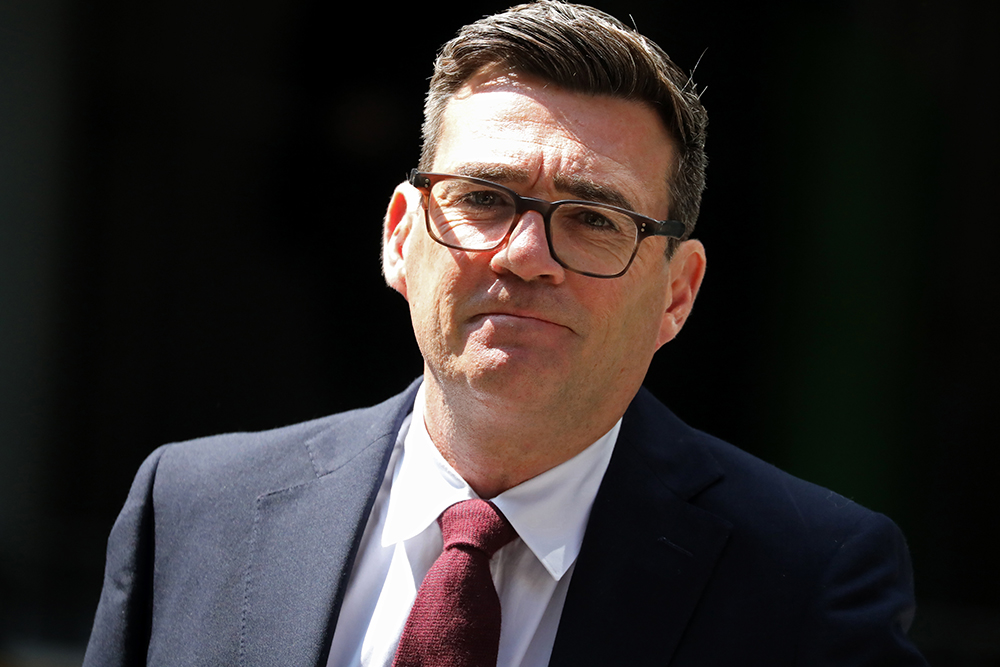
Andy Burnham was named leader of the UK Labour Party on 17 July 2026 and will be installed as Prime Minister on Monday, succeeding Keir Starmer in a handover that bypasses the more familiar Westminster talent pipeline in favour of a regional mayor who built his political brand north of Birmingham. Burnham framed the moment in a single sentence, reported by Telegram channels @BRICSNews and @osintlive and amplified by @disclosetv on X at 12:41 UTC: "I am for us, for all of us," with a stated mission to "bring back hope." The brevity is the message. The next occupant of 10 Downing Street is pitching himself as a unifier rather than a faction leader, and the pitch arrives at a moment when the Conservative opposition has spent months publicly reorganising around exactly that grievance: that Labour's Westminster operation has lost touch with voters outside the M25.
The mechanics of the handover are unusual. Burnham does not sit in the House of Commons. He has run Greater Manchester's combined authority since 2017, accumulating the kind of devolved-executive experience that no recent prime minister has brought to the role. He will become PM on Monday, per the @osintlive wire at 12:41 UTC, and the constitutional question of whether he will need to enter Parliament swiftly, via a by-election or a peerage, will dominate the first 72 hours of his administration. That detail is not yet settled in the reporting available to Monexus, and it is the kind of uncertainty that Conservative attack lines are already being drafted around.
A regional brand, a national ceiling
Burnham's political identity is metropolitan and northern in equal measure. He cut his teeth as a Heseltine-style moderniser in the early Blair era, served as Culture Secretary under Gordon Brown, lost the 2010 leadership contest to Ed Miliband, then spent a decade rebuilding himself as a visible mayor who turned up at crime scenes and rail cancellations. The Labour leadership contest he inherits is, by these accounts, less a coronation than a recognition that the party's parliamentary ranks have not produced a figure with comparable public standing. The Conservatives will frame that as a weakness: a PM-elect who has never sat on a government front bench and who has spent nine years answering to a region, not a country. Burnham's defenders will frame it as the opposite: a politician who has already made hard trade-offs on policing, housing, transport and the devolved budget, and who is not owned by any one Westminster faction.
The two readings are not mutually exclusive. A mayor who can command Greater Manchester's regional media without filters is also a mayor whose national exposure has been curated by his own communications team. The first test of the new government will be whether that locally honed voice survives the bruising reality of a hostile press gallery and a Commons where his own back benchers have been told to behave.
What the opposition is already saying
Conservative messaging, in the absence of a confirmed new leader of the opposition in the source material, has settled into a familiar groove: Labour is gambling the country on a regional politician who has never faced Margaret Thatcher's ghost in the Commons chamber. That line of attack is being seeded in the same Telegram and X channels that have carried the leadership news, and it lands because the underlying premise is factually accurate. Burnham has never served as an MP; he resigned from his Leigh seat to run for mayor in 2016. The precedent for non-MP prime ministers is thin. The most recent comparable figure, Lord Salisbury in the 19th century, sat in the Lords. A sitting mayor taking the premiership would be a first in the modern era, and precedent matters in a system as precedent-bound as Westminster.
The counter-read is that voters, particularly in the post-2024 cohort, are indifferent to procedural novelty if the result feels competent. Burnham's standing in Greater Manchester has survived fare disputes, a stadium-safety standoff, and an acrimonious relationship with the previous national government. That is a more useful CV for a divided country than three years on the government back benches.
The structural read
What the British political class is watching, beneath the personnel story, is a deeper shift in where executive authority is generated. The devolution settlements of the 2010s created a new class of politicians with budgets, planning powers, and direct mandates from electorates larger than several small member states. Greater Manchester alone has a population north of 2.8 million. For a decade these figures were treated as a secondary tier; useful for photo opportunities, irrelevant for the serious business of national government. Burnham's elevation, if it completes on Monday, breaks that hierarchy. The next decade of UK politics will be shaped in large part by whether his successors in other combined authorities read his ascent as a model or as a cautionary tale.
The Conservative counter-strategy will be to reassert the Commons as the legitimate site of executive accountability: more select committee inquiries into devolved spending, louder demands for parliamentary appearances, tighter framing of metro mayors as local not national figures. Whether that succeeds depends on a variable the sources do not yet let us quantify: how the British public reads the contrast between a Burnham who has had to deliver visible services and a shadow cabinet that has spent years critiquing from the sidelines.
What remains uncertain
The thread material available to Monexus does not specify how Burnham will take his seat in the Commons, what his first cabinet will look like, or whether any of the sitting leadership contenders withdrew before the announcement reached the wires. It also does not name a confirmed Leader of the Opposition. Those omissions matter: the shape of the next government, and therefore the political weather of the autumn, depends on answers the public reporting has not yet supplied. Treat any confident reconstruction of Burnham's first hundred days, including this one, as provisional until at least one mainstream wire confirms the specifics.
Desk note: how Monexus framed this against the wire. The Telegram and X wires available to us treat the leadership announcement as a fait accompli and move quickly to the Burnham quote. Monexus has held back on the personality-led frame and emphasised instead the devolution question that the wire has not yet named: the structural shift from parliamentary to executive regional power that a sitting mayor in Number 10 would crystallise. We have also flagged, in line with house uncertainty rules, that the Commons-seat mechanism and the shadow-cabinet identity are unresolved in the source set.
Wire provenance
This editorial synthesis draws on the following public wire/social posts:
- https://t.me/bricsnews
- https://t.me/osintlive
- https://t.me/disclosetv
- https://twitter.com/disclosetv/status/2078086900053581824