Cleanup begins in La Guaira as Venezuela counts the cost of the storm
Recovery work is underway in the Los Corales area of La Guaira after the storm, with businesses reopening. The damage assessment is still being compiled.
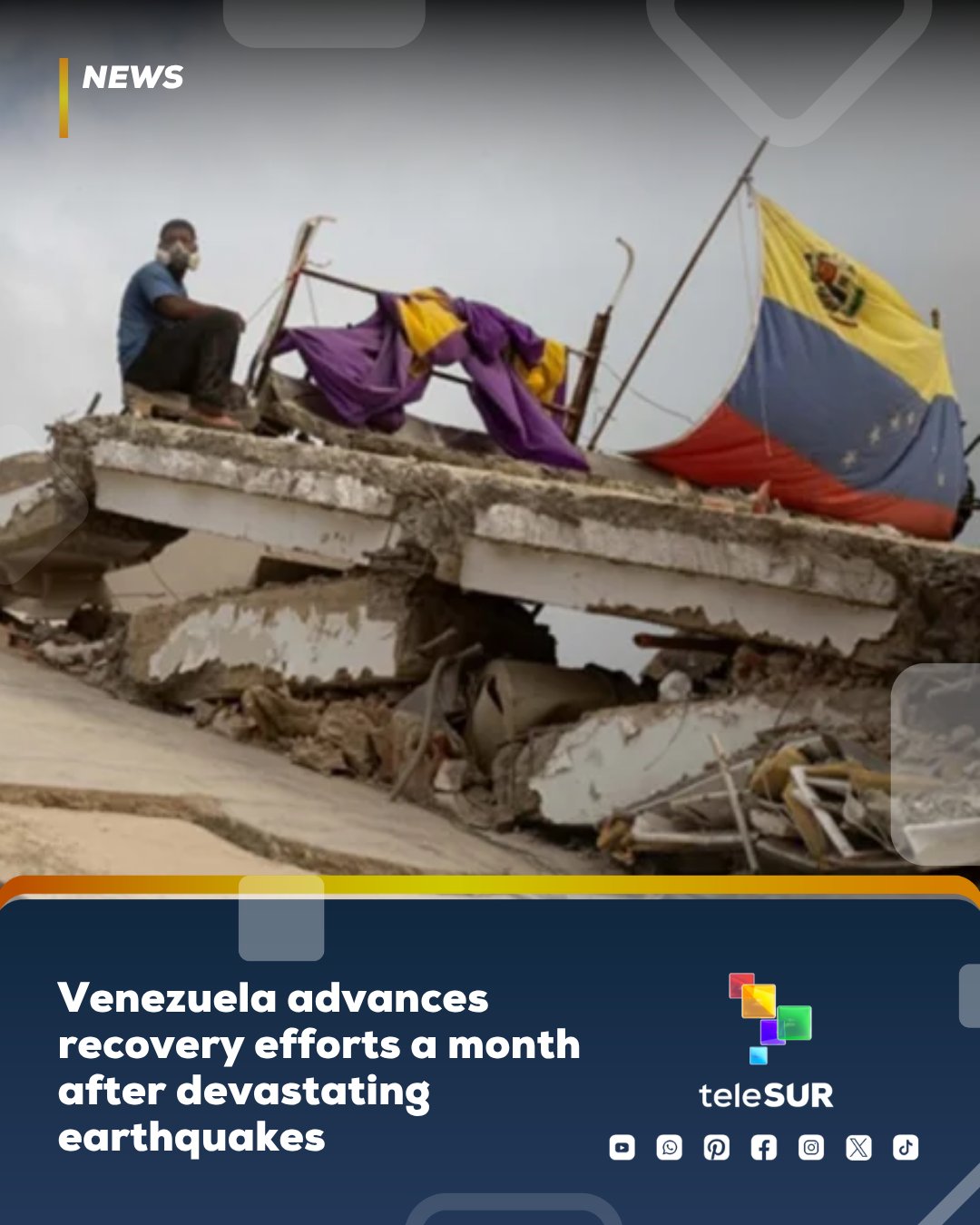
Cleanup crews were working through the Los Corales coastal district of La Guaira on 16 July 2026, clearing debris and reopening shuttered shops after a storm swept the Venezuelan coast. teleSUR English's midday news bulletin, posted at 13:03 UTC, framed the recovery in the district of Los Corales and the wider La Guaira municipality as already underway, with businesses returning to their doors and a tag of solidarity attached to the broadcast under the network's #WeStandWithVenezuela rubric. The brief item did not name the storm system, give casualty figures, or estimate the structural damage; it instead presented a snapshot of a region picking itself up.
What that snapshot leaves out matters as much as what it shows. La Guaira sits on a narrow coastal strip northwest of Caracas, one of the most densely populated stretches of Venezuelan shoreline, and its geography amplifies the impact of even mid-grade weather systems. The bulletin places the human cost at the centre of the framing and the political solidarity at the centre of the language, but it does not yet furnish the numbers that would let a reader judge whether the recovery is genuine, partial, or primarily choreographed for the cameras. The lack of an independent accounting is itself the story: when teleSUR English carries the only available footage, the act of recovery becomes both the news and the message.
What teleSUR English showed
The single source on the desk is a news-aggregator post, 13 seconds of video and a short caption, lifted from teleSUR's daily "#FromTheSouth News Bits" feed. It pins the location to Los Corales, a working-class neighbourhood in the La Guaira municipality that has historically been among the first zones flooded when Caribbean weather systems push squalls into the central coast. The video, distributed through X, shows residents moving through damaged commercial frontage and what appears to be the cleared roadway of a coastal strip. Businesses, the caption says, are reopening. The bulletin is short by design: teleSUR's morning and midday wires are meant to set the frame for the day's news rather than to deliver investigative reconstruction.
That framing choice is consistent with how Caracas-aligned media have covered past storms: a foreground of communal effort, a humanitarian vocabulary, and a flag-waving solidarity hashtag that doubles as a polemic against external sanctions pressure. The pattern is not unique to teleSUR English; regional outlets from Managua to Havana have used similar templates. The report does what such reports typically do, it shows the resilience of the affected population, and it situates that resilience inside a story of resistance to a hostile outside world.
What the wire does not yet tell us
It is the silences that strain the picture. The bulletin does not name the meteorological event, so a reader cannot verify the storm against NOAA's National Hurricane Center advisories or the bulletins issued by Venezuela's Instituto Nacional de Meteorología e Hidrología. There are no casualty counts from civil protection authorities and no figures for displaced households, damaged dwellings, or kilometres of coastline affected. The phrase "recovery and cleanup operations" suggests an organised response, but it does not name the agency leading the effort or describe the chain of command. None of this is invented by the network; it simply falls outside the format of a 13-second "News Bits" item.
For a reader relying on teleSUR English alone, the picture is incomplete in three specific places. The economic cost to merchants in La Guaira, the state of the road network along the Caracas-La Guaira highway, a vital artery that has repeatedly washed out in past storms, and the impact on tourism infrastructure in the Vargas state coastline are all unaddressed. Each is normally reported in the local Caracas press, on Unión Radio, or by regional outlets such as La Patilla, TalCual, and Efecto Cocuyo; those wires did not appear in the desk's inputs.
Why the framing matters
The framing of weather disasters in Caracas-adjacent media has long carried an ideological load. Coverage of regional storms since 2017, including the catastrophic floods in the same Vargas state corridor nine years ago, has been used inside Venezuela to argue that external sanctions impede the state's ability to rebuild and that international isolation leaves Venezuelan citizens to fend for themselves. The slogan bracketed onto this item, #WeStandWithVenezuela, slots into that lineage. It positions teleSUR's South-South readership as a witnessing audience for a country the rest of the Anglophone press is accused of ignoring.
There is a defensible journalistic point inside that position. Independent reporting on Caribbean weather events has historically been thin: when no major international broadcaster has a permanent bureau in Caracas, the camera operators on the ground are often working for state-aligned networks. That gives teleSUR English a near-monopoly on the first imagery, and the framing falls out from there. The same dynamic plays out in much smaller markets from Quito to Kampala; access shapes story. The structural fact that the wire is both the messenger and a part of the message is the one detail any reader ought to hold onto.
A balanced read
Two readings of the same broadcast are available, and both are in the public record. The first is the one teleSUR English plainly offers: a community is recovering, businesses are reopening, and the country is moving past the worst of a damaging event. The second is the more cautious one: a single state-aligned feed has shown us the most flattering 13 seconds from a coastline that often goes under-reported in international media, and we do not yet know what the rest of the picture contains. Both readings deserve space. The first is what the source shows us. The second is what the source does not. A fair report would note both and keep watching as independent wires arrive.
Two things are worth carrying into that watching. Watch for casualty figures from civil protection and from the Pan American Health Organization, which usually reports separately on Caribbean weather events; those numbers will give the event its real scale. Watch for an assessment of the transport corridor along the Caracas-La Guaira highway, since its condition determines how quickly commerce actually returns to Los Corales. Until those figures land, the current picture is a still photograph from one wire, not a verdict.
This article is grounded in a single source, teleSUR English's midday news bit, and Monexus framed it against the structural pattern of state-aligned regional coverage of Caribbean weather events rather than against independent reporting, which has not yet arrived on the desk.
Wire provenance
This editorial synthesis draws on the following public wire/social posts:
- https://t.me/telesurenglish
- https://en.wikipedia.org/wiki/La_Guaira
- https://en.wikipedia.org/wiki/Vargas_tragedy
- https://en.wikipedia.org/wiki/TeleSUR