Fifth night of US strikes hits Bandar Abbas as Centcom announces new wave
US Central Command confirmed a new round of strikes on Iran began at 2pm Eastern on 16 July 2026, the fifth consecutive night of operations, with Fars reporting multiple sites hit in the port city of Bandar Abbas.
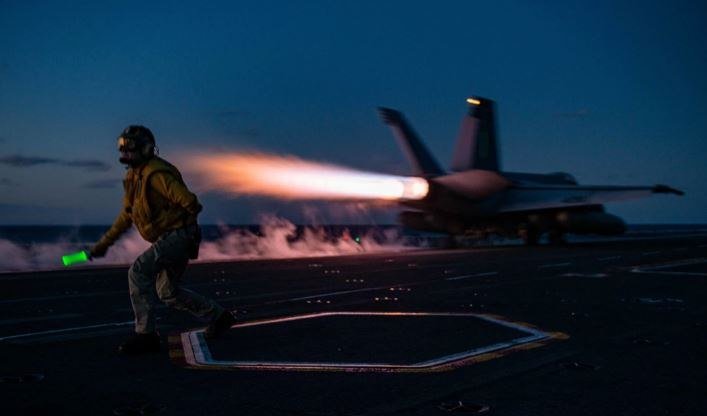
At 2:00pm Eastern on 16 July 2026, US Central Command announced that American forces had begun a new wave of strikes against Iran, the fifth consecutive night of operations aimed, in Centcom's own framing, at further degrading Iranian capabilities. Iranian state-aligned outlet Fars reported that several locations in the southern port city of Bandar Abbas were hit, with at least seven people injured in the strikes. The escalation comes as the war enters a second week of sustained bombardment, and as Iran's civilian infrastructure appears, for the first time in this campaign, to be drawn into the target set.
This is no longer a campaign of surgical attrition. The fifth consecutive night of strikes, with targets now named in a major Iranian port city, signals a widening of the air war into a phase that Iran's leadership will struggle to absorb politically, and that Washington's planners will struggle to keep bounded. The decision to keep striking, day after day, says more about the absence of a diplomatic off-ramp than it does about any specific military objective.
What Centcom said, and what Fars said back
Centcom's statement, carried on X and relayed by Iranian state-aligned channels including Tasnim and Fars, was characteristically spare: a new wave of attacks had begun, the operation was entering its fifth night, and the stated purpose remained the further degradation of Iranian military capability. There was no claim of a specific target destroyed, no battle-damage assessment, no named weapons system. The institutional voice was procedural rather than declaratory, a pattern consistent with a campaign that has been running long enough for the press releases to be running on autopilot.
Fars, by contrast, named the city. Bandar Abbas is not a remote target: it sits on the Strait of Hormuz, hosts the bulk of Iran's naval infrastructure on its southern coast, and is home to the headquarters of the Islamic Republic of Iran Navy. Strikes there, if confirmed at scale, would represent an effort to attrit the very platforms Iran has historically used to threaten shipping through the strait. The early Fars reporting referenced "several locations" in the city, with initial accounts of seven injured. Telegram channels tracking the strikes, including wfwitness, intelslava and rnintel, posted initial reports of explosions in Bandar Abbas roughly contemporaneous with the Centcom announcement, suggesting the public-facing messaging and the kinetic events were tightly synchronised.
A campaign that has outrun its own narrative
The widening is itself the story. When the strikes began, the framing from Washington pointed at nuclear infrastructure, missile production facilities, and the command-and-control nodes of Iran's regional proxy network. That framing still does much of the work in official statements. But a fifth consecutive night of operations, with targets now inside a city that hosts both military headquarters and a civilian population of around half a million, tests the gap between the language of "degradation" and the visual reality of a port city under bombardment.
Iranian state media has, predictably, drawn the opposite conclusion. The headline out of Fars and Tasnim in recent days has been the presentation of the strikes as an act of aggression against Iranian sovereignty, with civilian casualties foregrounded in a way that Iran's domestic audience will recognise from earlier conflicts. That framing should be read with the same scepticism one would apply to a Pentagon readout, but it should not be dismissed. The asymmetry of who can name which target publicly is itself part of how this war is being fought, and how it will be remembered.
The Hormuz variable
Bandar Abbas's geography makes the strikes strategically legible in a way that earlier rounds were not. The city controls access to the Strait of Hormuz, through which roughly a fifth of global oil shipments transit. Any sustained degradation of Iranian naval capability at Bandar Abbas is, functionally, a message to Tehran about its ability to close or threaten the strait in retaliation. It is also, intentionally or not, a message to the wider market about who controls the chokepoint on which Gulf energy exports depend.
Oil futures and freight rates through the strait are the variables to watch in the coming days. The sources surveyed here do not provide price prints, and this publication will not invent them. But the structural read is straightforward: a war that degrades Iran's ability to threaten the strait is a war that stabilises, at least in the short term, the insurance and shipping premia that Gulf exporters have been paying since the campaign began. The cost of that stabilisation, however, is being paid in a port city that did not choose to host a naval headquarters.
What the sources do not yet tell us
Several things remain unclear. The number of distinct strike packages on the night of 16 July is not confirmed in the materials available, nor is the specific weapons inventory used. Fars's figure of seven injured is an early count, drawn from initial reporting and likely to rise. Centcom has not, as of the timestamps captured here, published a strike assessment for the night's operations. Independent verification of which sites in Bandar Abbas were hit, military or otherwise, is not yet on the public record from Western wire services in the materials reviewed.
The diplomatic back-channel is also opaque. The fifth consecutive night of strikes does not, by itself, prove that the off-ramp has closed; it does, however, narrow the window in which one could credibly be opened. The question for the next 48 hours is whether the pattern of nightly announcements, each delivered with the same procedural language, gives way to a more substantive account of what these strikes are meant to achieve, or whether the campaign continues to run on its own momentum. Right now, the second outcome looks more likely than the first.
This publication framed the strikes through Centcom's own statement and the Iranian state-aligned reporting on Bandar Abbas, rather than relying on a single wire's casualty estimate. Where the count of seven injured is reported, the source is Fars; where the strategic intent is described, the source is Centcom's public messaging. The two framings are not equivalent, and a reader looking for a definitive battle-damage assessment will not find one here.
Wire provenance
This editorial synthesis draws on the following public wire/social posts:
- https://t.me/wfwitness
- https://t.me/intelslava
- https://t.me/rnintel
- https://t.me/tasnimnews_en
- https://t.me/farsna