Kyiv's defence shake-up deepens as air force deputy commander follows Fedorov out
Within hours of Mykhailo Fedorov's departure as defence minister, Air Force Deputy Commander Pavlo Yelizarov says he has tendered his resignation. The pattern matters more than either resignation alone.
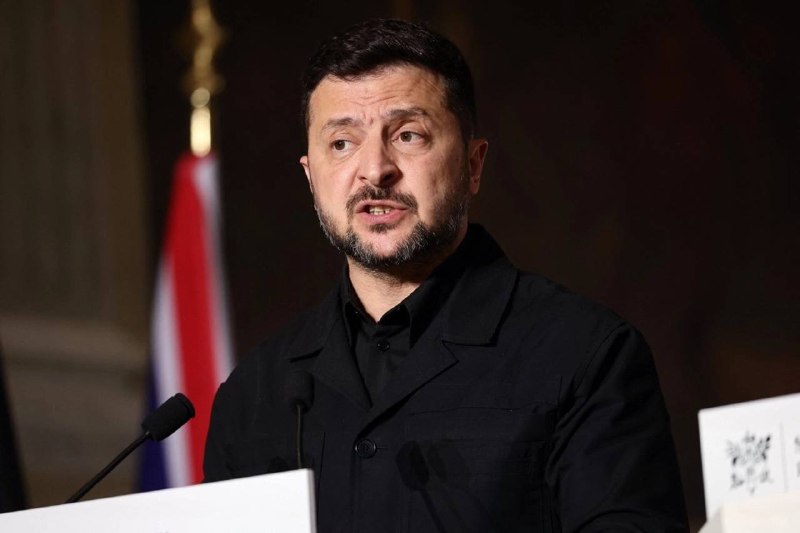
Pavlo Yelizarov, the deputy commander of Ukraine's Air Force, said on 16 July 2026 that he had submitted his resignation, linking the move to Mykhailo Fedorov's exit as defence minister. The announcement, carried at 13:05 UTC by the Telegram channel noel_reports, came roughly forty minutes after Ukraine's commander-in-chief Oleksandr Syrskyi publicly thanked Fedorov for his tenure, a farewell that itself signals that the ministerial change is being framed inside the military command as a planned handoff rather than a sacking.
Read together, the two moves mark the most consequential personnel turnover in Kyiv's wartime security apparatus since the broader government reshuffle began. Fedorov, the 35-year-old former digital transformation minister who took over the defence portfolio in 2024, leaves at a moment when Ukraine's air force is absorbing Western-supplied F-16s and grappling with persistent glide-bomb and Shahed pressure on its forward airfields. His deputy commander following him out the same day is the kind of synchronised signal that, in any other week, would dominate the wartime news cycle.
Fedorov's exit, in his successor's words
Commander-in-chief Syrskyi's midday post on the channel operativnoZSU, timestamped 12:29 UTC, was striking for what it did not say. There was no announcement of a successor, no policy critique, no leaked reasoning. Just a thank-you. "I thank Mykhailo Fedorov for his work as the Minister of Defense of Ukraine. I wish him to remain in the Ukrainian team in the future," Syrskyi wrote. The Ukrainian-language outlet hromadske amplified the line at 12:25 UTC, underscoring that the message originated with the commander-in-chief rather than with the presidential office.
That distinction is not procedural trivia. In Kyiv's wartime information order, a thank-you from Syrskyi carries operational weight: it tells the General Staff, the air force, and the defence ministry's sprawling procurement directorates that the change has the military's public backing. It also pre-empts the read inside Western capitals that the defence minister was forced out over procurement disputes, a framing that has shadowed every ministerial change since the food-procurement scandal of 2023. The thread context for this story does not specify the reasons for Fedorov's departure; Syrskyi's framing implies continuity, not rupture.
The air force follows the minister
Yelizarov's statement is more pointed. According to the channel noel_reports, the deputy commander framed his own resignation as a direct response to the ministerial change: "the decision follows Fedorov's resignation as defense minister," and added, per the Telegram post, that he had "joined Ukraine's Def[ence forces]" under the previous arrangement. The truncated wording is itself revealing. Yelizarov appears to be drawing a line between the team that took over the defence ministry in 2024 and the team he signed up to serve, and saying publicly that line no longer holds.
The sources available to this publication do not record any statement from the Air Force command disputing or contextualising Yelizarov's account. There is no on-the-record response from Acting Minister or from the General Staff in the thread. That absence is itself a data point: in Ukraine's wartime media environment, an unsigned resignation by a serving deputy commander would normally draw an immediate clarification if the institution disagreed.
What this looks like inside the building
The two resignations, taken together, sketch a pattern. The defence ministry is shedding senior figures who arrived together, on what now reads as a coherent political project, and the most exposed operational branch, the air force, is losing a deputy commander rather than absorbing him into whatever arrangement replaces Fedorov. Ukrainian ministries do not publicly publish internal HR rationale, and the thread context offers no specifics on procurement contracts, F-16 maintenance arrangements, or drone-programme accountability that would let an outside reader adjudicate the merits. The honest framing is that the resignation cluster is a signal of internal change, not a verdict on it.
A second reading is also available. Fedorov's tenure coincided with the rapid expansion of Ukraine's drone-industrial complex, the "Army of Drones" procurement vehicles, and the integration of Western air defence systems. A ministerial reset in mid-2026 could reflect a deliberate pivot toward a different procurement posture, perhaps one less centred on the digital-ministerial style Fedorov brought from his previous portfolio. Under that reading, Yelizarov's departure is collateral rather than catalytic, the kind of secondary fallout that follows any senior political exit.
The two readings are not mutually exclusive, and the public evidence does not let this publication choose between them. What can be said is that the visible churn is concentrated at the top of two institutions, the ministry and the air force command, that together decide how Western-supplied aircraft and air-defence systems are integrated into a force under daily ballistic and drone pressure.
What to watch next
Three concrete markers will clarify whether the shake-up is a controlled transition or a more disruptive realignment. First, the formal appointment of a successor defence minister; Ukraine's parliament, the Verkhovna Rada, must vote on the nominee, and that process normally takes days rather than weeks. Second, any replacement at Air Force deputy-commander level, and whether the incoming officer is promoted from inside the air force or parachuted in from the Ground Forces or the Unmanned Systems Forces, the third service branch Kyiv stood up in 2024. Third, the public framing from the President's Office. As of the 16 July thread context, the presidency has not been quoted in the items this publication reviewed; that silence will not last.
For now the record shows two departures, one public thank-you, and a question that the available sources cannot yet answer: whether the change at the top of the defence ministry is the end of a chapter or the beginning of a more unsettled one. The materials do not specify the reasons behind either resignation, and they do not establish whether other senior officers intend to follow Yelizarov's lead. They establish only that, on 16 July 2026, the two most senior uniformed and ministerial figures in Ukraine's air defence chain both moved off the chessboard within forty minutes of each other, and that the commander-in-chief chose to mark the moment with grace rather than explanation.
This publication's framing privileges the on-the-record statements from Ukrainian military and ministry channels and treats the air force command's silence on Yelizarov's account as a soft corroboration rather than a confirmation. The thread context offers no Western wire or independent reporting on the ministerial change; readers seeking external corroboration should treat the Ukrainian military channels as primary until independent reporting catches up.
Wire provenance
This editorial synthesis draws on the following public wire/social posts:
- https://t.me/noel_reports/
- https://t.me/operativnoZSU/
- https://t.me/hromadske_ua/