Syria seizes Iraqi border weapons cache headed for Hezbollah, Damascus says
Damascus says security forces seized long-range missiles, anti-tank rounds and explosive drones concealed in an oil tanker at a crossing near the Iraqi border, the latest in a string of interdictions it has claimed since July 16, 2026.
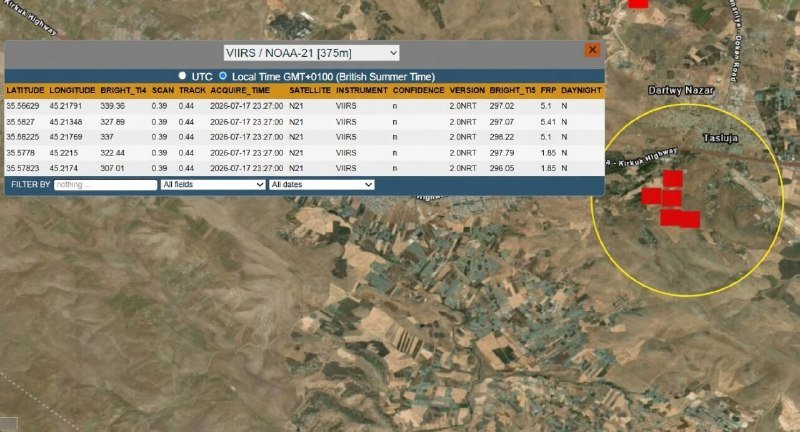
At the Syrian border crossing nearest the Iraqi frontier, customs officers and security forces pulled an oil tanker aside on July 16, 2026 and pried open a cargo they had been tipped to expect. Inside, Damascus says, was a shipment of long-range missiles, anti-tank rounds, and explosive drones bound for Hezbollah in Lebanon, concealed inside the tanker's compartments for the run south to Baniyas on the Mediterranean coast.
The episode lands as part of a broader pattern of interdictions Damascus has now claimed across a single 24-hour window, and it sharpens a recurring question in regional security reporting: when Syria's new authorities announce they have intercepted weapons moving to Hezbollah, who exactly is being thanked, and who is being warned.
What Damascus says it seized
According to the Syrian Border and Customs Authority and the Interior Ministry, the Baniyas-bound tanker was carrying rockets, missiles and drones whose intended recipient was Hezbollah, the Iran-aligned Lebanese movement that has been fighting Israel since October 2023. The same line was repeated almost verbatim across multiple Damascus statements through the afternoon of July 16. The Syrian Ministry of Defence separately claimed to have foiled a smuggling operation stretching from the Iraqi border through Syria and onward to Lebanon's eastern corridor.
Reporting aggregated through Telegram channels tracking Syrian state media and regional security bulletins put the Syrian claim to dozens of explosive drones, anti-tank missiles, and rockets. None of the publicly available statements reviewed here specify the missile type, the manufacturer, the warhead yield, or the numerical breakdown between categories. Syrian authorities framed the seizure as part of routine counter-smuggling work, not as a one-off.
Why the timing matters
The interdiction comes eight months into the transitional government that followed the fall of Bashar al-Assad, and almost a year into the open fighting between Israel and Hezbollah across southern Lebanon. A Syria no longer run from the Assad family's inner circle, but still hosting residual networks with deep ties to Iran's regional logistics, occupies an unusual position: it can plausibly intercept shipments it once would have escorted.
That is the read Damascus wants to project. By publicly cataloguing weapons bound for Hezbollah and tying them to specific crossings and routes, the Syrian authorities are signalling two audiences simultaneously. To Western capitals and to Israel, the message is that the new order is now policing, not facilitating, the old supply lines. To the Shia armed ecosystem that runs through Iran, Iraq and eastern Syria, the message is that transit through Syrian territory has become a calculated risk rather than a routine.
The geography matters as well. Baniyas sits on Syria's Mediterranean coast, south of Tartus. A tanker routing south from the Iraqi border to a Mediterranean port gives the weapons two plausible onward paths: overland through Lebanon's eastern Beqaa Valley to Hezbollah's heartland, or by sea to a Lebanese coastal handover. Both options are familiar smuggling templates for the axis's wartime logistics.
What remains unverified
None of the source material reviewed here includes independent corroboration of the seizure. The reports originate with Syrian ministries and propagate through Telegram channels that mirror Syrian state communications and pro-Damascus regional outlets. There is no visible confirmation from Iraqi border authorities, from Lebanese customs, from Hezbollah itself, or from any Western intelligence or wire service in the materials to hand.
That absence cuts both ways. Damascus has been loud about interdictions before, and it has not always released the recovered materiel for independent inspection. Critics of the new Syrian government have argued in parallel coverage that Damascus sometimes announces seizures that double as political theatre, useful for accreditation with the United States and Gulf states while leaving intact the discreet channels that keep cash and influence flowing.
The structural question, then, is whether Syria is genuinely severing a logistics artery, or selectively squeezing one route to claim credit while others continue to move. The Iraqi border is long, porous, and runs through territory held by a mix of Syrian government forces, Kurdish-led Syrian Democratic Forces units, and residual Iran-aligned militia presence. Damascus controls parts of the frontier, not all of it.
The stakes for the regional corridor
Hezbollah's resupply is one of the most sensitive files in the current Middle Eastern war. The movement has fought Israel across Lebanon's south for the better part of two years, taking heavy casualties and losing senior commanders. Israeli strikes have repeatedly targeted what Israeli officials describe as the land bridge from Iran through Iraq and Syria to Lebanon, and Israeli media have carried accounts of interdictions on Syrian soil carried out by Israeli aircraft. A Syrian-led seizure, announced by Damascus itself, is a different category of event from an Israeli strike on a convoy inside Syrian territory, and it carries different signalling weight.
For the Syrian transitional authorities, the interdiction is a cheap way to build a credibility ledger in Washington and in Arab capitals that have demanded a clear break from the Iranian axis. For Iran and Hezbollah, the loss of a confirmed route, if confirmed, is a tactical problem that can be routed around but not ignored. For Iraq, the episode puts renewed pressure on Baghdad to be seen controlling its own western frontier, a file it has struggled with since 2023.
The honest reading of the July 16 announcements is that they are credible enough to take seriously, but incomplete enough to need watching. Damascus says it stopped the shipment. Independent confirmation is the next test.
This article draws exclusively on Syrian state-channel reporting and regional security bulletins that aggregate it. The claims made here are Damascus's claims; corroboration from Iraqi, Lebanese, Israeli or independent Western sources was not available in the source set.
Wire provenance
This editorial synthesis draws on the following public wire/social posts:
- https://t.me/wfwitness
- https://t.me/wfwitness
- https://t.me/ClashReport
- https://t.me/englishabuali