Sifuna's ouster rattles Kenya's opposition hours after it was confirmed
Nairobi's senator learned he had been replaced as deputy minority whip on Wednesday night, then watched his own coalition vote to reject the change the next morning.
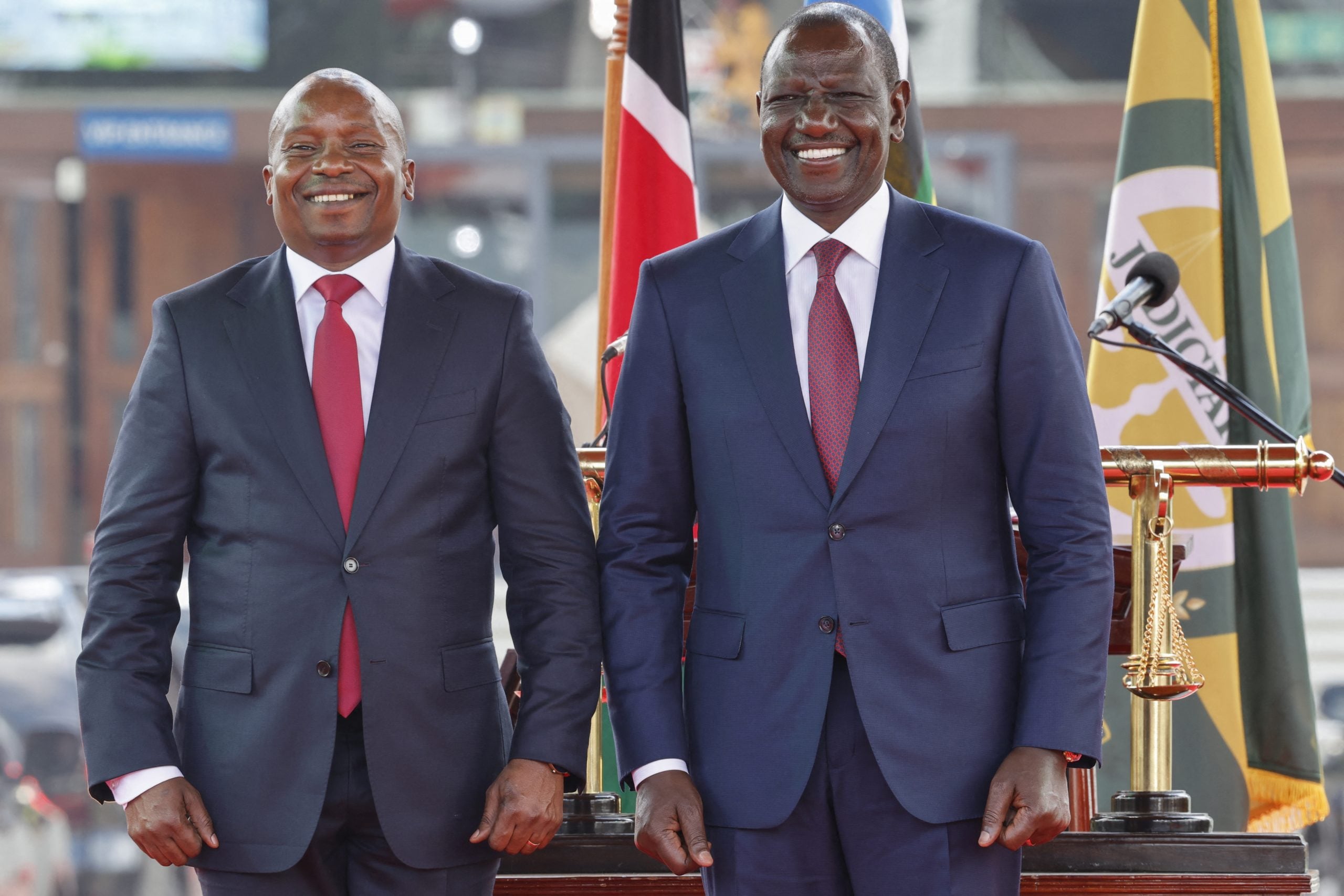
Edwin Sifuna, the Nairobi senator and long-serving secretary-general of the Orange Democratic Movement, was removed as Senate Deputy Minority Whip on the night of 15 July 2026 after a closed-door Azimio la Umoja meeting that ran past midnight, with Speaker Amason Kingi announcing that Migori senator Eddie Oketch would take the post. By midday on 16 July, the same coalition that engineered the switch was writing to the Speaker asking him not to effect the changes, an about-face that exposes how fragile the party's authority inside its own parliamentary caucus has become.
The procedural back-and-forth matters less than what it reveals: Azimio's coalition arithmetic is no longer settled enough to absorb a contested reshuffle without splintering. A late-night council vote can install a whip; a written protest from the same council can demand the Speaker unmake him. The substance of Kenyan opposition politics has migrated, again, into the management of internal loyalty.
A coalition that cannot decide
The sequence is short and the record clean. According to a Standard Kenya dispatch timed at 12:39 UTC on 16 July, Speaker Amason Kingi announced that Sifuna had been replaced as deputy minority whip by Eddie Oketch, the Migori county senator. Less than 24 hours later, at 13:11 UTC on 16 July, a separate Standard Kenya report records that the Azimio la Umoja council had moved to protest the removal of Sifuna and asked Kingi not to effect the change. The two bulletins describe a coalition acting against itself inside a single news cycle.
In Kenya's Senate, the minority whip's office is procedural rather than executive: it organises debate timing, counts votes within the minority side, and negotiates the order paper with the majority leadership. The post is, however, also a signal of who the coalition trusts to enforce discipline on the floor. Replacing a sitting whip is rarely a routine adjustment; it usually implies that the whip had stopped delivering the side the council wanted.
The visible cause, on the available reporting, is a fissure inside the ODM wing of Azimio, where Sifuna's national role as secretary-general has at times put him at odds with senior figures more cautious about the coalition's posture toward the Kenya Kwanza government. Sifuna has been one of the more outspoken opposition voices on street mobilisation and on the cost-of-living question, and his removal narrows the room for that posture inside the chamber. His replacement, Eddie Oketch, comes from the Migori seat and from a younger cohort of legislators who have so far kept a lower national profile. The Standard Kenya bulletins do not record either senator's prior statements on the swap; the framing so far is procedural, not ideological.
The council vote and what it shows
A coalition council protesting its own whip change is, in parliamentary terms, a confession that the original decision did not survive contact with the membership. The letter to the Speaker, dated the morning after the announcement, is the kind of document that gets filed when a faction within the council believes the meeting that made the decision was either stacked or unrepresentative. The fact that the letter is being written publicly, rather than settled in private caucus, suggests the dispute has already spilled beyond Azimio's internal dispute-resolution channels.
The Senate now sits with two competing signals. Kingi's announcement, made from the chair, is on the parliamentary record. The council letter, if upheld, asks the Speaker to treat that record as if it had not happened. Speaker Amason Kingi, who holds the procedural authority over such matters, has not, in the available reporting, indicated how he intends to respond. The cleanest outcome for the institution is that the matter is referred back to the Azimio caucus to be re-decided properly, with the Speaker declining to enforce a change until the coalition speaks with one voice.
There is an alternative read worth keeping in view: that the council protest is itself a tactical move by Sifuna's allies to test how much procedural capital the replacement has within the coalition before the next major vote. In that reading, the letter is not a sincere reversal but a pressure instrument, and the substantive outcome is whichever side can muster a clean majority when the chamber next convenes on a contested motion. The available reporting does not resolve between these two interpretations, and Monexus will not pretend it does.
What the party still controls
The deeper question is institutional. Azimio la Umoja is a coalition of convenience stitched together from the ODM core, Wiper, Jubilee fragments, and a handful of smaller parties, and it has never settled on a clear internal mechanism for resolving disputes between its national parties and its parliamentary caucus. The whip swap, and the immediate protest of the swap, are best read as the visible edge of that unresolved architecture. A coalition that cannot agree, even for 12 hours, on who its deputy minority whip is, will struggle to hold a line on the larger questions: budget negotiations, the next IEBC reconstitution, the cost-of-living protests that have come to define the opposition's street strategy.
Sifuna's individual standing complicates the picture. As ODM secretary-general, he sits on the party's national executive and is one of the more visible national spokesmen for the opposition, a position that gives him leverage independent of his Senate seat. Removing him as whip narrows his procedural footprint without touching his party role; the council protest suggests his party role may be where the next round of pressure lands. The Kenya Kwanza government, for its part, has reason to watch the dispute from a distance: a fractured opposition is easier to outvote on routine business, and harder to coordinate against on national moments.
Stakes, and what to watch next
For Kenyan voters, the immediate stakes are narrow: the deputy minority whip is a procedural post, and the chamber's substantive agenda will continue whatever the Speaker decides on this matter. The longer stakes are about whether Azimio's coalition can still discipline itself into a recognisable opposition, or whether internal disputes will, as they have in past parliamentary cycles, push opposition politics back onto the street. Sifuna has been one of the more disciplined voices for keeping the coalition inside institutional channels; his removal, even if reversed, raises the question of who inside Azimio wants that discipline enforced, and at whose cost.
Three things to watch in the coming week: whether Speaker Kingi publicly responds to the council letter or treats the matter as internal to the coalition; whether the ODM national executive weighs in on Sifuna's party position, separate from his whip role; and whether the Senate's order paper, when published, lists Eddie Oketch or Edwin Sifuna in the deputy minority whip slot. Any of those three answers will tell the story the Standard Kenya bulletins have started.
Desk note: Monexus frames this as an institutional story about coalition discipline rather than a personality story about Sifuna. The wire reporting from Standard Kenya sets the procedural facts and stops there; this piece reads the same facts against the longer arc of Azimio's coalition management. Where the bulletins differ on tone, this publication follows the more procedural of the two.
Wire provenance
This editorial synthesis draws on the following public wire/social posts:
- https://t.me/StandardKenya
- https://t.me/StandardKenya