Ol Kalou by-election tests Kenya's ruling coalition as vote closes in Nyandarua
Voters in the high-altitude Nyandarua constituency turned out on 16 July 2026 for a parliamentary by-election that has become an early read on President William Ruto's United Democratic Alliance one year before the next general election.
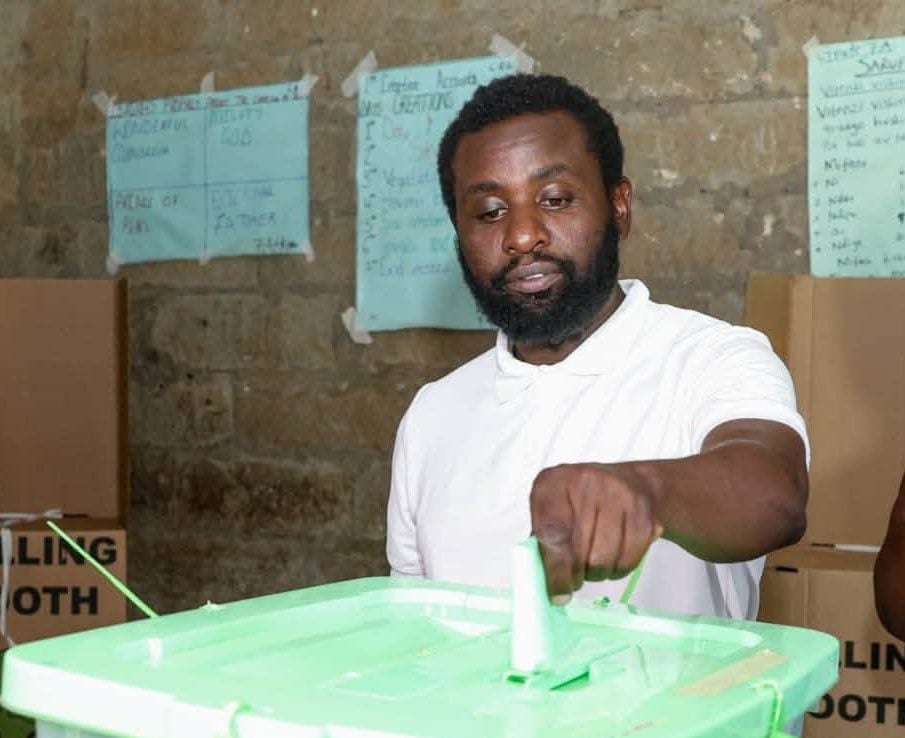
By midday on 16 July 2026, voters at Huruma Primary School in Ol Kalou, the administrative capital of Nyandarua County in Kenya's central highlands, had processed a steady but unhurried queue. United Democratic Alliance (UDA) candidate Samuel Muchina stood in front of the polling station and spoke to reporters after casting his ballot, the image captured by The Star Kenya's James Gichigi. The scene was orderly, but the stakes were not. Ol Kalou had returned to the ballot because the seat fell vacant, and every major party in the country treated the contest as a stress test of the governing coalition roughly twelve months before Kenya's next general election.
The Nyandarua race matters because it sits at the seam between two political worlds. The county is part of the Mt Kenya region, the vote-rich bloc that lifted William Ruto to the presidency in 2022 and that has, since then, become the most contested terrain in Kenyan politics. A UDA hold in Ol Kalou would confirm that Ruto's party can still turn out its base when the official slate is contested. Anything thinner would be read, fairly or not, as the first crack in a coalition that has already absorbed one cabinet reshuffle and persistent criticism over the cost of living.
A test of the Ruto machine
UDA's deployment for the by-election tracked the pattern it has used in every by-election since taking power: a heavy presidential surrogate presence, branded campaign materials in the ruling party's colours, and a candidate, Muchina, cast as a local man with national backing. The party's incentive to perform here is not just the seat itself. Mt Kenya voters have watched the previous elected representative vacate the position, and a low turnout or a narrow win would be the kind of result that opposition strategists can carry into 2027. Ruto's lieutenants cannot afford either outcome. The ruling party needs to demonstrate, with numbers, that the coalition it stitched together after the 2022 split with the former deputy president's faction is still delivering at the ballot box in its stronghold counties.
The opposition's calculation is the mirror image. The Azimio-aligned parties have treated every Mt Kenya by-election since 2023 as a referendum on Ruto rather than a contest over the local candidate. A close finish, even a narrow loss, would let the opposition message write itself: that the cost of living has eroded the personal loyalty Mt Kenya voters once extended to Ruto, and that the UDA's grip on its home region is loosening. The fight is therefore less about Ol Kalou the constituency than about what Ol Kalou is allowed to mean.
What the wire says, and what it does not
The two wire images that surfaced on 16 July frame the contest in deliberately narrow terms. The Star Kenya's frame centred on Muchina, the UDA candidate, and the act of voting at a specific polling station in Huruma. Daily Nation's frame centred on accessibility: a voter helping his physically challenged elderly mother to the booth at the same school. Neither frame mentions a turnout figure, a competing candidate's name, or a reported incident. That silence is itself the story of how Nairobi's political desks approach a by-election that the commentariat has been writing about for weeks: the wire reports the moment of the vote, while the analytical weight lands elsewhere.
The framing choice matters. By focusing on the candidate and on a sympathetic act of family assistance, both outlets produced copy that travels well on social platforms without taking a position on the political stakes. That is the correct editorial instinct for a polling-day dispatch. It also leaves the analytical labour to follow-up pieces, op-eds and the eventual results announcement. A reader looking on 16 July for a verdict on whether Ruto's coalition has held Nyandarua will find none in the wire, only the raw material from which a verdict can be constructed.
Reading the result, whenever it comes
Whatever the IEBC announces in the days after 16 July, the contest will be parsed through three filters that have become routine in Kenyan political journalism. The first is the turnout filter: anything under forty per cent of registered voters will be read as evidence of base erosion on one side or the other, depending on who wins. The second is the margin filter: a UDA win under ten points in a county it swept in 2022 will be treated by the opposition as a moral victory and by the government as a warning. The third is the spoiler filter: small parties and independent candidates, of which there were several listed on the ballot, will be analysed for whether their vote share was disproportionately drawn from UDA or from the opposition, with each reading implying a different coalition fault line ahead of 2027.
The structural point underneath those filters is that Kenya's electoral system magnifies small shifts. The country uses a first-past-the-post system for parliamentary seats layered onto a two-round presidential contest, and Mt Kenya counties in particular have a record of moving in disciplined blocs when a strong local signal goes out. A by-election in a single constituency cannot move the national dial on its own. But the cost of being wrong about what it signals is high enough that every major party has read Ol Kalou as if it were a national poll.
What is still unknown
The sources available on 16 July do not yet record the result, the turnout figure, or the number of candidates. They do not record any IEBC statement on the conduct of the vote, any observation mission findings, or any official reaction from Ruto's office or the opposition principals. The next twenty-four to seventy-two hours will determine whether Ol Kalou becomes a footnote in the 2027 cycle or the first data point in a longer story about a coalition under pressure. Until those numbers are published, the polling-day images are the only verifiable record: a UDA candidate at a Huruma school polling station, and a son helping his mother to the same booth. The political verdict belongs to the count, not to the cameras.
This article has been written using only the wire imagery and captions available at the time of publication. No official results, turnout figures, or statements from party principals had been verified by the IEBC at the time of filing.
Wire provenance
This editorial synthesis draws on the following public wire/social posts:
- https://t.me/TheStarKenya
- https://t.me/DailyNation