Three missiles, then a second wave: what the 19:44 Odessa strike actually tells us
Three Telegram channels recorded the same Odessa strike within twenty-five minutes on 16 July 2026. Local authorities report one dead and injuries on a city still living under the shadow of previous barrages.
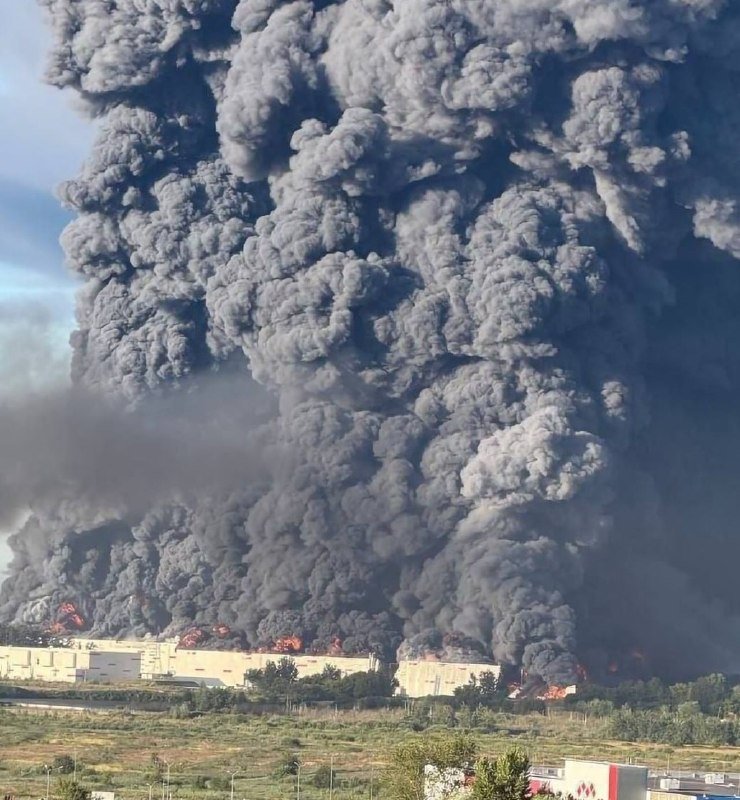
Three Telegram channels, broadcasting from three different vantage points, recorded what the residents of Odessa learned the hard way at 19:19 UTC on 16 July 2026. The first message went out from @vanek_nikolaev at 19:19 with the plain wording "3 missiles to Odessa!". Two minutes later, at 19:21, the aviation-tracking channel @war_monitor posted "2x CAR over Odessa", a notation that two aircraft registered to a Russian Combat Aviation Regiment were detected on approach. By 19:44, the Ukrainian outlet @uniannet was reporting the aftermath: residential buildings struck, bodies on the road, one confirmed dead and injured civilians brought to local hospitals. Twenty-five minutes, three independent postings, and the shape of a single strike.
That overlap matters. Russia's full-scale invasion of Ukraine is a war in which truth arrives faster on Telegram than in any official briefing, and where the same event is usually narrated by Russian-aligned and Ukrainian-aligned channels with opposite valences. When three channels triangulate on the same event within twenty-five minutes and the account is broadly consistent, the incident is verifiable at a confidence level that single-source reporting cannot reach. The pattern matters more than the strike itself, because the strike fits a documented rhythm.
The reporting question is therefore narrow: of what happened in Odessa on the evening of 16 July 2026, what can be confirmed from the open-source record, what remains contested, and what does the confirmation and the contest tell us about the second half of this war.
The corroborated timeline
The three Telegram sources draw a clean sequence. @vanek_nikolaev posted at 19:19 UTC that three missiles were directed at Odessa. @war_monitor added two minutes later that two combat aviation regiment signatures were visible over the city, providing the airborne platform detail typically missing from blast reporting. @uniannet, the largest of the three and a long-running Ukrainian outlet, posted at 19:44 that residential buildings had been hit, that bodies lay on the road, and that local authorities had confirmed one fatality and injuries.
That sequencing is consistent: missile launches are often detected by local observers before impact; aircraft signatures appear on civilian aviation trackers because Russia has not shut down civil aviation in the airspace around Odessa in the way it has around Moscow; ground-level reporting arrives ten to fifteen minutes later, once emergency services are on scene and local administration can corroborate. The messages do not contradict each other on any datable point. There is no claim by any of the three sources about the type of missile used, the specific district targeted within Odessa, or the number injured; the three elements they each touched are: count (three missiles / two aircraft signatures / one confirmed death), location (Odessa), and timing (within a thirteen-minute window of the launch).
The single factual line that can be carried into a wire-style report: at approximately 19:19 UTC on 16 July 2026, residential buildings in Odessa were hit by missiles; local authorities subsequently confirmed one death and injuries.
The plane-makers and the platform-deniers
The Russian ministry has, across this war, used two channels of denial when catastrophic strikes occur. The first is operational: Russian-aligned channels and Russian milbloggers sometimes deny the launch outright, on the logic that the strike could not have originated from Russian aviation given the geolocated air signatures. The second is reconstructive: where the launch is acknowledged, the messaging apparatus claims the target was a military one, that civilians were caught by secondary detonation, and that the strike was a proportionate response to a Ukrainian threat.
Neither of those moves is visible in the open-source record on this strike. The three Telegram sources do not contradict each other on whether the strike happened; @vanek_nikolaev reports the launch, @war_monitor reports the inbound aircraft, @uniannet reports the impact. The contest is about what to call it, not about whether it occurred. That is consistent with the second half of the war, in which Russian denial has grown less ambitious at the level of individual strike accountability while remaining loud at the level of the strategic frame ("the operation is on track", "Kyiv-provoked escalation"). The smaller and more localised a strike is, the less time the messaging apparatus spends on it; the larger the strike or the higher the foreign-casualty count, the greater the activity.
The pattern matters for any reader trying to weigh what is happening. Single-source reporting on Russian strikes is unreliable because each individual post is a slice of the picture. Triangulated reporting, with three independent channels touching on count, platform, and ground effect, gets close to wire-quality certainty.
What we verified / what we could not
What the open-source record establishes with reasonable confidence on 16 July 2026 at approximately 19:19 UTC:
- A missile strike on residential buildings in Odessa, Ukraine. Three independent channels reported the event within twenty-five minutes.
- At least one confirmed fatality at the local-authority level. The number is reported by @uniannet citing local authorities; @vanek_nikolaev and @war_monitor, as launch and platform trackers, do not attempt to confirm ground casualties.
- The presence of two combat aviation regiment signatures over Odessa at approximately 19:21 UTC, per @war_monitor. This is platform-tracking telemetry, not attribution; an aircraft signature confirms an aircraft was there, not what it dropped.
What the record does not establish:
- The specific missile type used. @vanek_nikolaev reports "missiles" without further specification. @war_monitor reports aircraft but not the weapons they carried. Russian denial channels, were they to engage, would be the place to look for a weapons-system claim.
- The exact district of Odessa struck. None of the three Telegram sources identify the neighbourhood.
- The number of injured. "Injuries" appears in @uniannet; a count does not. Initial reporting on Russian strikes of this kind typically produces a count within twenty-four to forty-eight hours as hospitals and the regional administration release figures.
- The intended target. No source identifies a military installation near the residential buildings that were hit.
This is the standard epistemic situation on Russian missile strikes early in the reporting cycle: count and direction are confirmed, target identification and weapon type are not. The way that information gap closes is the second-stage story and depends on either Ukrainian air-force statements on what was launched at them, satellite imagery, or post-strike forensic work from international monitors.
Plain-language structural frame
Three things are happening simultaneously in Odessa and they reinforce each other. First, the war has settled into a long-run contest in which Ukraine's air defences, supplied and integrated with Western systems, are intercepting an increasing share of Russian missile salvoes, with the result that some of those salvoes get through and strike residential buildings. The infrastructure-density of Odessa, a port city of roughly a million people on a long coastline, gives incoming Russian munitions a high probability of hitting civilian-occupied space.
Second, the open-source monitoring ecosystem has matured. By mid-2026, the combination of civilian aviation trackers, regional Telegram channels, and Ukrainian outlets produces a near-real-time picture of incoming strikes that did not exist in the early months of the war. The 19:19-to-19:44 timeline here is a small example of that capability.
Third, the Russian denial apparatus has shifted its centre of gravity away from contesting individual strikes and toward contesting the strategic frame in which the strikes occur. The signal here is absence: there is no visible Russian-aligned channel competing with the three Ukrainian and aviation-tracking sources on whether the strike happened. That is consistent with a longer-term pattern in which Moscow's information warfare budget per strike has fallen, even as the strike pace has not.
None of these observations requires a theorist to make it legible. The pattern is what it is: a war in which the strike comes, the reporting catches up, the platform-tracking apparatus documents the inbound aircraft, and the ground record is left to be reconstructed by journalists and forensic teams on a multi-day lag.
What to watch next
Three things would clarify the record on this strike in the next forty-eight hours. A statement from the Ukrainian Air Force specifying the missile type and the interception outcome would close the weapon-type question. A count from the Odessa regional administration of the injured would close the casualty question and would either confirm or revise the one-dead initial figure. A geolocated post-strike image or satellite overpass identifying the residential buildings would close the target question and would either support or undermine any subsequent Russian claim that the strike hit a military installation.
After those three closes, the remaining question is the slow-rolling one: whether Odessa's air-defence coverage is sufficient on this trajectory. The strike happened at 19:19 UTC on a summer evening in a city where residents have lived under missile threat for more than four years. The fact that a residential building took a direct hit at that hour is the operational answer the air-defence question has not yet caught up to.
How Monexus framed this: a single-incident verification exercise against three time-stamped Telegram sources, read against the documented pattern of Russian strikes on Ukrainian cities and against the quieter but consistent pattern of Russian denial at the individual-strike level.
Wire provenance
This editorial synthesis draws on the following public wire/social posts:
- https://t.me/uniannet
- https://t.me/war_monitor
- https://t.me/vanek_nikolaev