Three Kh-59s into a residential block: Odesa strike punctuates a forecast Zelenskyy made hours earlier
A Russian missile strike on a residential area of Odesa on the evening of 16 July 2026 killed at least one person, hours after the Ukrainian president had publicly warned that the run-up to Russia's September elections would be marked by escalatory nighttime ballistic attacks.
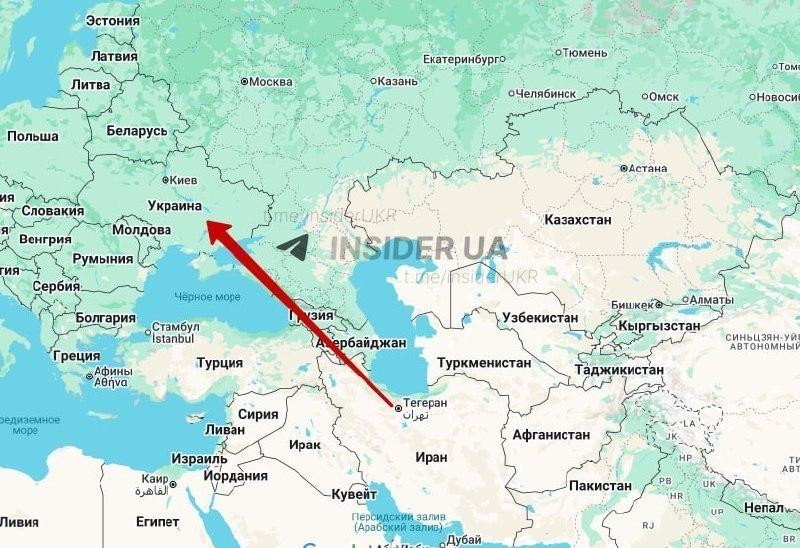
Three Kh-59 cruise missiles struck a residential area of Odesa late on 16 July 2026, killing at least one person and leaving witnesses describing bodies in the open street next to a high-rise building, according to Ukrainian journalist Andriy Tsaplienko, reporting from the scene via Telegram at 19:46 UTC. The Ukrainian military's operational channel operativnoZSU confirmed a fatality minutes later, at 19:48 UTC, noting "a person died, previously there are victims" and confirming the use of rockets against the city. The translated Russian-war channel wartranslated relayed the same description from the ground, with photographs showing victims lying in the middle of the street.
The strike landed with eerie precision on a warning Volodymyr Zelenskyy had issued hours earlier: that the period before Russia's elections in September would be "dangerous due to nighttime ballistic missile attacks," and that Moscow might intensify escalatory steps as the vote approaches. The exact correspondence between rhetoric and rockets is the news tonight, and it sets the analytical frame for what comes next.
What the strike looked like on the ground
Initial reporting, sequenced across three Telegram channels within a four-minute window, describes an attack delivered by three Kh-59 air-launched cruise missiles, a Soviet-era design in service with Russia's tactical aviation, used here against an urban residential target rather than a port or military facility. Tsaplienko's dispatch from Odesa named the weapon system explicitly and described witnesses seeing a victim's body beside a high-rise. The Ukrainian military confirmation followed within minutes, and the war-translation channel corroborated the casualty description with on-the-ground imagery. None of the three primary sources specify the number of wounded or the exact residential block, consistent with the early-evening hour at which the initial reporting was filed.
The Kh-59 is a 480-kilogram air-launched cruise missile with a stated range of roughly 200 kilometres, designed originally for hardened point targets. Its use against a residential area, rather than the port infrastructure that has been Moscow's preferred target in previous strikes on Odesa, marks a tactical choice worth flagging. Russian forces have hit the city's port repeatedly since the invasion began, a campaign that Western officials have read as an effort to degrade Ukraine's grain-export corridor. A strike of this kind on a housing block sits in a different category: it cannot plausibly be described as a dual-use target.
Zelenskyy's forecast and the electoral clock
Zelenskyy's earlier caution, that the weeks running into Russia's September presidential vote would carry an elevated risk of nighttime ballistic attacks, is now borne out by the evening's events. The mechanism he described is straightforward. Russia enters a political window in which the leadership has an interest in projecting strength abroad to a domestic audience and in demonstrating that the war economy continues to deliver tactical results. Strikes on residential areas, gruesome as they are, generate the imagery that state-aligned Russian outlets recycle as proof of resolve.
There is a counter-reading worth taking seriously: that the strike and the forecast are coincidental, and that the timing reflects operational tempo rather than electoral signalling. The Kh-59 is an air-launched system that requires a launch aircraft to come within relatively close range of the target, which puts Russian tactical aviation at risk from Ukrainian air defences. That operational risk suggests strikes of this kind are not committed lightly. If the tempo rises over the coming weeks, the simplest explanation is that Moscow decided the tactical returns were worth the air-defence exposure; the electoral context would then be a permissive condition rather than a triggering one. But the simpler reading does not exonerate the targeting choice. Civilian housing blocks are not legitimate targets under the body of international humanitarian law that Russia has formally accepted.
The structural backdrop: a war of cumulative pressure
Odesa sits at a particular node in the wider campaign. The city is Ukraine's principal Black Sea port and the conduit through which the country's remaining seaborne grain exports move under the wartime corridor arrangement. Strikes on the port degrade Ukraine's foreign-currency earnings and put pressure on the country's wartime balance of payments. Strikes on residential areas, by contrast, degrade morale and produce the diaspora outflows that compound Ukraine's demographic crisis. The combination is the point: a strategy of cumulative pressure on multiple fronts simultaneously, which the Russian military has been refining since the early months of the full-scale invasion.
Zelenskyy's framing of the electoral calendar as a danger window is an attempt to inoculate Western publics and capitals against surprise. The implicit ask is that partners read the next two months' strikes not as aberrations or as isolated escalations but as predictable behaviour by a Russian leadership incentivised to demonstrate strength before a vote. That is a request worth heeding because it lowers the probability that each subsequent strike is treated as a fresh news event requiring its own policy response, and raises the probability that a sustained programme is met with a sustained response.
What remains uncertain, and what to watch
Three things are not yet established. First, the casualty count beyond the one fatality confirmed by operativnoZSU; initial Ukrainian reporting on residential strikes typically revises upward as rescuers work through the night. Second, whether the strike is the opening note of a cluster or a one-off: the pattern of prior campaigns suggests Moscow tends to bracket attacks on Ukrainian cities with strikes spread over several days rather than concentrated in a single evening. Third, the proportion of the Kh-59 inventory Russia is willing to expend in a pre-electoral period, given that the missile is launched from tactical aircraft that must operate inside Ukrainian air-defence engagement zones; the answer depends in part on which Western partners have supplied Ukraine with additional air-defence systems in recent months.
The dates to watch are the Russian presidential vote, scheduled for September 2026, and the weeks immediately preceding it. Each subsequent strike on a Ukrainian residential area should be read against Zelenskyy's forecast rather than against the prior night's headlines. The structural question is not whether Russia will strike again before the vote, but what the cumulative civilian toll will look like, and whether the international response catches up to the pattern rather than the individual event.
This article was prepared by Monexus's defence desk. The desk deferred to primary Ukrainian sources of the kind international wires routinely cite, given the absence of verified Western-wire reporting at the time of publication.
Wire provenance
This editorial synthesis draws on the following public wire/social posts:
- https://t.me/operativnoZSU/
- https://t.me/wartranslated/
- https://t.me/Tsaplienko/
- https://t.me/wartranslated/