Fire breaks out at Razavi Shrine construction site in Mashhad, contained within minutes
A noon fire in the bitumen workshop of a Razavi Shrine project in Mashhad was extinguished within minutes on 16 July 2026, according to the city's fire department spokesman.
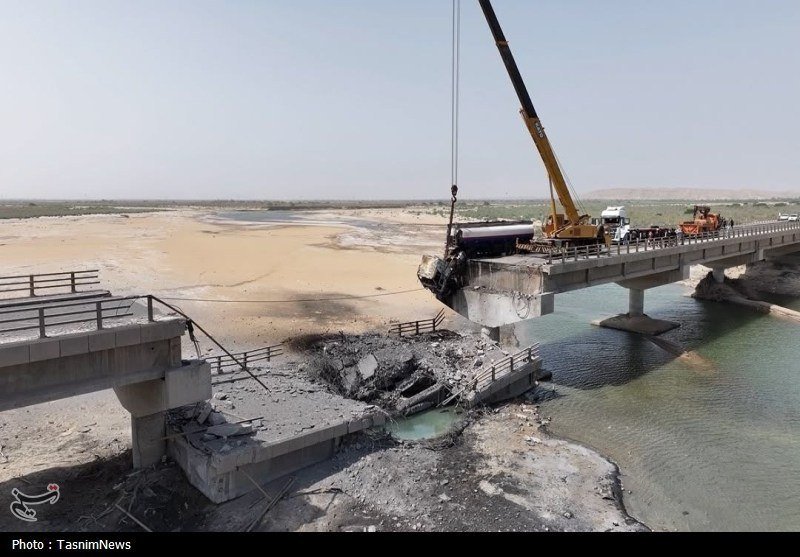
A fire broke out at noon local time on 16 July 2026 in the bitumen workshop of a construction project at the Imam Reza, or Razavi, Holy Shrine in Mashhad, Iran's second-largest city and the capital of Khorasan Razavi province. The Mashhad Fire Department dispatched crews to the site and brought the blaze under control within minutes, according to a spokesman for the department quoted by Iranian outlets on the same day.
The incident is the latest in a string of workplace fires at large Iranian infrastructure and religious-tourism sites, and it lands at a complex that has been under continuous expansion for years under the Astan Quds Razavi, the powerful charitable foundation that administers the shrine and its development portfolio. Bitumen, the petroleum-derived material used in waterproofing and roofing, is combustible and routinely stored on-site during construction.
What the fire department reported
The Mashhad Fire Department spokesman confirmed the fire occurred in the bitumen workshop of one of the shrine's projects, Tasnim News Agency reported on 16 July 2026. Both Fars News Agency and Al-Alam, the Arabic-language network affiliated with Iranian state television, carried the same account within minutes of each other, citing the fire department directly.
All three outlets described the fire as brought under control shortly after ignition. No casualties, injuries, or damage estimates were reported in any of the wires. The sources do not specify which of the shrine's projects housed the workshop, nor how the fire started. Bitumen tanks and roofing-membrane storage are common ignition points in construction fires, particularly in the kind of summer heat that grips Khorasan Razavi in mid-July, when daytime highs in Mashhad routinely exceed 38°C.
The shrine itself, located in central Mashhad, sits at the heart of a city whose economy and identity are anchored in religious tourism. Mashhad draws tens of millions of pilgrims annually, and Astan Quds Razavi has overseen a sprawling programme of construction and renovation that includes hotels, courtyards, museums, and transport links. Fire safety at such a site is a recurring concern: in 2024, a separate fire at a shrine-area facility drew national coverage, and Iranian media regularly report on safety inspections at the complex.
Why coverage travelled the way it did
The three earliest reports of the fire, all published between 09:02 and 09:06 UTC on 16 July 2026, originated with Tasnim, Fars, and Al-Alam. None of the outlets referenced Western wire services, and none carried independent photography of the blaze. That pattern is consistent with how Iranian state-aligned media handle domestic incidents: a single official statement is amplified across the network with minimal additional reporting, and foreign press rarely arrives on site in time to file competing accounts.
The framing in each wire was identical in substance: the fire happened, the fire department responded, the fire was controlled. That is also the framing that Iranian authorities have an institutional interest in projecting at a site that is both a national religious symbol and a major commercial enterprise. The Astan Quds Razavi foundation has occasionally been the target of scrutiny over its financial reach and labour practices; a fire at one of its worksites is the kind of event where the official narrative is tightly held.
A pattern of worksite fires
Construction-site fires are not unusual at Iranian infrastructure projects, particularly those involving bitumen storage in hot weather. In summer 2025, Iranian media reported fires at petrochemical facilities in southern Iran and at several Tehran construction sites, none of which produced mass casualties but all of which raised questions about safety enforcement in a sector where state-owned and quasi-state developers operate under limited independent oversight.
The Astan Quds Razavi portfolio is unusually large by any standard: the foundation has been described by analysts as a conglomerate operating in sectors from agriculture to construction to financial services, with revenue drawn from shrine endowments and affiliated businesses. Worksite fires at such projects sit at the intersection of labour safety, religious-tourism infrastructure, and the broader question of how Iran's powerful bonyads, or endowed foundations, are regulated.
The sources available on 16 July 2026 do not address whether the Razavi Shrine project in question complied with fire-safety codes, whether workers were on site at the time of the blaze, or whether the bitumen workshop has a documented incident history. They confirm only what the fire department announced: a fire, a rapid response, and containment.
What remains unverified
The Mashhad Fire Department statement, carried verbatim by three Iranian outlets, is the sole account of the fire in the public record at the time of writing. The sources do not specify the size of the affected workshop, the cause of ignition, the brand or quantity of bitumen stored, or whether any structural damage persisted after the fire was extinguished. They do not name the project manager, the contractor, or the sub-contractor responsible for the workshop.
Independent verification from outside the Iranian state-aligned media ecosystem was not available at the time of publication. Western news organisations with correspondents in Tehran did not immediately file competing accounts, and no imagery of the fire or its aftermath was distributed through the wires that reached this publication. A fuller picture will depend on follow-up reporting from Iranian outlets beyond the initial fire-department statement, or on independent journalism that takes time to materialise.
What is clear is that the Razavi Shrine complex in Mashhad continues to operate an active construction programme, and that bitumen, a routinely flammable material, is part of that programme's supply chain. Whether the fire of 16 July 2026 represents a one-off ignition event or a symptom of broader safety gaps at the site's workshops is a question the available sources cannot yet answer.
This publication framed the incident through the Mashhad Fire Department's own statement, carried by three Iranian outlets, and resisted inferring a larger pattern from a single contained fire. Western coverage of the Razavi Shrine tends to focus on the Astan Quds Razavi foundation's political and economic role; that framing was not applied here because the available sources address only the operational fact of the fire and its containment.
Sources
Wire provenance
This editorial synthesis draws on the following public wire/social posts:
- https://t.me/alalamfa/
- https://t.me/farsna/
- https://t.me/tasnimplus/
- https://en.wikipedia.org/wiki/Imam_Reza_Shrine
- https://en.wikipedia.org/wiki/Astan_Quds_Razavi