Power cut, then calm: what the wires actually said about the US strike on Kish Island
Three Telegram channels, three minutes apart, gave two incompatible pictures of a US strike on Iran's Kish Island. The gap between them is now part of the story.
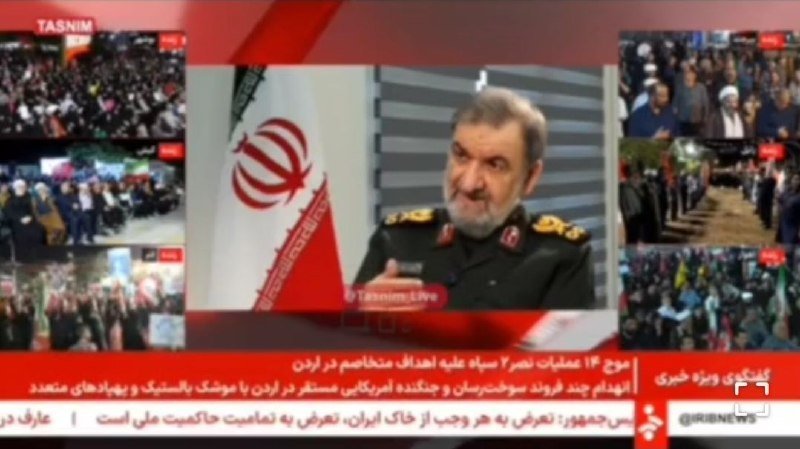
At 21:29 UTC on 16 July 2026, Iran's Tasnim news agency pushed a single, alarming paragraph to its English-language Telegram channel: an electrical substation on Kish Island had malfunctioned following "tonight's US attacks," and power had been cut in a small area of Hormozgan Governorate. The post carried no casualty count, no location pinpoint, and no confirmation of which facility had been struck, only the substation's failure as the apparent downstream effect. Three minutes later, the Arabic-language channel Al Alam broadcast the opposite message under a red "Urgent" banner: "Hormozgan Governorate: The situation on Kish Island is currently stable, and there is no problem." A third channel, the war-tracker account World Freedom Witness, echoed Tasnim at 21:38 UTC, attributing the substation account directly to Tasnim and re-broadcast the small-area outage. The first written record of the night is therefore not a strike, but a contradiction.
What this dispatch can establish is narrow but worth stating plainly. Two Iranian state-adjacent outlets, separated by less than ten minutes, gave readers incompatible pictures of the same island. One said something was hit and a substation failed; the other said nothing was wrong. Both are operating in the same media environment and answering to the same political principals. The honest reading is that the public record of the strike is, at this hour, still being constructed in real time, and that the construction itself is the news.
What we know, and the order we know it
The earliest item in the thread is the Tasnim Telegram post at 21:29 UTC, which puts the US strike ahead of the substation malfunction and uses the phrase "tonight's US attacks" as a temporal anchor. The post identifies the affected area as Kish Island, names the failed infrastructure as an electrical substation, and confines the outage to a "small area" of the governorate. It does not name the specific substation, give a casualty figure, or describe the weapon used. Kish Island is a special free-trade zone in the Persian Gulf roughly 1,000 kilometres south of Tehran and one of Iran's better-known tourist and commercial hubs. Its strategic value lies as much in its legal status as in its geography: an attack there carries an extra layer of signalling because it is, on paper, civilian-administered and economically privileged.
Al Alam's correction, logged at 21:32 UTC, addresses Hormozgan Governorate as a whole rather than the substation specifically. "The situation on Kish Island is currently stable, and there is no problem" is the kind of sentence a state broadcaster issues when the alternative is panic tourism, evacuations, or a run on outbound flights. The third item, at 21:38 UTC, is a near-verbatim relay of Tasnim with attribution preserved, which matters for two reasons: it confirms Tasnim as the originating outlet for the substation claim, and it shows how the Iranian state-aligned narrative travels once it is on the wire.
Why the contradiction is structural, not sloppy
Reporting from a closed information environment during an active strike rarely gets cleaner than this. Iranian outlets are not operating under independent editorial command; they coordinate, they delay, and they correct in plain sight. The first Tasnim line performed the work of confirming that a strike had happened and that there were visible, civilian-adjacent consequences, the substation being a piece of infrastructure every reader can picture. Al Alam's three-minute-later rebuttal did the opposite work: it told Iranians, and anyone watching the Arabic-language feed across the Gulf, that life on Kish continued normally. Neither claim is verifiable from outside the island at this hour. Both are statements about authority, not about physics.
The pattern is familiar from earlier episodes of US–Iran friction. State media confirm strikes quickly enough to claim ownership of the narrative; parallel state media stabilise the public-facing picture quickly enough to claim the situation is under control. When these two impulses collide inside a ten-minute window, the result is not a typo. It is the system working as designed, with each outlet performing the function its audience expects. The same dynamic shaped coverage of the 2020 US strike on Qasem Soleimani and the periodic flare-ups that have followed.
What remains genuinely contested
The sources do not specify the target on Kish Island, the weapon used, or whether the substation failure was a direct hit, a power-grid cascade, or collateral damage from a nearby strike. They do not give a casualty figure of any kind. They do not name the US unit or command responsible. They do not confirm whether Iranian air defences engaged, which is a material omission because Iranian state media typically announces interceptions within hours when it has them. The two narratives also differ on a basic descriptive question: did the island experience a problem, or did it not? Al Alam's "no problem" line is categorical; Tasnim's "small area" qualifier leaves room for an outage that no tourist would notice but a substation engineer would. Both readings are consistent with the same physical reality. Only one of them is useful to a government trying to manage public mood.
The wider geopolitical stakes are easier to sketch. Kish Island sits in a Gulf that Iran has long treated as a defensive perimeter and that the United States, under successive administrations, has treated as a freedom-of-navigation space. A strike there, even one aimed at a specific military-adjacent site, raises the cost of any future de-escalation because it puts Iranian civilian infrastructure, even nominally free-zone civilian infrastructure, inside the target set. That is the kind of move that gets walked back only with difficulty. Iranian counter-strike options, were Tehran to choose escalation, include the chokepoints at Hormuz and Bab el-Mandeb, the Iraqi militia network, and the cyber domain, all of which have been telegraphed in Iranian military doctrine for the better part of a decade.
The information fight around the strike will outlast the operational one. By the time the first Western wires file their own versions of the night, the on-the-ground picture will have been filtered through whichever Iranian outlet gets quoted first, and through whichever US administration readout lands in the inbox of the relevant bureau chief. Readers should expect the next 24 hours to look less like a clarification and more like a layering: Tasnim's substation line, Al Alam's "no problem" line, a CENTCOM or Pentagon confirmation of what was hit and why, and then a quieter round of corrections as satellite imagery and local reporting fill in the blanks. The earliest minutes, recorded above, are the ones that set the terms of the debate. Everything after is reaction.
Monexus framed this as an information-environment story rather than a strike story. The operational facts are too thin in the open record to anchor a piece on their own; the Iranian state-media contradiction is anchored, dated to the minute, and traceable to named channels. We will update the dispatch as Western wire reporting and any official US or Iranian government readout become available.
Wire provenance
This editorial synthesis draws on the following public wire/social posts:
- https://t.me/s/tasnimnews_en
- https://t.me/s/alalamarabic
- https://t.me/s/wfwitness
- https://en.wikipedia.org/wiki/Kish_Island
- https://en.wikipedia.org/wiki/Hormozgan_Province