Detained American walks free as Trump courts a settlement Iran no longer claims to want
A US citizen held since 2024 left Iran this week while Washington bombed Iranian targets for a fifth straight day, and the gap between Trump's praise of Tehran and his threats to it captured the contradictions of the negotiating posture.
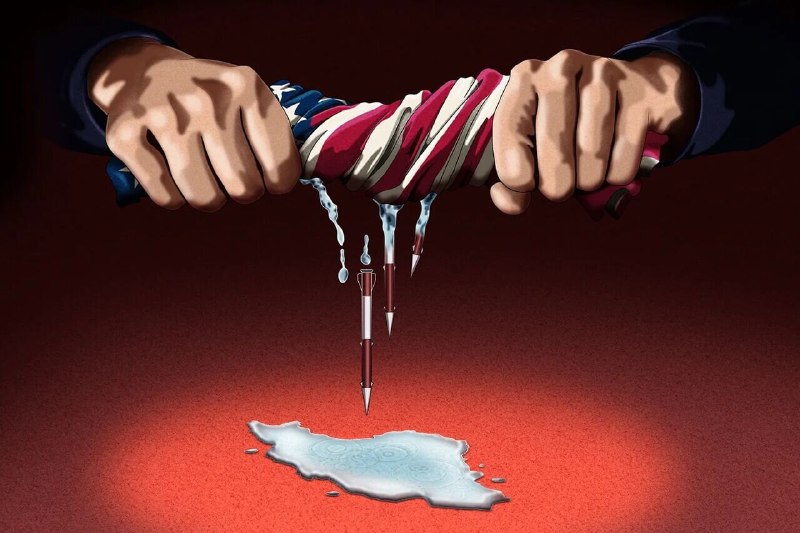
A US citizen who had been held in Iran since 2024 walked out of the country this week, and within hours President Donald Trump was on camera doing two things that, on their face, do not fit together. He thanked Tehran for the release, and he warned the same government to "behave" as American strikes on Iranian targets entered a fifth consecutive day.
The detainee's departure, confirmed by Trump in remarks to reporters on 15 July 2026 and carried by The Indian Express and the South China Morning Post, is a tangible concession in a confrontation that has otherwise run on escalation. It is also the kind of confidence-building gesture that usually belongs at the start of a diplomatic track, not at its midpoint, when the two sides are already trading bombs and cancelling meetings.
That mismatch is the story. The Trump administration is pursuing an active military campaign against Iranian facilities while simultaneously advertising that Tehran "wants to settle so badly," as Trump put it in a video clip distributed by Middle East Eye. Iran, for its part, has reportedly scrapped plans for further talks. The combination reads less like a coherent strategy than like two negotiations being run out of different rooms of the same building, each with its own audience.
The release, and what it actually is
The detainee, a US woman whose name has not been publicly confirmed in the source reporting, had been held in Iran since 2024. Trump described her detention as "wrongful," a characterisation the United States applies to most cases of American citizens held by the Islamic Republic. Her release was announced via Trump's Truth Social account and in on-camera remarks, and was later confirmed by reporting from The Indian Express and the South China Morning Post on 16 July 2026.
Detainee-for-concession exchanges have a long history in US-Iran relations. The Obama administration ran a sequence of them in 2015–16, freeing Iranian-held Americans in tandem with the prisoner-swap that accompanied the Joint Comprehensive Plan of Action. The Trump first administration separately negotiated the release of Xiyue Wang, a Princeton graduate student held on espionage charges, in December 2019, after eighteen months of detention. Each of those episodes sat inside a broader negotiation; the prisoner question was downstream of the strategic one, and answered only when the strategic one had somewhere to go.
This week's release is moving in the opposite direction. The strategic question is being answered, if at all, by air strikes rather than by envoys. The prisoner question, by contrast, has been answered with a quiet, unilateral gesture from Tehran. That inversion matters. Concessions extracted before a deal tend to be locked in; concessions granted during an active bombing campaign tend to be reversible, and read as goodwill that one side has chosen to extend under fire.
Trump's framing, on the record this week, treats the release as evidence that his pressure is working. "They don't like what we're doing, and they do want to settle," he said in video remarks circulated by Middle East Eye on 16 July 2026. The Indian Express, reporting the same comments, quoted Trump saying the United States "appreciates" Iran for the release. It is a deliberately transactional vocabulary: appreciation as the soft currency of a coercive relationship, not the language of reconciliation.
The fifth day of strikes
The backdrop to the prisoner release is a sustained military operation now in its fifth day, as reported by The Indian Express on 16 July 2026. The paper's account, picked up from wire reporting, describes US strikes entering a fifth consecutive day against Iranian-linked targets, with Trump using the same media availability to warn that Iran "better behave."
The Indian Express's framing was notable for what it did not claim. It did not specify which targets had been struck on the fifth day, did not name casualty figures on either side, and did not describe the operational tempo in terms that would let a reader independently verify the scale. That restraint is editorial; it is also a tell about how thin the public sourcing remains. The administration's updates are being delivered through the president's own mouth and via social media posts, and the wire reporting is following rather than leading.
Iran's official response to the release, as captured in the same source reporting, was to characterise the decision as a humanitarian gesture independent of the military confrontation, and to disavow any negotiating intent that could be read as yielding to US pressure. The Indian Express reported that Iran has scrapped plans for further talks. If that is accurate, the country that just freed an American prisoner is also the country that has chosen not to send a delegation to the next round.
That contradiction, on its own, is not necessarily a sign of bad faith on either side. Prisoner releases are routinely decoupled from formal diplomatic channels in part because the bureaucracies that handle them, often the Iranian judiciary and the foreign ministry, operate on different timelines and respond to different incentives. But a humanitarian gesture that arrives while the underlying channel is being shut down reads, to outside observers, as either a confidence-building move with no place to land or as a signal to a third party, such as Oman or Qatar, that Tehran is still willing to talk on its own terms even when its own negotiators won't fly.
The two-track posture
The clearest way to read the week is as the operation of two tracks inside the same administration, each with its own internal logic.
The first track is military. It is being run by uniformed planners and the operational commanders of US Central Command, and it has the institutional momentum of an order already given. Five consecutive days of strikes are not a thing a commander-in-chief does by accident; they are a thing that requires targeting packages, refuelling schedules, rules of engagement and a political decision to continue rather than to pause. The fact that the strikes have continued past the point where a prisoner release was announced suggests that the military track is not being held hostage to the diplomatic one. That is a posture, not a slip.
The second track is rhetorical and political. Trump is publicly attaching himself to the prisoner release, calling it proof that Iran "wants to settle," and framing the bombing campaign as the reason. This is the line that travels best on cable news and on social media: a win, attributed to pressure, that an audience can understand in a sentence. It is also the line that allows the administration to tell its base, and Gulf partners, that the United States is extracting concessions from Iran without giving anything back.
The cost of running those two tracks at once is that they will eventually collide. If Iran has genuinely scrapped further talks, as The Indian Express reported, then the rhetorical track loses its claim that the bombing produces a willing negotiating partner. If the prisoner release becomes a one-off, and the next American in Iranian custody does not come home, then the humanitarian framing of the campaign collapses. Either outcome would force the administration to choose which track is doing the work.
What the gap actually tells us
The reported suspension of further talks is the load-bearing fact of the week. It is what most clearly contradicts the Trump line that Iran wants to settle, and it is the piece of the picture that the administration's own messaging has not yet addressed. The Indian Express reported it; Middle East Eye reported the conciliatory Trump clip in the same twenty-four-hour window. Both can be true, and both are being reported as true.
What remains genuinely uncertain is the architecture of the Iranian decision. Was the suspension ordered at the top, by Supreme National Security Council vote, or did it come out of the foreign ministry's deep suspicion that any further talks during an active bombing campaign would be read inside Iran as surrender? The source reporting does not say. Neither does it say which American was released, which Iranian-held individuals remain, or whether the release was conditioned on any quiet US concession, such as a licence for a frozen Iranian funds transfer, that might not appear in public.
The pattern in previous US-Iran detainee episodes is that the public story is the smaller part of the actual transaction. The 2016 prisoner-swap was settled alongside the lifting of certain US sanctions and the return of Iranian funds held abroad. The 2019 Wang release was paired, according to later reporting, with the release of an Iranian scientist held in the United States. None of those secondary elements tends to surface on the day. If there is a quiet Iranian ask behind this week's release, it has not yet appeared in the source reporting, and it would be irresponsible to speculate about it.
The structural point, beyond the immediate back-and-forth, is that the United States is now operating in a Middle East where its coercive tools and its diplomatic tools are no longer pointed at the same target in the same direction. Strikes are designed to degrade Iranian military capacity and to signal cost. Negotiations are designed to extract verifiable changes in Iranian behaviour. The two work in opposite ways: pressure raises the cost of saying yes, while talks lower the cost of saying yes. Running them at the same time, against the same adversary, in the same week, produces exactly the kind of confused output that the world saw between 15 and 16 July 2026: a freed prisoner, a fifth day of bombing, and a presidential statement that both praises Iran and warns it to behave, delivered to the same cameras.
The coming week will tell which of the two tracks is winning. If talks resume, even through a Gulf intermediary, the prisoner release will look, in retrospect, like the opening bid of a settlement Trump was right to predict. If the strikes continue and the negotiating channel stays closed, the same release will look like a unilateral Iranian gesture designed to puncture the American narrative, and the administration will have to decide whether its strategy was always the strike campaign or whether the strike campaign was the opening of a negotiation that the other side has now declined.
This article was reported from publicly available wire and outlet reporting on 16 July 2026. The sources do not specify the identity of the released detainee, the specific targets struck on day five, or any Iranian conditions attached to the release. Where those details are not in the source record, this publication has not inferred them.
Wire provenance
This editorial synthesis draws on the following public wire/social posts:
- https://x.com/MiddleEastEye/status/2077586552553877769