India Pulls Seafarers From Hormuz as Iran–US Fight Squeezes the World's Oil Choke Point
New Delhi has told shipowners and crew recruiters not to deploy Indian seafarers on Hormuz transits, the first government-level crew recall since US and Iranian forces began contesting the strait. The move puts a human face on a 20-percent-of-global-oil-corridor fight that has already pushed insurance rates into uncharted territory.
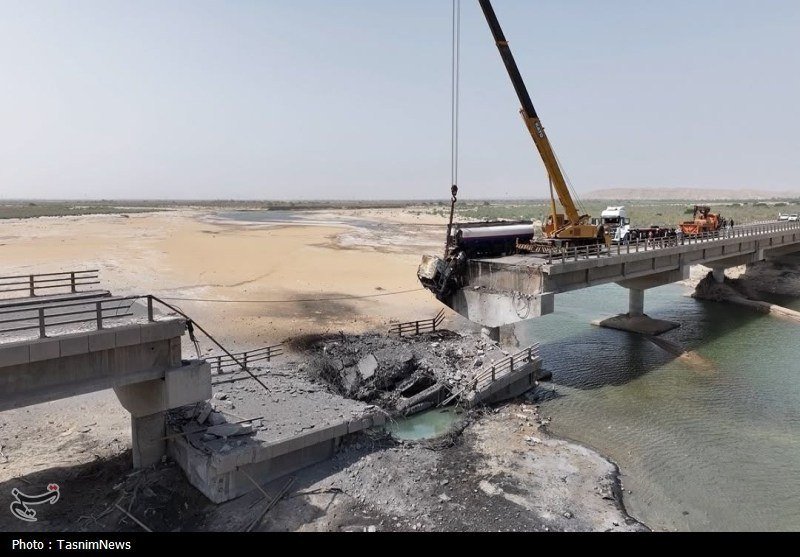
On 16 July 2026, India's maritime administration asked shipowners and the country's crew-recruitment firms to stop deploying Indian seafarers on vessels transiting the Strait of Hormuz, according to a notification circulated by analyst Michael A. Horowitz and reshared on Telegram. The advisory is the first government-level crew recall since Washington and Tehran began openly contesting the waterway through which roughly a fifth of the world's seaborne oil and gas normally moves.
What began as a slow-burn sanctions contest has, in the space of a fortnight, hardened into a kinetic dispute over the narrow corridor between Oman and Iran. India's move signals two things at once: that New Delhi reads the strait as genuinely unsafe for civilian crew, and that one of the world's largest pools of merchant-marine labour is being quietly withdrawn from the highest-value oil route on earth.
Crews off the water, premiums off the chart
The Indian advisory, as reported by Horowitz on Telegram, did not specify a duration but framed the prohibition as a direct response to ongoing US–Iran fighting in and around the strait. India supplies close to 12 percent of the world's merchant seafarers, a share that gives New Delhi an outsize lever on which vessels can still physically crew up for a Hormuz passage.
Insurance markets had already begun pricing the war. War-risk premiums for tankers calling at Gulf ports had climbed into the low single-digit percentages of hull value, according to shipping-industry reporting flagged by unusual_whales on X, a level that makes commercial owners walk away before they have ever loaded cargo. The Indian crew directive sits one step downstream of that price signal: premiums alone never actually stop a transit, but the absence of a willing crew does.
The combined effect is a slow strangulation rather than a blockade. Iran has continued to attack commercial vessels in the strait, according to reporting relayed by the Epoch Times on Telegram, including seizures and small-arms strikes that have forced owners to reroute around the Cape of Good Hope, where a return voyage from the Persian Gulf to Europe adds roughly three weeks and several million dollars of bunker cost.
The Indian hesitation
New Delhi has tried, for two decades, to sit carefully between Washington and Tehran. Indian refiners are among the largest remaining buyers of Iranian crude, and Indian diplomats spent much of the early 2020s negotiating the sanctions workaround that kept that trade alive. Pulling seafarers now is a more consequential gesture than it sounds: a tanker without a crew does not sail, but a tanker owned by an Indian company on charter to a US-aligned buyer would also be a sanctions target.
The advisory applies to Indian nationals on Indian-registered ships. It does not formally bar Indian seafarers from working on foreign-flag vessels, but the practical effect is close to a ban. Major manning agencies in Mumbai and Chennai have, in recent weeks, begun telling recruits that a Hormuz book means no berth, and that crew who try to argue for the premium will be blacklisted from the next rotation.
That is the part of the story that tends to disappear in the wire copy. The market impact gets the headlines. The labour-side decision is what actually locks in the new risk regime.
What sits underneath the dispute
The strait is unusually vulnerable because of what it carries, not because of where it is. Roughly 20 percent of global oil and gas traffic moves through a passage less than 40 kilometres wide at its narrowest, bounded on the north by Iran and on the south by Oman's Musandam exclave. There is no realistic bypass pipeline of comparable scale. A sustained closure would force Gulf exporters to absorb the cost of longer voyages, push European importers onto more LNG, and redirect Asian buyers to Russian and West African crude at prices Washington would struggle to control.
A war there is therefore, structurally, a contest over the architecture of the global energy market, not over territory in any conventional sense. Iran's calculus is that even a partial disruption tightens supply enough to lift prices and to demonstrate that US-led sanctions enforcement has a ceiling. Washington's calculus is the inverse, that the cost of letting that demonstration stand is worse than the cost of contesting it.
What we verified and what we could not
Three facts in the public record now sit on firm ground: India's maritime administration has issued the seafarer advisory, attributed in this piece to a 16 July 2026 notification reshared via Michael A. Horowitz's Telegram channel; Iran's attacks on commercial vessels in the strait are running above the long-run baseline, per reporting flagged by the Epoch Times on the same day; and the strait normally moves close to 20 percent of seaborne oil and gas, a figure echoed in coverage circulated by unusual_whales on X overnight.
The harder parts of the story are still spongy. We do not yet have visibility into whether Iran or the United States have formally declared exclusion zones or issued mariner advisories of their own, beyond what the telegram-aggregator threads paraphrase. We do not know how many of the roughly 240 Indian-flagged tankers and cargo ships that transited Hormuz in the first half of 2026 have actually diverted, nor what share of the foreign-flagged tonnage calling at Iranian ports is crewed by Indian nationals. And the premium numbers, low single-digit percentages of hull value, are consistent across commentary but have not yet been tied to a named Lloyd's syndicate or to a specific charter party.
Those caveats matter. The human-facing decision, the crew recall, is the most concrete number we have. Everything downstream of it is interpretation on top of that one decision.
The stakes, in concrete terms
If the advisory holds for another month and the Iranian attacks continue, three things become more likely. First, tanker owners outside the Persian Gulf will demand charter rates that reflect a Cape routing, and several of those additional costs will pass through to retail fuel prices in Asia and Europe before the end of the third quarter. Second, Indian refiners will quietly reduce Iranian crude purchases regardless of formal sanctions posture, on the grounds that cargoes from a Hormuz port are now uninsurable. Third, the United States will face a choice between escalating into a more formal escort regime, with the political costs that carries, or letting the new risk pricing settle into place and accepting a higher structural oil price.
For Indian shipping, the political signal is the more durable outcome of the week. New Delhi has drawn a line: civilian Indian lives are not an acceptable cost of the energy-corridor fight. That is the kind of line that, once drawn, tends to stick.
, How Monexus framed this: the wire copy tends to lead on sanctions and on tanker seizures, both of which are real but neither of which actually stops a transit. The crew recall is the underreported hinge, because labour is the binding constraint. We led there.
Wire provenance
This editorial synthesis draws on the following public wire/social posts:
- https://t.me/s/horowitzmetrics
- https://x.com/unusual_whales/status/2076870558202068992
- https://t.me/s/horowitzmetrics