Houthi rhetoric sharpens against Washington and Tel Aviv as Yemen's war economy grinds on
In a televised address on 16 July 2026, Ansarullah leader Abdul Malik al-Houthi framed the United States and Israel as the principal sources of global instability, signalling that the movement's propaganda posture has not softened even as its backers recalibrate.
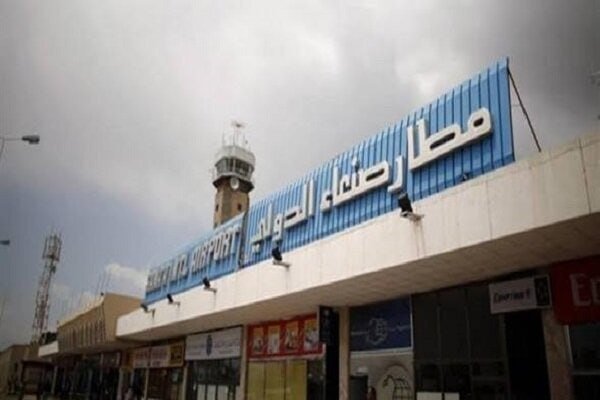
On 16 July 2026, at roughly 13:40 UTC, the leader of Yemen's Ansarullah movement, Abdul Malik al-Houthi, took to a televised platform to deliver a speech that left little rhetorical ambiguity. Iran-aligned Al-Alam and PressTV carried his remarks in near real time, with Mehr News republishing them shortly afterwards, all framing the United States and Israel as the "source of evil and instability in the world." The al-Houthi line that "if the oppressed do not seek justice, tyrants will continue their oppression unchecked," as relayed by PressTV, recasts an active military front as a moral contest.
The speech lands at a moment when Ansarullah's external operations have largely shifted from shock-value single strikes to a sustained campaign of maritime harassment and calibrated missile and drone launches aimed at Israel, paired with a domestic governance footprint that quietly keeps northern Yemen functioning. The language is not new. What is notable is the unchanging frame: Washington and Tel Aviv at the centre of every regional grievance, with no visible softening even as the movement's main external backers face their own escalatory pressures.
The line that won't move
Al-Houthi's script has been remarkably stable across years of public addresses. America, Israel and their "allies" appear as the singular drivers of instability; the Palestinians, Yemenis and broader Muslim world appear as a unified category of the oppressed. PressTV's 16 July feed and Al-Alam's running ticker on the same hour carry the same core accusation, with Mehr News republishing identical phrasing from its Tehran bureau. The near-simultaneous relay across Iranian state media outlets is itself part of the message: this is a coordinated communicative front, not a stray remark.
That repetition matters more than it looks. When the same vocabulary circulates across Telegram channels, satellite broadcasters and Farsi-language wires within minutes, the target audience is not Washington or Jerusalem, who will dismiss it. The audience is domestic: a Yemeni public that has endured a grinding war since 2015, a regional audience that consumes Iranian-state framing, and a wider Muslim-majority viewership that Ansarullah wants to position itself as defending.
Maritime pressure, calibrated
The rhetoric plays against a backdrop of continuing attacks in the Red Sea and Bab el-Mandeb corridor. Since late 2023 Ansarullah-aligned forces have targeted commercial shipping with missiles, drones and hijackings, framing the campaign as a blockade against Israel-bound vessels and a response to the Gaza war. The campaign has reshaped global shipping routes, pushed insurance premia higher, and forced major carriers to divert around the Cape of Good Hope. The 16 July speech does not announce a new posture on this front, but it ratifies the existing one: the maritime campaign is, in the movement's telling, part of the same moral duty as the missile launches.
That framing matters for diplomats trying to negotiate de-escalation. Any Western counter-message has to contend with the fact that Ansarullah presents its naval harassment as a defensive response to Israeli operations in Gaza and US support for them, not as an offensive project. The slogan and the route plot, in this telling, are the same thing.
The counter-narrative the wires don't lead with
Western wire reporting on Ansarullah tends to lead with security: vessel attacks, missile intercepts, the cost to commercial shipping, the diplomatic pressure on Tehran. That framing is accurate on its own terms and incomplete. The 16 July speech is a useful test case because the underlying claim, that Washington and Tel Aviv bear responsibility for regional instability, is one that a significant share of public opinion across the Middle East, North Africa and South Asia will accept on its face, even where they reject the Houthi movement itself.
The structural point underneath the rhetoric is straightforward. The United States maintains a substantial naval presence in the Red Sea and Gulf of Aden, conducts strikes against Ansarullah targets, and supplies the diplomatic and material backbone of the Saudi-led intervention that has been grinding against Ansarullah since 2015. Israel is at war in Gaza and has clashed with Iran-aligned forces on multiple fronts. To the movement's domestic audience, and to many outside it, this is not a contested empirical claim. The contested part is what follows: that the moral response is a maritime and missile campaign, rather than political pressure or armed struggle on Yemeni soil.
What stays unresolved
Three things remain genuinely uncertain even after today's speech. First, whether the rhetoric is preparatory for a new operational escalation, or simply the steady-state background noise that has come to define al-Houthi's public appearances. The available wires do not specify any new operational order. Second, the internal dynamics within Ansarullah, where a leadership reshuffle after the killing of senior officials in earlier Israeli strikes may be shaping who controls the messaging. The surface uniformity of the message may be obscuring internal recalibration. Third, the relationship between the rhetorical frame and the humanitarian reality inside Yemen, where the movement governs a population enduring severe economic distress and where war-fatigue framing in the West and the resistance framing broadcast from Sana'a both fall short of describing what civilians actually experience.
What the 16 July address confirms is that Ansarullah intends to keep presenting itself as the moral pole of a regional alignment arrayed against Washington and Tel Aviv, regardless of the shifting pressures on its backers in Tehran and Beirut. The script is unchanged. The infrastructure that delivers it, from the satellite channels to the Telegram relays to the Farsi-language wires republishing in near real time, is intact. For analysts and diplomats tracking the Red Sea corridor, the practical question is not whether the rhetoric will shift, but whether the operational tempo behind it will, on a timeline that does not depend on the speech cycle.
Desk note: Monexus has relied on Iranian-state and Iran-aligned channels for this article because those are the outlets that carried the 16 July address in real time. Where Western wires pick up al-Houthi's remarks in the coming days, this publication will incorporate that reporting and label divergences explicitly.
Wire provenance
This editorial synthesis draws on the following public wire/social posts:
- https://t.me/alalamfa
- https://t.me/alalamfa
- https://t.me/presstv
- https://t.me/mehrnews