Gaza's toll crosses 73,000, and the counting is itself the story
Hospitals in Gaza report more than 73,000 dead since October 2023. Western wire desks treat the figure as contested; Gaza's health ministry treats it as a count. Both claims are political.
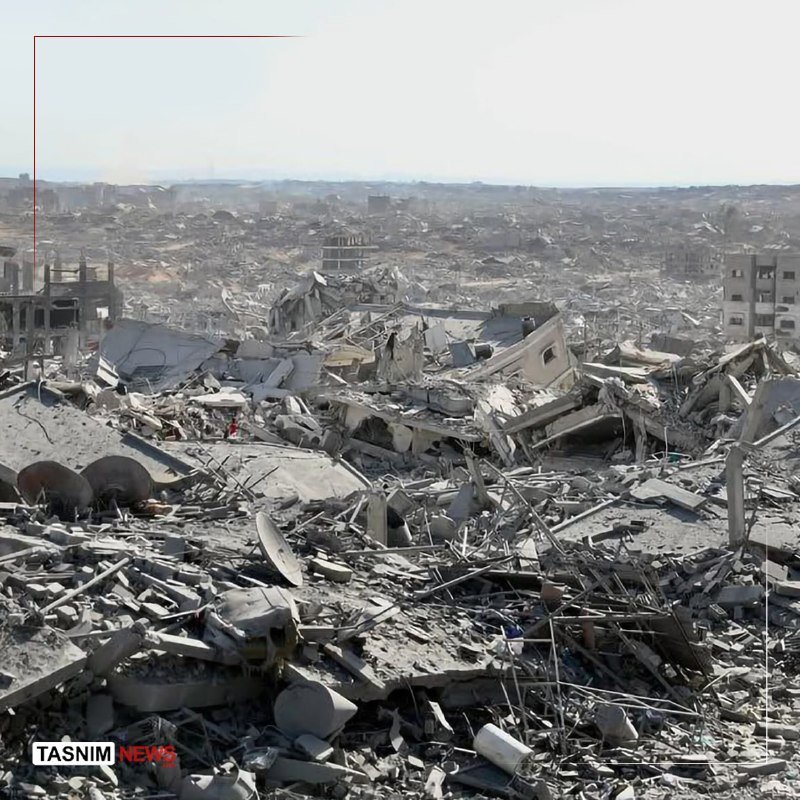
At 09:17 UTC on 16 July 2026, Gaza's Ministry of Health published a routine 24-hour bulletin: four new fatalities and 28 injured arriving at hospitals across the strip, pushing the cumulative death toll since 7 October 2023 to 73,250. By 09:58 UTC, the figure had been re-broadcast by Al Alam's Arabic service. By 10:14 UTC, the same ministry was quoting the rounded total alongside a parallel count of 173,751 wounded. Three messages, three channels, one number, recycled with the discipline of a daily weather report from a place where weather is the least of it.
The dispute over Gaza's casualty count is no longer really about the counting. It is about which institutions a reader is willing to trust, and which editorial desks are willing to print a number that originated inside a health ministry run by a government most Western governments do not recognise. The figure now circulates globally, attached to a methodology question that has become a proxy for the politics of the war itself.
The number, and the asterisk beside it
The 73,250 figure comes from a reporting system the ministry has run, with varying degrees of external oversight, since the war began. Israeli authorities and several Western wire desks have repeatedly described the figures as unreliable, citing the inability of independent observers to audit hospital intake records inside a strip under bombardment and near-total aid restriction. The caveats are real: the ministry does not currently distinguish in its daily bulletins between combatants and non-combatants in the running total, and earlier in the war the ministry itself revised down a count after a discrepancy was identified over women and children. None of that erases the figure. All of it changes what it means.
The straight read is that an average of roughly 60 deaths a day have been logged at Gaza's hospitals over the 986 days from 7 October 2023 to 16 July 2026, a pace that has slowed sharply from the war's peak in late 2023 and early 2024 but that has not stopped.
The institutional framing problem
The harder problem is editorial. Mainstream Western coverage has settled into a pattern: report the ministry's figure, attach a sceptical gloss, and move on. The gloss usually takes one of three forms, that the ministry is Hamas-run, that the figures cannot be independently verified, or that they include combatants. All three claims are defensible. None of them is sufficient reason to refuse to print a number that no serious counter-source has seriously attempted to displace.
The structural pattern is familiar from other conflicts where the institution doing the counting is politically inconvenient to the side doing the bombing. Coverage routinely defers to the language of official spokespeople; the data produced by the institutions of the people being bombed is treated, by default, as advocacy rather than as administration. That asymmetry is itself an editorial position, even when no reporter intended to take one.
The competing frame is that the ministry's daily bulletin is, in fact, an administrative product. Hospitals admit patients, log them, and report up. The figure reflects what the hospitals see. It may be incomplete, names get lost in collapsed buildings, bodies are pulled from rubble and buried without reaching a hospital, but incompleteness is not the same as invention, and no Israeli or Western source has produced an alternative cumulative count that diverges by an order of magnitude.
Why the count travels the way it does
The 73,250 figure moves through three distinct circuits. First, regional and pan-Arab outlets like Al Alam carry the ministry's bulletins verbatim, with the rounded total as headline. Second, human rights organisations and UN agencies cite the figure in their own reporting, occasionally with methodological footnotes attached. Third, Western wire desks cite the figure in passing, almost always with the institutional caveat in the same sentence.
The result is that the same number carries three different weights depending on where it lands. By the time a reader in London or Washington encounters 73,250, it has usually been stripped of its administrative origin and reattached to a controversy about trust. A reader in Beirut or Doha, by contrast, sees the figure as the closest thing to a public ledger of a war that is otherwise conducted in the dark.
Stakes, and the next bulletin
The next bulletin will land within 24 hours. It will carry a slightly higher number and a slightly longer wounded count, and it will be reported in roughly the same pattern it was reported in today. The numbers will keep moving; the institutional framing will not.
What is at stake is not whether 73,250 is precise to the last digit. It is whether the institutions of the people under bombardment are treated as competent record-keepers by the press corps covering the bombardment, or whether they are treated, by default, as partisan voices whose data must be smuggled into print under a cloud of caveats. The first posture is ordinary journalism. The second is a posture that has a politics whether it admits it or not.
Monexus reports Gaza's Ministry of Health figures with the institutional caveat standard in Western wire coverage; the editorial choice here is to print the number, name its origin, and let the reader weigh the rest.
Wire provenance
This editorial synthesis draws on the following public wire/social posts:
- https://t.me/gazaalanpa/1
- https://t.me/alalamfa/1
- https://t.me/alalamarabic/1