A country buried twice: Venezuela's quake toll hits 4,829 as Maduro's grip tightens
The official death toll from Venezuela's twin earthquakes has climbed past 4,800, while a prediction market puts the odds of a presidential vote this year at barely one in four.
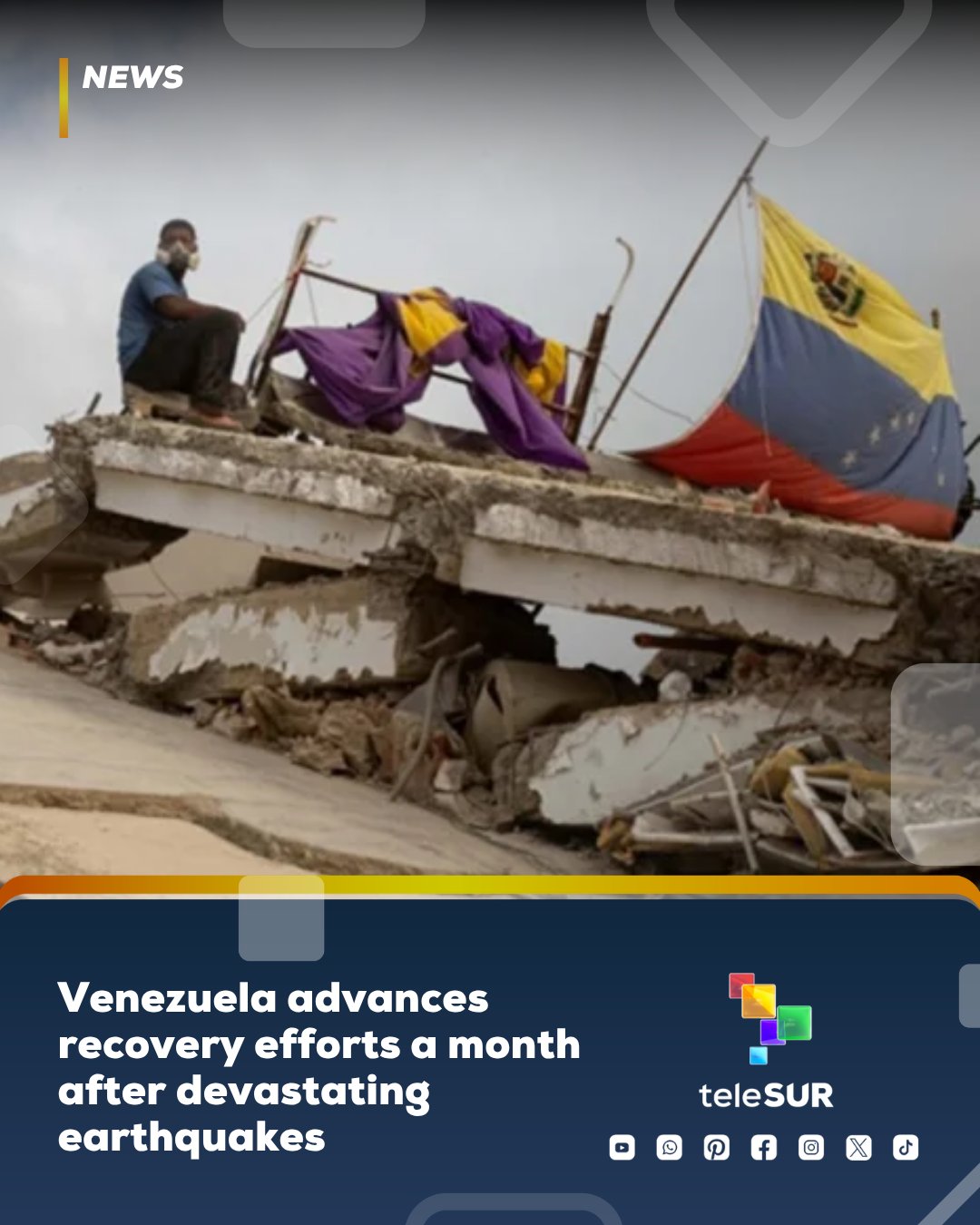
At 22:50 UTC on 15 July 2026, Reuters wire moved a one-line bulletin that has since defined the day's news out of Caracas. The death toll from Venezuela's twin earthquakes had climbed to 4,829, the government said, in a country where official figures are political artefacts as much as they are statistics. That figure, transmitted through state-aligned outlets and amplified by international wires, now anchors every humanitarian appeal and every geopolitical calculation attached to the disaster.
The quake came on top of a country already buried under a decade of sanctions, hyperinflation, mass migration and contested rule. The question is no longer whether Venezuela can absorb this shock. It is who controls the story of the recovery, and whether the political opening the disaster might force will ever arrive.
A toll that grows by the hour
Reuters reported on Tuesday evening that the cumulative death count had reached 4,829. The figure, attributed to Venezuelan authorities, almost certainly understates the true scope. Western Venezuela, where the tremors were centred, is a region of informal settlements, mountainous terrain and patchy cellular coverage; the absence of independent forensic teams means a final accounting could take weeks. The country's last comparable seismic event, in 1997, took months to fully register on official ledgers.
The disaster also arrived at a moment of institutional fragility. The Maduro government has consolidated power since the disputed 2024 presidential election, marginalising opposition figures, tightening control over the National Electoral Council and sidelining international observers. The relief effort, accordingly, is being choreographed from Caracas and ratified by friendly governments, rather than coordinated through independent humanitarian channels.
The election nobody will name
Politics did not pause for the earthquake, but it did go quiet. As of 15:29 UTC on the same day, the prediction market Polymarket listed a 24% probability that Venezuela schedules a presidential election before 31 December 2026. That is roughly the same base rate the platform assigned to the proposition in early spring, before the tremors and before the humanitarian crisis crystallised.
The number is its own story. A 24% read means traders are pricing in a real but minority chance of a vote in the next six months, with the remainder of the implied probability concentrated on continued delay, indefinite postponement or open cancellation. It does not mean the opposition has given up. It means markets are telling readers that Caracas is not, at present, on a glide path to a credible ballot.
A disaster routed through Caracas
International humanitarian response is being routed through official channels, an arrangement that has drawn quiet criticism from opposition-aligned civil society. The Maduro government has accepted aid from Cuba, Russia and Iran; deliveries from the United States, traditionally routed through USAID and accredited NGOs, have been politicised by the sanctions architecture and by Caracas's refusal to accept conditional assistance. The structural effect is that a country of roughly 28 million people, sitting on top of the world's largest proven oil reserves, is receiving disaster relief on terms shaped more by geopolitics than by need.
This is not unique to Venezuela. Disaster-response corridors are increasingly nationalised by governments that see humanitarian flows as instruments of legitimacy. The pattern is visible from Caracas to Khartoum, and the consequences for civilians are similar: relief arrives on the sender's timeline, not the recipient's.
What the next six months look like
Three dates will define the trajectory. The first is the next OPEC monitoring meeting, where Venezuelan crude volumes interact with global benchmark prices in a way that affects Caracas's cash flow. The second is the conclusion of the 60-day emergency window the government is likely to declare for the affected states; that window will determine whether reconstruction contracts flow through Caracas or through provincial governors. The third is the end of the calendar year itself, the deadline against which Polymarket traders are currently pricing the prospect of a vote.
A serious electoral opening would require the National Electoral Council to publish a calendar, the opposition to consolidate around a single candidate, and the government to permit international observation. None of those three conditions is currently met. The 24% probability on Polymarket is a measure of how low the bar has been set, not of how high the chances are.
The numbers the wires will not reconcile
The most contested figure in this story is not the death toll, though that will move in the weeks ahead. It is the implied count of Venezuelans displaced, and the parallel count of those who left the country in the past 30 days. The two should be related, but the data sources do not speak to one another. The international wires are reporting casualty figures from official channels; the migration data is being held by neighbouring governments, several of which have an interest in understating inflow. Monexus treats the 4,829 figure as the working estimate and flags it explicitly: government-attributed, awaiting independent verification.
What is not in dispute is the structural position of Venezuela at this moment: a country absorbing a major natural disaster while in the late stages of a contested political consolidation, with sanctions architecture and oil revenue shaping the relief corridors more visibly than humanitarian doctrine. The next 30 days will determine whether the disaster becomes an inflection point, or simply the latest entry in a long ledger of crises that did not bend the political arc.
Desk note: Monexus framed the earthquake through a humanitarian lens first, then situated it inside the sanctions regime, the consolidated Maduro government and the absence of a credible electoral calendar. The 24% Polymarket read is treated as a market sentiment indicator, not a forecast. Sources did not specify casualty demographics, provincial distribution or hospital capacity; this article notes those gaps rather than estimate around them.
Wire provenance
This editorial synthesis draws on the following public wire/social posts:
- http://reut.rs/3RE9V27