Trump’s ‘Iranian Blockade’ Rebranding and the Strait of Hormuz Fee: Maritime Risk, Crypto Corridors, and the Question of Who Actually Sets the Price of Pass-Through
A presidential pronouncement on the Strait of Hormuz, a 20% pass-through fee, and a $30 billion ETH market-cap swing on a Trump family quote: the lines between maritime security, oil pricing, and crypto liquidity are starting to look unusually porous.
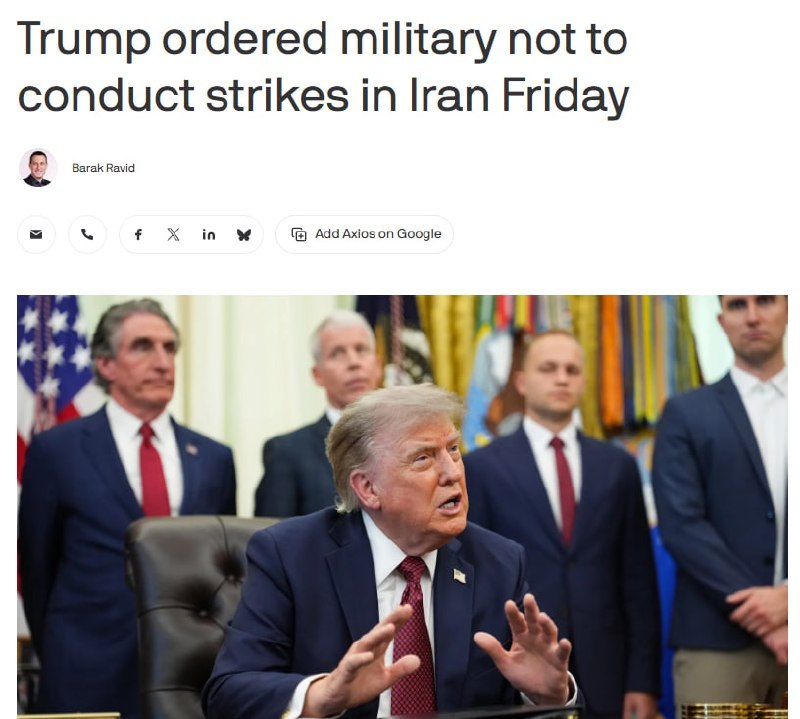
At 14:27 UTC on 13 July 2026, Cointelegraph’s newsroom wire carried a single-sentence bulletin: President Trump had declared the Strait of Hormuz would remain open, announced the reinstatement of something he called the "Iranian Blockade," and proposed a 20% reimbursement fee on cargo transiting the waterway. The wire did not contain a transcript, an implementing executive order, or a Treasury fact sheet. It contained a claim, attributed to the President, made on a stage in a place the bulletin did not name.
The market’s first question was not geopolitical. It was mechanical: who pays a 20% fee, on what cargo, denominated in what, and routed through which intermediary. A day earlier, on 12 July at 12:45 UTC, the same wire had logged a different signal. Eric Trump, asked about ether, said the asset was "pumping hard" after adding roughly $30 billion to its market capitalisation, then promptly dipped. A statement of that kind, made on a recorded video, is not market-moving on its own. Read alongside the Strait remarks, the two items sketch a single through-line: the Trump family brand is increasingly supplying price-relevant cues to two distinct markets, one ancient, one five years old, with no shared clearing mechanism and no shared regulator.
A 20% fee, a 21-mile chokepoint, and a clearing problem
The Strait of Hormuz is the narrow waterway between the Persian Gulf and the Gulf of Oman, bordered by Iran to the north and Oman and the United Arab Emirates to the south. At its tightest, navigational lanes are only a few kilometres wide. Roughly a fifth of globally traded petroleum passes through it, in normal years. The wire does not specify which cargoes the proposed 20% reimbursement would attach to, whether the figure is gross or net, or whether the revenue is to be collected by the US Treasury, a Gulf state, or a private underwriter. It does not name the legal mechanism. Without those details, the announcement functions less as a policy and more as a forward-looking price signal addressed at three audiences: tanker operators, oil futures traders, and the Iranian government.
A "reimbursement fee" is also an unusual phrase. A tariff is collected by a sovereign. A toll is collected by a transit authority. A reimbursement is, by definition, money returned to someone. The most plausible read is that the US intends to charge shippers, then redistribute a share of the take to an unnamed beneficiary, possibly a Gulf state or a private insurer, possibly both. None of that is in the wire. What the wire does establish is the price-formation effect: the moment a 20% number is in circulation, war-risk premia on Persian Gulf hulls reprice, reinsurance treaties get revisited, and the front-month Brent curve gets reshuffled by algorithmic desks that have been trained to react to keywords.
There is also a crypto angle to the chokepoint question that the wire did not draw but that the next 72 hours of price action will. Stablecoin issuers backed by short-dated US Treasury bills will be the marginal price-setters in any oil transaction that goes through a non-dollar corridor. A 20% reimbursement fee denominated in dollars and settled through a Gulf bank is a different instrument from a 20% fee collected in USDT, a stablecoin whose reserves sit in US money-market funds. The first clears through the Federal Reserve. The second clears through a Tether treasury wallet, with all the counterparty ambiguity that implies. The wire gives no signal on which settlement layer is contemplated, and that omission is itself a story.
The Eric Trump video, the $30 billion, and the line between commentary and price-setting
The 12 July Eric Trump remark arrived in a familiar format: a short vertical video, distributed through the family’s social channels, framed as a casual market read. "ETH is pumping hard," he said, after it added $30 billion to its market capitalisation, "and before the following dip." The Cointelegraph wire carried the quote at 12:45 UTC. The wire does not give the timestamp of the underlying video, the platform it was posted to, or the size of the dip that followed.
In isolation, a Trump family member commenting on a crypto market move is a marketing event, not a regulatory one. The history of the cycle, though, has been that presidential-adjacent communications travel fast and arrive in markets that cannot tell the difference between analysis and intent. World Liberty Financial, the Trump-linked DeFi venture, has spent 2025 and 2026 issuing a token, WLFI, and accumulating positions across multiple chains. The wire does not name World Liberty in this item, and Monexus has not independently verified any specific trade by that entity in the 72 hours around the 12 July video. What the wire does support is narrower: a member of the First Family publicly characterised a $30 billion market-cap move in ETH as a personal observation, and a major newsroom judged the remark worth a flash.
That is enough to surface a structural concern. The largest ether market-cap swings of this cycle have coincided, with uncomfortable regularity, with remarks by senior US political figures. The pattern does not prove causation. It does raise the question of whether the marginal buyer on a Trump-aligned ETH call is making a directional bet on the asset, or a directional bet on the political access that the asset has come to symbolise. The two are no longer cleanly separable.
The structural frame: when foreign-policy language and crypto liquidity share a vocabulary
What links the two Cointelegraph items is not the topic. It is the transmission mechanism. In both cases, a single verbal cue from a US political actor, with no implementing text, generated a market reaction whose scale exceeded the verifiable substance of the cue. The Strait of Hormuz announcement threatened to reprice oil freight, tanker insurance, and Gulf-state sovereign risk premia. The Eric Trump remark repriced a major crypto asset, at least briefly, and fed the news cycle for a day.
In a world where stablecoins settle an increasing share of cross-border commerce, the two channels of price formation start to compete for the same dollar of attention. A Gulf state that holds bitcoin or ether on its balance sheet to diversify away from dollar exposure will react differently to a 20% Hormuz fee than a Gulf state that does not. An Iranian counterparty that can receive USDT in a Trezor and convert it to rials on a Tehran bazaar will price the same fee differently from a counterparty that has to route through a correspondent bank in Dubai. None of these are hypothetical. They are the actual settlement topologies of the second half of the 2020s.
The deeper point, which the wire does not make because the wire only carries what a politician said, is that US foreign-policy signalling in the Gulf is now being received in two markets at once: the traditional commodities complex, and a parallel crypto complex that the US regulatory state has neither the appetite nor the legal architecture to discipline. The administration has, in the same period, signalled openness to dollar-backed stablecoins and scepticism toward the right of host countries to tax them. It has, separately, signalled the willingness to charge a 20% transit fee on the world’s most important oil corridor. The two positions can both be true. They cannot both be unconnected.
What the next 30 days will actually test
Three things are worth watching between now and mid-August 2026. The first is whether the Office of the US Trade Representative, the Treasury, or the Department of Transportation publishes anything that resembles implementing language for the 20% Hormuz fee. The absence of such a document would reduce the announcement to a price signal, which is what the markets are already pricing it as. The presence of one would force a fight in the WTO, in OPEC+, and inside the US Congress.
The second is whether Eric Trump or any Trump-linked entity, including World Liberty Financial, executes a publicly disclosed trade in ether or any other major crypto asset inside the 72-hour window around the next public comment of this kind. The wire does not establish that any such trade occurred around 12 July. The Securities and Exchange Commission has not, to Monexus’s knowledge, opened a public probe. A pattern, however, is what regulators act on, not a single data point.
The third is whether a major Gulf sovereign, or a major Gulf sovereign-backed enterprise, makes a stablecoin-denominated oil sale in the next quarter. If that happens, the question of whether the 20% reimbursement fee is settled in dollars or in a dollar-pegged token will be settled in practice, and the legal ambiguity that the wire’s short bulletin has so far concealed will move from theoretical to operational. Until then, the safest read is the boring one: a US administration that wants to be seen doing something about Iran, a crypto industry that wants to be seen doing something about geopolitics, and a price-formation layer that will keep mistaking the noise for the signal until somebody writes the rule book.
Uncertain ground
The Cointelegraph items that anchor this piece are short. They do not contain a transcript of the Hormuz remarks, an executive order number, a Treasury press release, or a Department of Defense coordinating statement. They do not identify the platform on which the Eric Trump video was posted, the size of the dip that followed his $30 billion figure, or any trade that the Trump family or its affiliates executed around the time of the remark. Monexus has not, for this article, filed freedom-of-information requests, reviewed court filings, or corroborated any of the price moves against on-chain data. The structural argument above is the editorial judgment of this publication, drawn from the wire items and from the public record on stablecoin settlement; it is not itself a sourced claim, and readers who require every paragraph to terminate in a citation should weight it accordingly.
Desk note: Monexus led on the settlement-topology framing rather than the partisan one. The wire items establish a presidential announcement and a family-member remark, not a scandal. The contribution of this piece is to read the two events as two data points inside the same transmission channel, and to flag the regulatory gap that the channel currently sits in.
Wire provenance
This editorial synthesis draws on the following public wire/social posts:
- https://t.me/s/cointelegraph/1987
- https://t.me/s/cointelegraph/1988
- https://t.me/s/cointelegraph/1975
- https://t.me/s/cointelegraph/1976