Trump's 47-year taunt and the diplomacy that didn't happen
Within an hour on 15 July 2026, the US president declared Iran would 'be defeated soon', claimed Tehran had called wanting to meet, and said Washington should have attacked 47 years ago. The sequence reads less like strategy than exhaustion.
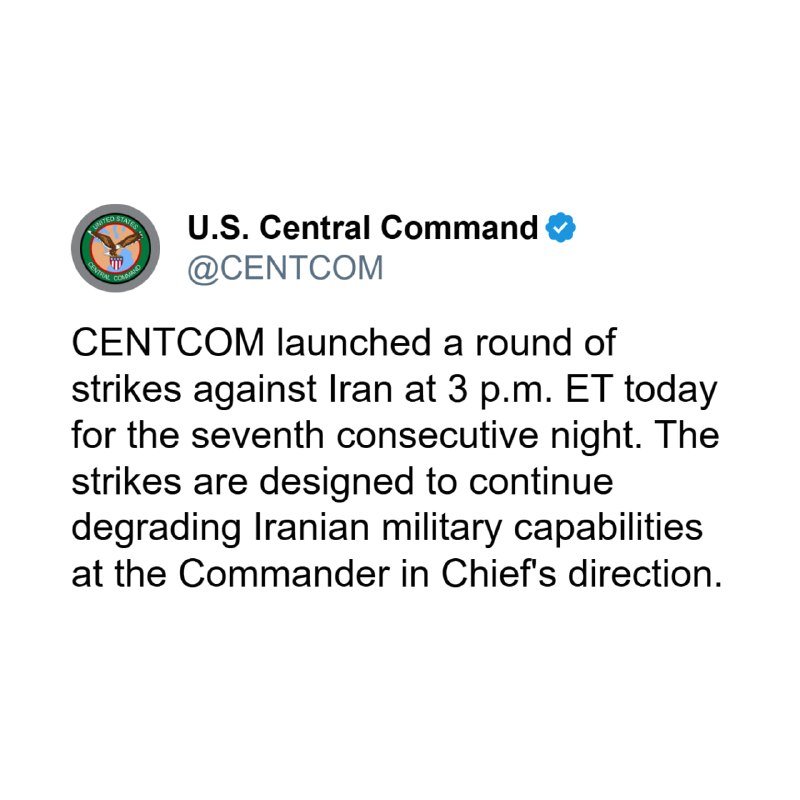
At 20:22 UTC on 15 July 2026, Iranian state-linked outlet Fars News carried a video of US President Donald Trump declaring that Iran "will be defeated soon" and "will fail very soon." Thirty-one minutes later, the President's own social channel said Iran had telephoned wanting a meeting. By 21:13 UTC, two parallel accounts of a third remark landed: that the United States "should have attacked Iran 47 years ago, it would have been much easier." Three statements, one evening, no negotiated text behind any of them. What is on the public record by midnight UTC is a sequence, not a policy.
The pattern matters more than any single line. A sitting US president moved inside an hour from declaring a foreign power would soon be defeated, to accepting a call from that same power, to musing about a 1979-style strike. Each statement was relayed by outlets with sharply different alignments: Iranian state media on the threat, a US-aligned X account on the call, and two aggregators on the historical taunt. None of them reported a concrete diplomatic deliverable: no venue, no date, no envoy named, no agenda.
The call that may or may not have happened
The most consequential claim of the evening is also the least sourced. According to a post on X by the account Unusual Whales at 20:55 UTC, Trump said he had "received a call from Iran, which he says now wants to meet with him." The post does not name a counterpart on the Iranian side, does not specify who initiated the conversation, and does not indicate whether any third party (Oman, Qatar, Switzerland) carried the message, as has been the practice in prior US-Iran back-channels.
Iranian state outlets had no immediate confirmation. Fars News and Press TV, both carried by Telegram channels with large followings, were instead amplifying the threatening and confrontational remarks rather than announcing a diplomatic opening. If Tehran had genuinely requested a summit, the absence of any matching Iranian readout is itself a data point. It suggests either a one-sided presidential characterisation, a probe that did not rise to the level of a formal request, or a deliberate Iranian decision to keep the asking price invisible.
The asymmetry is familiar. In prior rounds, Iranian willingness to talk has been signalled through intermediaries and read out by the foreign ministry in Tehran before any US confirmation. The 15 July sequence inverts that pattern: Washington claims the call, Tehran neither confirms nor denies, and the world is asked to take the US characterisation on faith.
The 47-year line
The remark attributed to Trump at 21:13 UTC, that the United States "should have attacked Iran 47 years ago," was carried by two Telegram channels, Megatron and DDGeopolitics, within seconds of each other. The line is rhetorically pointed: 1979 is the year of the seizure of the US embassy in Tehran and the start of the hostage crisis. To invoke it is to invite comparison with the trauma that has organised US-Iran enmity across five decades.
What the line does not do is announce a policy. It does not invoke Article 5, does not name a casus belli, does not request congressional authorisation, and does not move US force posture. It is a sentence, delivered on camera, repeated by aggregators. The work it performs is signalling, not statecraft: a reminder to Tehran that the rhetorical ceiling has been raised, and a reminder to a domestic audience that the President is willing to use historical grievance as a backdrop.
That framing carries costs. Iranian negotiators, who have spent two decades arguing that engagement with Washington is rational, lose political cover at home every time a US president frames Iran as an unvanquished 1979 holdout. The harder Washington talks about regime-defeat, the more any Iranian counterpart who picks up the phone risks being read in Tehran as capitulating. The 47-year line, on its own, narrows the space the President's own claim of a phone call needs to operate in.
A congressman, and the credibility question
Into that space walked Congressman Seth Moulton, whose remarks were carried by Press TV at 20:53 UTC. "No one trusts Donald Trump," Moulton said. "Most of the world thinks it's a waste of time talking to Donald Trump." The quote comes via an outlet with an editorial alignment opposite to Moulton's Democratic Party base; Press TV's choice to amplify it is itself an editorial act. The remarks are nonetheless on the public record and have not, as of the time of writing, been disputed by Moulton's office.
The substance of Moulton's claim is testable. A US president who is simultaneously announcing that an adversary will be defeated, that the adversary wants to meet, and that the adversary should have been attacked decades ago, is asking counterparties, allies and adversaries alike, to hold three incompatible beliefs at once. Moulton's framing, sharpened for television, is that no serious interlocutor will try. The press of allies in Europe, the Gulf and East Asia will be watching whether any capital treats the 15 July sequence as a basis for engagement or as another data point in a pattern.
What this episode is, and what it isn't
Read narrowly, the 15 July sequence is a single day's worth of remarks. It produces no document, no joint statement, no sanctions waiver, no force movement. The threats and the supposed opening exist in the same news cycle and cancel each other out in practical terms.
Read in the longer arc of US-Iran relations, the sequence is more diagnostic. A US president who cannot or will not stage-manage his own escalation ladder within a single evening is signalling to every regional capital, from Riyadh to Tel Aviv to Ankara, that the centre of gravity in the file is the President's mood rather than a working interagency process. That is not a counsel of despair; it is a counsel of low expectations. Adversaries will probe. Partners will hedge. The Gulf states that have spent two years trying to position themselves between Washington and Tehran will, in private, widen their own contingency planning.
What the public record does not yet contain is any independent corroboration of the Iranian call, any Iranian official readout, any allied briefing from a third capital, or any movement on the nuclear file, the sanctions architecture, or the prisoner dossiers that have historically been the coin of US-Iran engagement. Until one of those moves, the 15 July evening is best read as theatre: high-volume, low-substance, and self-cancelling within an hour of its own broadcast. The diplomatic calendar, not the cable-news cycle, will tell us whether anything was actually transacted.
Wire provenance
This editorial synthesis draws on the following public wire/social posts:
- https://t.me/s/Farsna
- https://t.me/s/PressTV
- https://x.com/unusual_whales/status/
- https://t.me/s/megatron_ron
- https://t.me/s/DDGeopolitics