Spain and Argentina book places in a 2026 World Cup final that no model saw coming
Spain beat France and Argentina edged England in Tuesday's semifinals, setting up a final that left prediction markets and a $1.5 million England backer staring at the bracket.
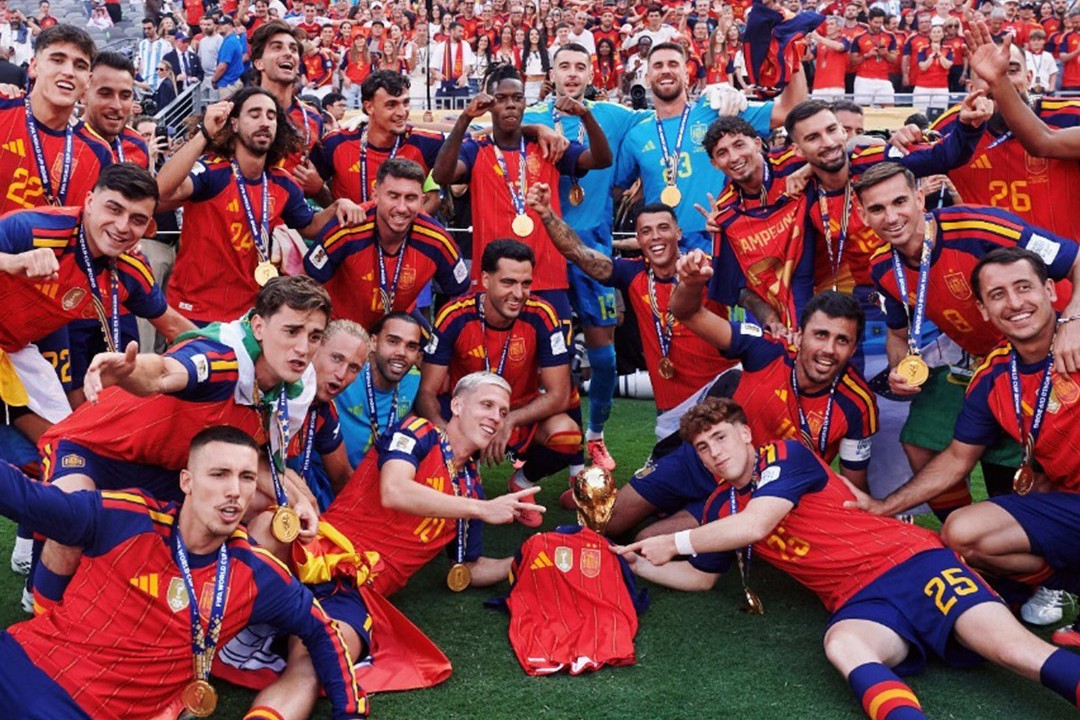
Spain and Argentina confirmed their places in the 2026 World Cup final on Tuesday evening, completing a semifinal double-header that upended the tournament's pre-game pecking order and left a $1.5 million prediction-market wager on England exposed to a 2-1 defeat. According to Telegram channels Euronews, Insider Paper and the RNIntel news wire, Spain became the first finalist by eliminating France, before Argentina joined them in the title match with a one-goal victory over England.
The pair of results, both timestamped in the 21:00 UTC window on 15 July 2026, crystallises a final that few bracket-builders and fewer bookmakers had on their sheets before kickoff. The tournament, hosted across the United States, had spent its early rounds tilting toward a European heavyweight and a South American counterpunch; instead, the bracket now hands the trophy to either a Spain side that has quietly reasserted possession-based football against a fading French generation, or an Argentina squad that has made a habit of late-tournament eliminations.
How the bracket broke
Euronews's flash on the second semifinal reported the scoreline as England 1, Argentina 2, framing the result in its own bulletin as "Clumsy Foot" making the difference, a line the channel uses to flag the decisive moment of a match. The earlier Insider Paper wire, retweeted through the same window, carried the result as a "BREAKING" alert that Argentina had eliminated England by the same margin. The two reads are consistent: a one-goal Argentine victory, sealed in the second half of a match that England needed to win to keep its own World Cup storyline alive.
Spain's path was set earlier in the evening, when RNIntel's wire logged the first finalist as Spain following their win over France. The tournament's format, with both semifinals played on the same calendar day, compressed two decisive results into roughly two hours of news traffic and gave Polymarket's settlement engine two bracket-shifting prints in quick succession.
The prediction-market print
The market had been telling a different story as recently as Tuesday afternoon. At 18:19 UTC, Polymarket retweeted a $1.5 million position placed on England to advance past Argentina, a wager structured to return $2,730,946 if successful. The size of the ticket made it the loudest signal of the day: a single account, willing to lock in a six-figure payout against a single binary outcome, betting that England would be in the final.
By 21:03 UTC, the same platform's account was reporting that Argentina would face Spain. The position had been live for under three hours before the result rendered it worthless. The episode is a useful reminder that prediction markets aggregate conviction, not consensus: one well-capitalised account can shift the implied probability of an event without that event becoming any more likely. The settlement price, which Polymarket does not yet disclose in the thread context, will be the cleanest read on how exposed the order book was to the eventual outcome.
A final the odds did not invite
The two teams now heading to the title match had occupied very different places in the pre-tournament conversation. Spain entered the 2026 cycle with a squad widely treated as a work in progress, a side whose possession patterns remained recognisable but whose conversion rate had been the subject of steady punditry through the European qualifiers. France, by contrast, arrived as one of the favourites, with a squad built around a core of players for whom this tournament was meant to be the cap on a major-tournament run. The semifinal result, as relayed by the RNIntel wire, is the first clean elimination of that French generation at a World Cup since the previous cycle.
Argentina's case is more complicated. Defending champions carry a target on their backs and a baseline expectation that they will reach the latter stages, but the team that turned up in North America had spent the group stage absorbing criticism for an unsettled front line. The semifinal result, as reported by Euronews and Insider Paper, will not settle that debate on its own; it will, however, reset the conversation. England, the side whose fans had spent the build-up to the semifinal openly weighing what a final would mean for a generation, leave the tournament with a question instead of an answer.
What the wire did and did not say
The sources available at the time of writing are limited to Telegram-channel bulletins and Polymarket posts. They confirm the two scorelines and the final pairing, and they document the existence and size of the England-backed position on Polymarket. They do not include goal scorers, attendance figures, stadium identifications, or any on-the-record quotes from managers or federations. Any of those details in further coverage will need to be sourced from the established match-reporting outlets once their filings are public. For now, the headline facts stand: Spain and Argentina, 1-2 scorelines in their respective semifinals, a final between them, and a six-figure prediction-market position that did not pay out.
The remaining uncertainties are straightforward and worth naming. The exact margin of Spain's win over France is not specified in the wire bulletins beyond the fact of victory; the timing of the decisive Argentina goal is not in the source material; and the identity of the account that placed the $1.5 million England position is not disclosed by Polymarket in the thread context. Each of those is a routine follow-up, and each will surface in standard match reporting in the next 24 hours.
Desk note: Monexus treated the Tuesday semifinals as a sports-business story as much as a sporting one, foregrounding the prediction-market print alongside the scorelines. Wire outlets focused on the goals; the betting position tells a separate, equally honest story about where the smart money thought the bracket was heading.
Wire provenance
This editorial synthesis draws on the following public wire/social posts:
- https://t.me/rnintel
- https://t.me/insiderpaper
- https://t.me/euronews