Las Vegas becomes the offseason crossroads as agents eye a path back from the NBA to college
The same sin-city floor hosting NBA Summer League rookies is now drawing college coaches and agents weighing whether a new age-based eligibility rule could send players back to campus.
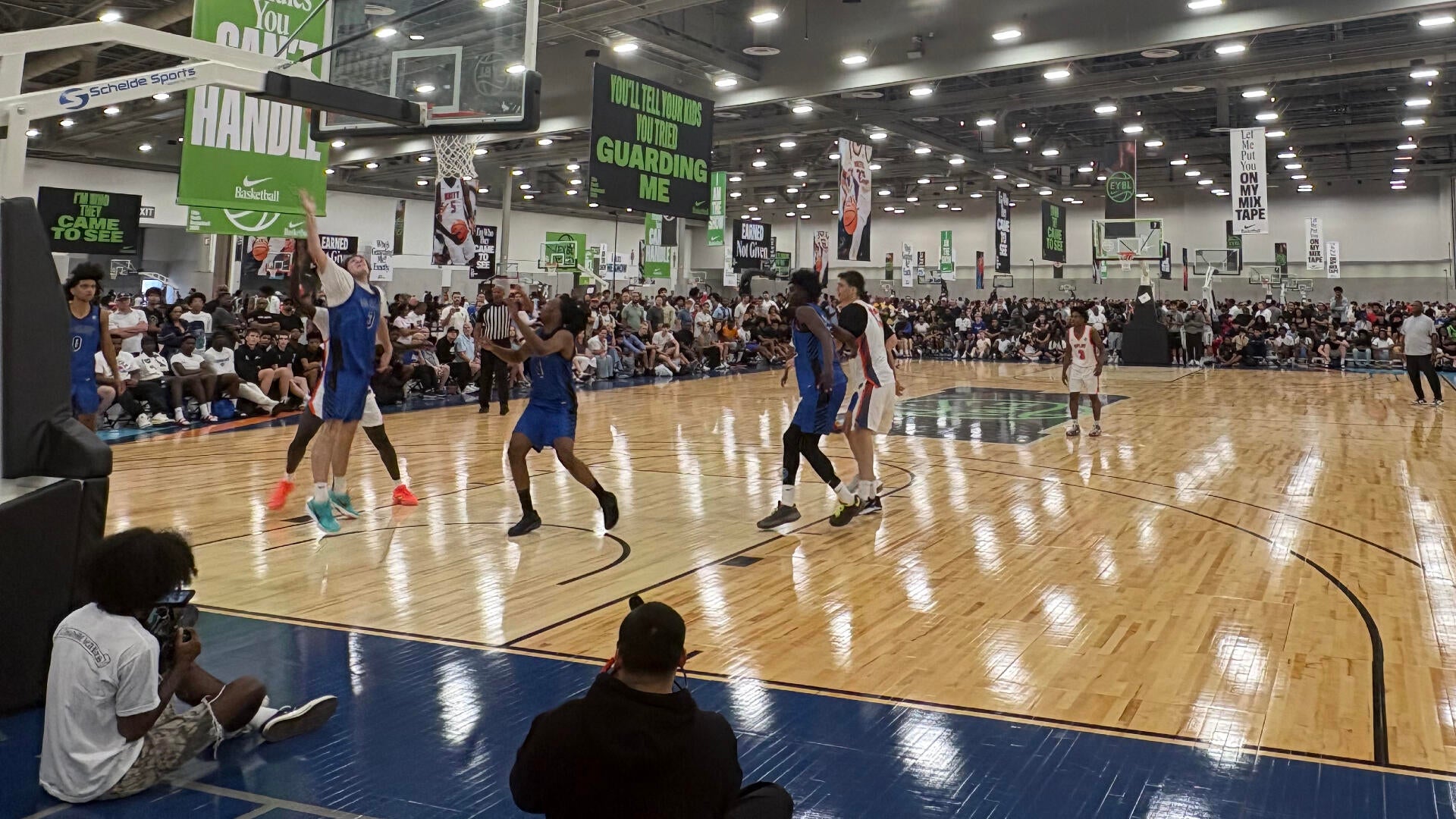
On 13 July 2026, CBS Sports reported that the Las Vegas gym hosting NBA Summer League doubles this month as an evaluation site for college basketball coaches, with the NBA's ten-day rookie showcase and the NCAA's July evaluation period running on top of each other on the Strip. The overlap is not accidental. It is the early signal of a recruiting architecture that has begun bending around a new eligibility rule and the legal challenges now circling it.
The arrangement matters because Las Vegas was not built for this. The summer league has long run as a try-out forum for marginal NBA talent, attended mostly by front-office scouts and agents looking for two-way inventory. The college game has its own July live period, restricted to certified coaches operating in designated window. That two circuits had co-existed for decades without meaningful crossover. In the past year, they have started to overlap in ways the NCAA cannot easily police and cannot easily unwind.
A rule under legal fire
At the centre of the new alignment is the NCAA's age-based eligibility rule, which imposes a years-from-graduation cut-off in place of the older amateurism model. CBS Sports reported on 14 July that the rule is facing legal attacks and that some agents now see a pathway for players to move from the NBA back into college rosters. The mechanics of that pathway were not specified in the reporting, and that omission is itself the story: nobody running a college programme or a player's representative is willing to lay out the route on the record while the litigation is open.
What the sources do establish is direction of travel. The rule's existence created an opt-in for players who would previously have declared for the draft and lost eligibility. Lawyers attacking it have framed the rule as restricting employment mobility, a bracket in which antitrust-style claims have a workable structure. If the rule falls, or narrows, the talent flow does not just continue upward from college to the NBA. It can reverse, briefly, for players already inside pro systems who want a college chapter on their resume.
Las Vegas as the new offseason capital
The geography of who-talks-to-whom has shifted with the rule. CBS Sports's 14 July piece characterised Las Vegas as "poised to become an annual offseason mecca" because the NBA showcase and the NCAA evaluation window share a fortnight on the calendar and roughly a square mile of Strip-adjacent gym space. Agents who would previously have spent July working the AAU circuit now have a reason to be in the same building as college head coaches on the same day.
The practical upshot is information asymmetry in reverse. For most of the modern recruiting era, the NBA held the leverage: agents controlled the draft board and college coaches had to chase. In Vegas this month, college coaches can sit second-row at a Summer League box and watch a prospect they are quietly recruiting walk through NBA offensive sets, then walk out into a hallway where the same prospect's agent is also standing. That is not how July used to work. The reporting describes the new arrangement as something the parties expect to keep.
The roster chaos question
Whether any of this shows up on a fall roster depends on litigation outcomes that the source material does not yet resolve. College coaches are bracing for "more roster chaos," in CBS Sports's framing, a phrase that doubles as a warning about scholarship caps, compliance offices, and the bureaucratic load of re-recruiting a player already on a professional contract. The most plausible alternative read is that the rule survives its initial legal test in modified form, the NBA-to-college flow stays a niche path used by a handful of players, and the July crossover persists mainly as a recruiting-acceleration tool rather than a true talent-recycling mechanism. The reporting leans toward the more disruptive scenario without committing to it.
Either way, the institutional players have already moved. Summer League broadcast schedules have expanded. The NCAA's evaluation window has been calibrated, in practical terms if not always by rule, around the Vegas dates. Coaching staffs have added staff whose specific job is to be in those buildings in July.
Stakes and what to watch
The next dated milestones are not on this article's horizon yet. A ruling on the rule itself, in whatever forum the legal challenges sit, would be the cleanest inflection point. Until then, watch the rosters. If NBA Summer League box scores in 2027 carry college-programme logo watermarks on player tracker graphics, the rule has already done its reshaping work in advance of any court decision.
This piece was reported using CBS Sports reporting dated 13 and 14 July 2026, plus NBA Summer League broadcast threads from the same window. Monexus framed the story around the rule's legal status and the calendar overlap, rather than treating Vegas as a venue-market story.
Wire provenance
This editorial synthesis draws on the following public wire/social posts:
- https://t.me/NBALive