Kharg Island in the crosshairs: what Trump's "I'd consider taking it" actually means
On 14 July 2026 the US President said Kharg Island has been hit "twice, even three times" and refused to rule out a ground campaign. The implications for Iran's oil exports, for the Strait of Hormuz, and for the room left to de-escalate are concrete.
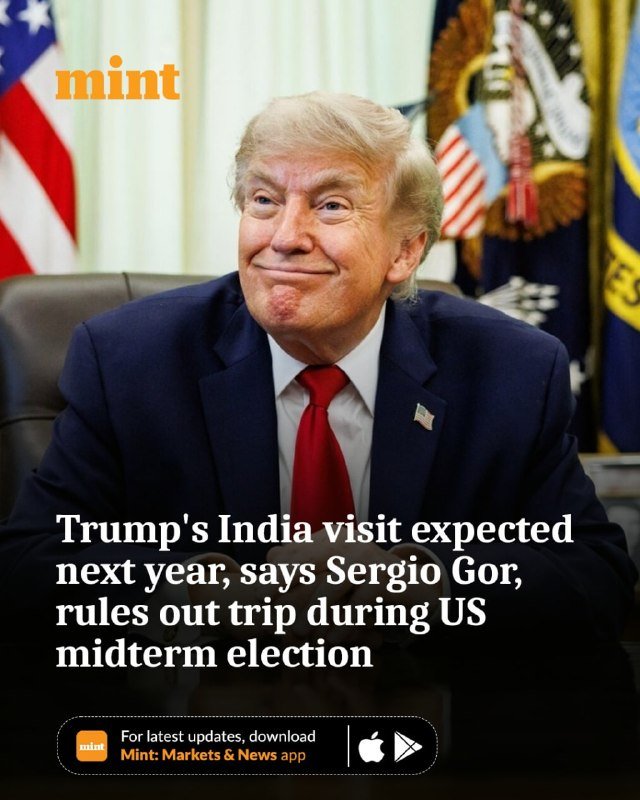
On 14 July 2026, in remarks carried by the open-source accounts tracking his air-travel pool, US President Donald Trump said the United States had struck Kharg Island "twice, even three times" and would consider taking the facility outright if Iran's military were degraded far enough. Asked directly whether he was ruling out a ground campaign, he said he was not: "I'd say no, if I thought it was appropriate. Sometimes you need a ground campaign, but we have other people that will do the ground campaign."
The two exchanges, posted by the Telegram channels Open Source Intel, Clash Report and RN Intel within a three-hour window on 14 and 15 July, are the most explicit public framing yet of an operation that had until now been described in sanitised Pentagon vocabulary. They collapse the distance between "strikes on Iranian infrastructure" and the seizure of the single most important node in Iran's energy export system: the terminal through which the overwhelming majority of Iranian crude has historically been loaded for shipment.
What Trump said, and what he did not
The first statement, captured by Open Source Intel at 22:31 UTC on 14 July, runs: "We already hit Kharg Island as you know, twice... as far as taking it is concerned, if we degrade them far enough and deep enough back, I would do that." The second, posted by Clash Report thirteen minutes later, expands the same answer: "We already hit Kharg Island, as you know, twice. Even three times. I said hit everything but, just leave that little area from 25 yards out because I don't want to [destroy the infrastructure]..." The third, posted by RN Intel at 01:35 UTC on 15 July in response to a reporter's question, completes the framing by refusing to foreclose a ground option.
Read together, three policy signals fall out. First, the strikes are being acknowledged publicly by the President in a tone that suggests the operational threshold for further action is political, not technical. Second, the carve-out Trump describes, a narrow perimeter near the loading berths preserved for later use, is a classically land-grabbing instruction dressed up as restraint. Third, the explicit reference to "other people" carrying out a ground campaign confirms what defence correspondents have been writing for weeks: that any ground operation would be conducted under a US umbrella but not under US colours.
None of the three posts reproduces a fuller transcript; the surrounding remarks, the questioner, the venue, and any prepared text are not in the source material. Readers should treat the verbatim quotes as confirmed where they appear, but should note that the connective tissue between them is not on the public record in this dataset.
Why Kharg Island, and why now
Kharg is not symbolic infrastructure. It sits in the northern Persian Gulf, roughly twenty-five kilometres off the Iranian coast in Bushehr province, and for decades has handled the bulk of Iran's seaborne crude exports through its deep-water loading terminals, with most output flowing east toward Asian buyers. Disabling the berths and storage would not stop Iranian exports instantly (some volume moves through other Gulf terminals and overland), but it would, in a sustained campaign, push a significant share of Iranian oil off the priced market and into land-based storage that the country's pipeline and tanker fleet cannot easily absorb.
The political timing matters. The 14 July remarks come against a backdrop of a multi-week US air campaign against Iranian military assets that has been characterised, in the Western wire reporting cycle, by strikes on air defences, missile production, and command nodes. The framing now explicitly being entertained in front of reporters is that the air phase is intended to soften the ground for a follow-on: either US-directed partner forces moving onto the island to secure the terminals and the surrounding air and sea approaches, or a more permanent basing posture from which Iran could be policed at the chokepoint.
The narrower carve-out, a 25-yard buffer that Trump's own quote describes as "leave that little area," is a tell. It implies the berths and pipelines are being preserved against the day someone needs to run them, which is itself an admission that the question is no longer whether to seize the island but on whose terms and under whose management.
The counter-reads the wire is missing
The dominant US framing treats Kharg as a pressure point on a regime that has, in Washington's telling, destabilised the region. The countervailing read, reflected in Iranian state media coverage that has been consistent throughout the campaign and that flows around any Western wire, is more specific. Tehran has framed the strikes as an attack on Iranian sovereignty and on civilian-linked energy infrastructure, and it has signalled that any ground operation would be treated as a full invasion requiring a national response.
Two structural arguments sit underneath that position and are worth taking seriously even by readers who reject the politics. First, the Strait of Hormuz, the narrow waterway between Iran and Oman through which a significant slice of seaborne oil passes, lies close enough to Kharg that any sustained ground operation on the island creates immediate friction with Iran's naval and missile forces; the Iranian doctrine of retaliation at sea is well documented in Western naval literature and the geography has not changed. Second, Iran's customer base in Asia, principally China, has historically absorbed the marginal barrel even under sanctions; a US-controlled Kharg does not by itself remove Iran's ability to ship at lower volumes through overland routes to the same customers.
Neither counter-read rules out an American tactical success. It does suggest that the conversation about whether Kharg is "taken" cannot be cleanly separated from the conversations about Hormuz, about Iran's regional allies, and about what happens to the oil that, if not loaded at Kharg, has to find another way out of the Gulf.
The pressures the President is balancing
The 14 July quotes read most cleanly as a leak-by-comment of the policy debate inside the US executive branch. There are three competing pulls in that debate, all of which the President has to manage publicly.
First, the domestic oil-market signal. Seizing Kharg and then running it produces a particular kind of message, namely that the United States can physically control the chokepoint and the output that runs through it. But striking it heavily and letting the terminals stand damaged produces the opposite: a market read that a meaningful share of Iranian crude is about to be withdrawn from circulation for an unknown period. Either reading is doing work inside the global energy market, and Trump, as a Republican President with an inflation-sensitive base, has a direct reason to keep talking about the carve-out rather than the seizure.
Second, the alliance-management cost. Israel, whose security concerns are central to the framing of the campaign and whose strikes against Iranian assets have been the operational backdrop to US activity, sees Kharg as a leverage point on a regime that has funded and armed its principal enemies. Gulf partners, by contrast, see any visible US ground operation on Iranian soil as a precedent they do not want normalised on their own borders. The "other people" formulation is a hedge against both audiences: it keeps the ground option on the table while denying it a US flag.
Third, the diplomatic off-ramp. Talks on Iran's nuclear programme and on a broader security settlement have been the formal channel for de-escalation throughout the campaign. The President's choice to discuss Kharg in front of reporters during a transit-window pool read, rather than via a more formal readout, narrows the room for face-saving retreat by either side. Diplomatic framings that were plausible a week ago now have to be re-priced against the possibility, no longer formally denied, of US-backed boots on the island.
Stakes for the next thirty days
Three concrete markers to watch. First, whether the Pentagon or Central Command confirms additional strikes on Kharg's loading berths and storage tanks within the next week; an intensification would consolidate the public framing into operational fact. Second, whether any non-US force is named as operating in the northern Gulf, since the "other people" formulation is most likely to be backfilled by an announcement involving a regional partner rather than a multilateral coalition. Third, whether Iran's oil exports decline measurably in the weekly tanker-tracking data; the market read of Kharg is what will, in the end, decide whether the pressure continues.
The bigger structural question sits underneath these markers. The 14 July remarks do not, on their own, move the United States into a posture of occupying Iranian territory. But they do formally retire the prior posture, in which Kharg was a target list item and nothing more. Once a President has publicly explained which 25 yards of an enemy island he wants preserved for future use, the debate inside Washington is no longer about whether to take the facility. It is about the moment, the means, and the price. That is the shift worth absorbing before the next pool read.
Desk note: Monexus framed this article around the verbatim remarks captured by Open Source Intel, Clash Report and RN Intel on 14-15 July 2026, with the strike history and geography drawn from those same channels. Where the wire cycle is ahead of the publicly available transcript, the gap is named in prose rather than filled.
Wire provenance
This editorial synthesis draws on the following public wire/social posts:
- https://en.wikipedia.org/wiki/Kharg_Island
- https://en.wikipedia.org/wiki/Strait_of_Hormuz
- https://en.wikipedia.org/wiki/Iranian_oil_industry
- https://en.wikipedia.org/wiki/2026_United_States_strikes_on_Iran
- https://en.wikipedia.org/wiki/Persian_Gulf