Tokyo opens the gate: Japan classifies crypto as a financial instrument, and the bills are already piling up in Washington
Japan's Diet has passed a bill treating crypto as a financial product, with a flat 20% tax and a runway for Bitcoin ETFs. Two days earlier, the US Senate was being told China would eat Washington's lunch if the CLARITY Act stalls.
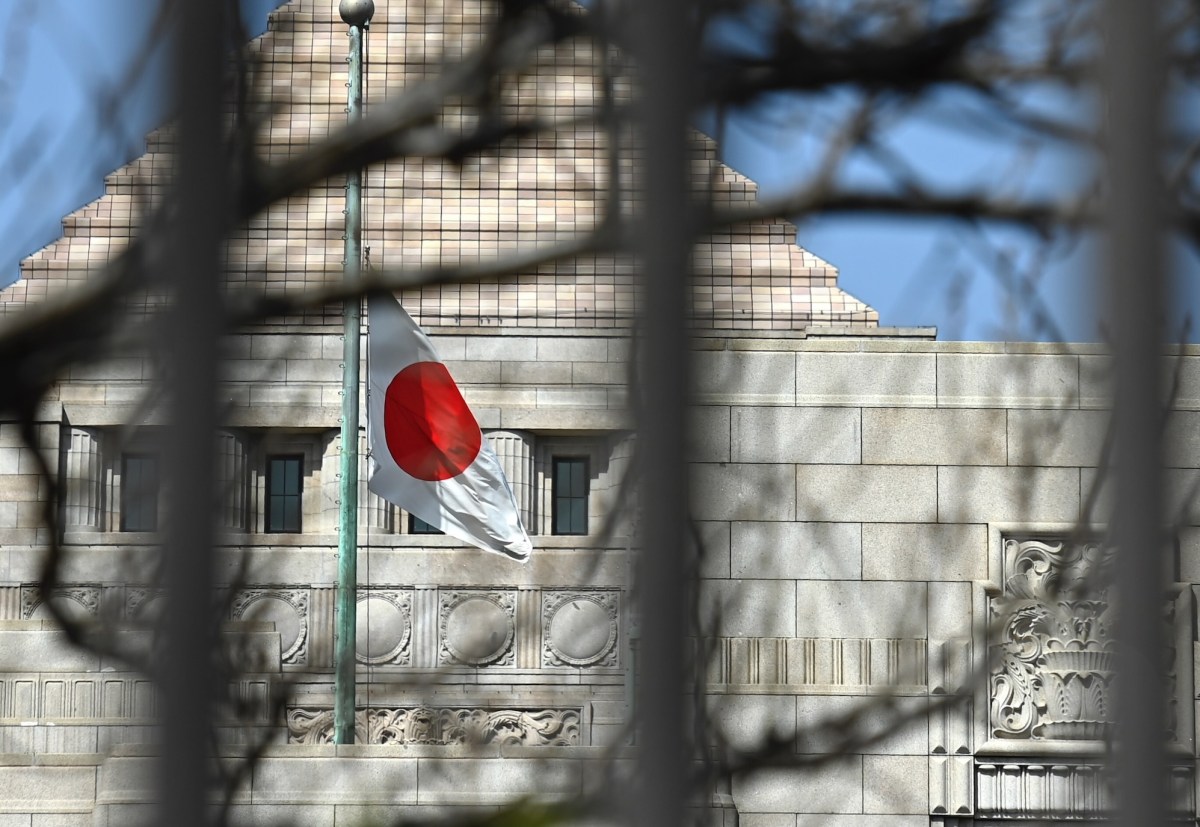
Japan's parliament passed a bill on 15 July 2026 that classifies cryptocurrencies as financial instruments, lining the country up for its first domestic Bitcoin exchange-traded funds and pinning retail gains to a flat 20% tax rate, according to a Cointelegraph wire flash at 08:25 UTC.
The text has not yet been published in English by the Ministry of Finance or the Financial Services Agency in the materials available to Monexus, and the rate is being reported as "around 20%" rather than as a statutory figure. That is a small but important caveat: a Diet vote is not the same as a published implementing ordinance, and Japan's regulators have a habit of tightening the screws on crypto in the years after a permissive headline. But the directional signal is unmistakable. Tokyo has decided that the asset class belongs inside the perimeter, not beside it.
What makes the timing interesting is the company the bill is keeping. On 13 July at 15:05 UTC, Cointelegraph carried remarks from President Donald Trump pressing the US Senate to pass the CLARITY Act, the market-structure bill that would draw the line between the Securities and Exchange Commission and the Commodity Futures Trading Commission for digital assets. The argument he used was not the usual one about consumer protection or financial stability. It was that China would otherwise take the lead in digital finance and artificial intelligence.
This publication finds that the two stories, taken together, mark the moment the global crypto regulatory race stops being a niche policy story and becomes a piece of great-power positioning. The capital is moving. So is the framing.
Tokyo redraws the perimeter
Japan's existing crypto regime, built after the 2018 Coincheck hack, treated tokens as a payments instrument under the Payment Services Act and subjected exchanges to registration and segregation rules. The new bill lifts tokens into the same conceptual neighbourhood as stocks and bonds. That is the legal precondition for ETFs, because Japan's trust banks and asset managers will not wrap an unregulated asset in a regulated wrapper, and it is the precondition for the flat tax, because capital-gains treatment presupposes an instrument that produces a capital gain.
The 20% figure lines up neatly with Japan's existing rate on listed securities. The political message is that retail traders will not be punished for moving from shares to tokens: same bracket, same filing line, same incentive to disclose. Whether the rate holds through Diet committee review is the open question. Japan's bureaucracy has historically preferred a separate, heavier crypto rate; the Financial Services Agency may yet insist on a 30% band for high-frequency traders. The wire reporting gives "around 20%" rather than a settled number, and that is the right way to read it.
The deeper story is what this does to the Asian league table. Hong Kong opened spot Bitcoin and Ether ETFs in April 2024 and has been working on a broader licensing regime since. Singapore keeps retail crypto tightly fenced through the Monetary Authority of Singapore's payment-services framework. South Korea's military-style outflow controls are tightening, not loosening. Tokyo, with the third-largest equity culture in the developed world, has just chosen the permissive end of the spectrum. Capital allocators notice that kind of choice.
Washington's stall, Beijing's slow grind
The CLARITY Act has been bouncing between Senate committees for two Congresses. The political problem is structural: it requires both chambers to agree on which agency owns which token, and every senator with a major bank in their state has a view on that question. Trump's intervention on 13 July was a pressure play aimed at his own party rather than at the opposition. The lever he chose was geopolitical, not domestic.
The framing matters because it concedes something American crypto lobbyists have spent years refusing to concede: that the regulatory question is not primarily about protecting retail investors. It is about which jurisdiction writes the rulebook that the next decade of digital finance operates under. If the United States cannot decide whether a Bitcoin spot ETF is a security or a commodity, issuers route the product through Hong Kong, Singapore, Dubai or, as of this week, Tokyo.
China's position is harder to read from the outside. On 15 July at 02:34 UTC, Cointelegraph carried data showing China's Q2 GDP growth slowing to its weakest pace since late 2022, missing expectations. Beijing has banned crypto trading on the mainland since 2021 and has not loosened that line. But "China takes the lead in digital finance" is not a statement about Bitcoin. It is a statement about central bank digital currency infrastructure, tokenised real-economy settlement, and the cross-border payments rail that the digital yuan is being threaded through the BRICS expansion, the Shanghai Cooperation Organisation, and the Lancang-Mekong corridor. On that terrain, Beijing is not behind. It is ahead of Washington by a working margin.
The mainstream Western wire read of the CLARITY Act debate is that it is a domestic turf fight between the SEC and the CFTC. That is the wrong altitude. It is a fight over whose courts and whose central-bank counterparties adjudicate the next generation of dollar-denominated digital instruments, and what the fallback is if the answer is "someone else's".
The counter-narrative, taken seriously
The bear case against the Japan move is straightforward and worth weighing. Crypto ETFs in the United States launched to a wave of outflows in their first eighteen months, and the academic literature on retail over-trading around Bitcoin ETFs is consistent: the wrappers do not, by themselves, deepen the market. They widen the front door and let more leveraged bets through it. Japan's ageing household balance sheet, heavily parked in cash and yen deposits, is not obviously the constituency that benefits most from a new tax-efficient casino.
There is a second critique from the Japanese tax authority's own institutional culture. Japan's National Tax Agency has historically preferred consumption taxes over capital-gains taxes because the former are harder to evade and politically less elastic. A flat 20% rate on crypto, equal to the rate on listed equities, is a gift to the cohort least likely to need it: salaried urban professionals already invested in Nomura's iDeCo and NISA wrappers.
A third critique, more often voiced in Tokyo than in New York, is that by tying itself to the 20% securities rate, Japan cedes the option of using a higher rate as a macro-prudential lever if retail speculation in tokens ever produces the kind of balance-sheet damage the 1989 bubble did. That is a real cost.
None of this undercuts the directional signal. Tokyo has chosen competition over caution, and the bill's passage makes that choice durable for at least the next Diet session.
Stakes, and the dates to watch
Three numbers will tell us whether this matters as much as it appears to. First, the bill's implementing timetable: if Japan's Financial Services Agency publishes draft cabinet orders within ninety days of enactment, the political signal has teeth. If the orders stall past the autumn Diet session, the bill becomes a talking point rather than a market. Second, the first Bitcoin ETF filing on the Tokyo Stock Exchange or the Osaka Exchange: that filing will name the issuer, the custodian, and the in-kind versus cash redemption model, and it will tell us whether Japanese regulators are comfortable with the structure that American issuers finally settled on after eighteen months of iteration. Third, the CLARITY Act: a Senate floor vote before the August recess would settle the question of whether Trump's pressure play worked.
In the background, the 14 July Trump-administration move to replace a 20% US reimbursement fee with Gulf trade and investment deals, paired with a blockade on Iranian shipping, is a reminder that the dollar's plumbing is being rearranged in the same week that crypto's plumbing is being rearranged. They are not the same story, but they are made of the same material: who sets the rules, in whose jurisdiction, on whose terms.
The plain editorial reading is that the contest over digital-asset regulation has stopped being a sector story and has become a piece of currency-statecraft. Tokyo has picked a side. Washington is being asked to. Beijing, by refusing to legalise retail trading, is letting the contest play out on its own terms without spending political capital on a domestic fight it does not need to win. The next ninety days will show whether the United States treats that posture as a challenge or as a gift.
Desk note: Monexus frames Japan's bill and the CLARITY Act pressure as a single contest over whose rulebook governs the next phase of digital finance, rather than as two unrelated regulatory stories. The China counter-frame is steelmanned: Beijing's CBDC-led posture is presented on its own terms, not as a derivative of US inaction.
Wire provenance
This editorial synthesis draws on the following public wire/social posts:
- https://t.me/s/cointelegraph
- https://t.me/s/cointelegraph
- https://t.me/s/cointelegraph
- https://t.me/s/cointelegraph