IRGC claims strike on US logistics hub in Kuwait, escalates shadow war on Gulf hosting
Iran's IRGC says it hit the KGL logistics centre at Mina Abdullah in Kuwait in a fourth-wave attack, putting Washington and its Gulf hosts on notice about the price of hosting US logistics for the region.
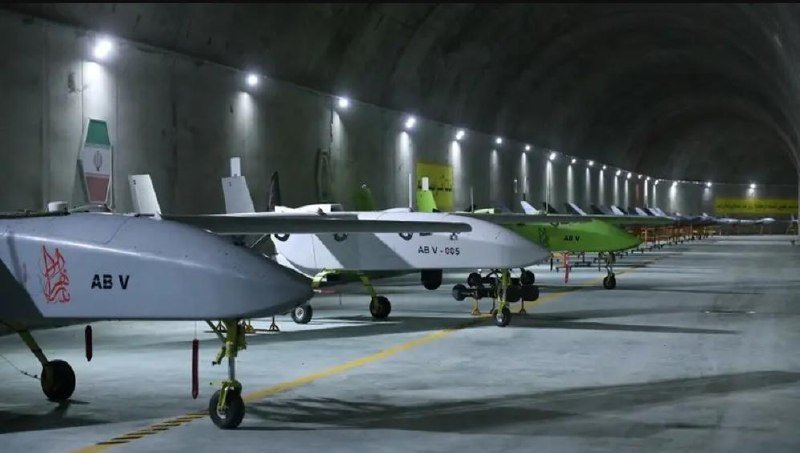
At 02:07 UTC on 15 July 2026, Iran's Islamic Revolutionary Guard Corps claimed responsibility for setting fire to the main US military readiness and support centre in West Asia, located at Mina Abdullah in Kuwait. The IRGC's English-language statement, carried by Tasnim, identified the target as the KGL logistics centre run by Kuwait and Gulf Link Holding Company, and framed the attack as the fourth wave of "Operation Nasr" under the operation code "Ya Abul-Hassan" [Middle East Spectator via Telegram, 01:52 UTC, 15 July 2026; Tasnim News via Telegram, 01:47 UTC, 15 July 2026]. Footage circulated by the Iran-aligned War Front Witness channel claims to show a Shahed-type drone striking a warehouse at the site [War Front Witness via Telegram, 01:57 UTC, 15 July 2026].
The strike matters less for what it destroyed than for what it targets: the connective tissue that lets the United States project power across the Gulf. Kuwait has hosted US logistics for decades without becoming a frontline state. That ambiguity is now the point of attack.
What the IRGC is actually claiming
The IRGC Public Relations statement, relayed in Announcement No. 11, names KJL, referred to as the main readiness and support centre of the American army in West Asia, and locates it in Mina Abdullah, a port area south of Kuwait City that has long hosted coalition logistics [Tasnim News via Telegram, 01:47 UTC, 15 July 2026; Tasnim Plus via Telegram, 02:07 UTC, 15 July 2026]. The statement explicitly references "the American enemy, who used to attack our bases last night," a phrase that signals an Iranian framing of retaliation rather than unprovoked escalation [Tasnim Plus via Telegram, 02:07 UTC, 15 July 2026]. Tasnim, the IRGC-affiliated outlet, is publishing these claims as primary content; the framing is official Tehran, not commentary.
Kuwait and Gulf Link Holding Company is a Kuwaiti-listed logistics firm that has historically handled port and warehousing work for US Central Command sustainment flows. The IRGC's choice of target, a private commercial entity that is functionally a US logistics node, is deliberate. It puts a legal-commercial buffer between the strike and the US flag while still hitting the operational bottleneck.
The footage War Front Witness circulated at 01:57 UTC purports to show a Shahed-series loitering munition striking a warehouse structure. The clip cannot be independently verified from the source material; the provenance is Iran-aligned, and the framing in the channel post attributes the strike to the IRGC.
The shadow logic of "Operation Nasr"
Tehran has spent the past several days using the "Operation Nasr" label for a sequence of strikes the IRGC frames as retaliation against regional US logistics. The repeated naming, fourth wave, named operation, named code, is messaging architecture, not military architecture. The IRGC wants Gulf states to read a pattern: every node that hosts US sustainment for Western Asia is in scope.
The choice of Kuwait is significant. Saudi Arabia, the UAE, Bahrain and Qatar host US Central Command facilities under formal defence agreements. Kuwait does too, but its politics are quieter, its public tolerance for visible US posture lower, and its parliament more willing to raise the cost of hosting. An attack on Kuwaiti soil forces a quieter host to confront a louder choice: publicly disavow the strike and demand protection, or absorb it and accept the framing of complicity.
The IRGC's claim that the target was hit by a Shahed-type drone also matters. Shahed-series munitions are inexpensive, attritable, and now produced at scale inside Iran. Using them against a logistics node rather than a hardened military installation is a cost-imposition choice: it tells Washington that even soft targets in permissive host countries are reachable, and that doing so does not require Iran's better air-defence-penetrating systems.
Counter-narrative: what the framing papers over
The Iranian framing, "the American enemy, who used to attack our bases last night", asserts a prior US strike on Iranian positions as casus belli. The thread sources do not contain independent confirmation of such a strike; the framing rests on the IRGC's own claim. That asymmetry is worth naming plainly: in this episode, the only on-record account of the precipitating event is the attacking party.
The Kuwaiti government has not, in the thread sources, publicly responded. US Central Command has not, in the thread sources, confirmed damage assessment. Without those confirmations, the strike's operational effect remains unverified. What can be verified is the public claim, the operational code, the named target, and the geographic location.
A second counter-narrative worth surfacing: Iranian-aligned outlets and Western wires have spent months describing the same kinds of events in incompatible vocabulary. Western coverage tends to read Iranian strikes as escalatory provocations; Iranian coverage reads them as proportional responses to a US posture that has been escalating for years. Both readings have evidence behind them. Neither is innocent. Monexus treats the IRGC's claim as a verified public statement by an institutional actor, and treats its framing as a framing, not as a finding.
Structural frame: why logistics, and why now
The pattern visible across these threads is not really about Mina Abdullah. It is about the architecture that lets the US sustain forces across Western Asia without forward-deployed mass: ports, warehouses, commercial logistics contractors, pre-positioned stock, and host-country agreements that keep the visible footprint small. Iran has spent two decades learning to read that architecture. Striking a Kuwaiti logistics centre does not require defeating US air defences; it requires making the cost of hosting US logistics higher than the rent.
That is a different problem than the one most Gulf security commentary is built to discuss. Traditional Gulf defence thinking concentrates on missile defence, interceptors, integrated air operations, and the credible promise of US reinforcement. None of those are useful against a single one-way attack drone hitting a commercial warehouse. The defence that fits is dispersal, hardening of commercial nodes, and host-country political will to accept retaliation. Iran is betting the third is the weakest link.
The "Operation Nasr" labelling also serves a domestic-Iranian function. Naming, sequencing, and coding strikes lets the IRGC present a campaign narrative inside Iran that demonstrates reach, resolve, and operational discipline. Each named wave resets the credibility window. The cost of admitting a strike matters less than the cost of being seen as unable to retaliate.
Stakes and what to watch
The immediate stakes are operational. If the IRGC's claim is accurate, US logistics throughput into the Gulf has been disrupted at a node that handles non-trivial sustainment flow. If it is inflated, the strategic effect is almost as large: Gulf hosts now have to plan for the possibility that their territory will be Iranian-struck regardless of their formal posture.
Three things to watch over the next 72 hours. First, the Kuwaiti government's public response and whether it frames the strike as an attack on Kuwaiti sovereignty. Second, US Central Command's damage assessment and any visible force-posture changes at Mina Abdullah or at other Kuwaiti facilities. Third, whether the IRGC's "fifth wave" naming convention appears, and what it targets. The campaign logic predicts escalation in salience even if not in destructive scale.
What the sources do not specify, and what therefore remains uncertain, is the actual damage at KGL, the presence or absence of US personnel casualties, and whether any third-party state has corroborated the strike independently. The thread sources are entirely Iran-aligned or Iran-adjacent. Independent confirmation has not, as of the time of writing, appeared in the materials available to this publication.
Desk note: Monexus treats the IRGC's claim as a primary public statement by an institutional actor and reproduces its naming and operational code without endorsement. The framing of "the American enemy" is the IRGC's, not this publication's. Independent damage assessment and host-government response, when they appear, will be added to this thread.
Wire provenance
This editorial synthesis draws on the following public wire/social posts:
- https://t.me/tasnimnews_en
- https://t.me/Middle_East_Spectator
- https://t.me/wfwitness
- https://t.me/tasnimplus