Iran strikes US naval facilities in Bahrain and Kuwait, claims expanding Gulf campaign
Iranian-aligned channels say missiles hit a fifth US naval facility in Bahrain while drones target Kuwait, marking a sharp escalation in a shadow Gulf war. Independent verification remains thin and the operational picture is moving fast.
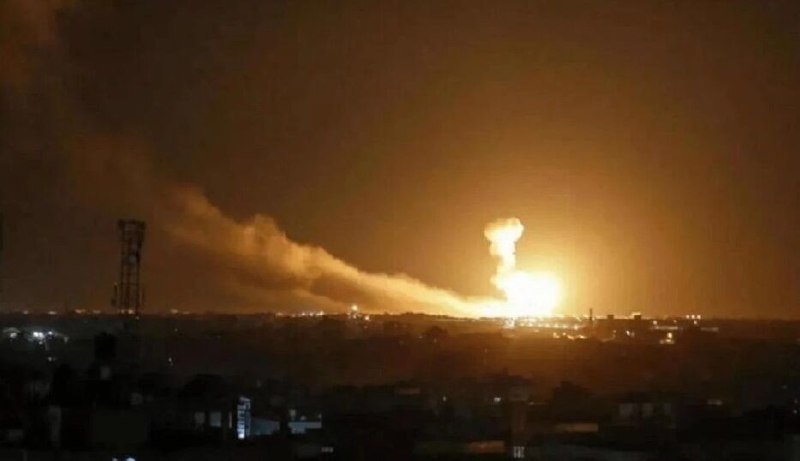
At 00:27 UTC on 15 July 2026, Iran's Tasnim News agency circulated video it described as a successful Iranian missile strike against a fifth United States naval installation in Bahrain. Eight minutes earlier, the JahanTasnim channel repeated the same claim. By 00:22 UTC, the Telegram channel intelslava was reporting that Kuwait and Bahrain were repelling Iranian drone attacks, and a separate account, AMK_Mapping, said fighter jets were airborne over Kuwait to intercept Iranian drones. The four messages, posted within five minutes of one another, sketch an escalation in the long-running shadow war between Tehran and Washington's Gulf posture, and a posture that is being asserted almost entirely through Iranian-aligned media channels.
The immediate claim, if it holds, is consequential. The United States Naval Forces Central Command, the Fifth Fleet's parent organisation, has long operated from Bahrain, where facilities at Mina Salman and elsewhere host roughly 5,000 US personnel. Kuwait hosts forward-deployed expeditionary forces and is part of the layered US Gulf air defence picture. A coordinated Iranian strike package aimed at multiple host-nation bases, even one inflated for propaganda effect, points to a new phase of risk for the Gulf monarchies that host American power, and for the civilians who live around those bases.
What the Iranian channels are asserting
The four messages converge on a single narrative line: Iran is now hitting US military infrastructure in Bahrain and Kuwait in a widening campaign, and air defences are active. Tasnim and JahanTasvim, both outlets affiliated with the Islamic Revolutionary Guard Corps, presented the Bahrain strike as a fait accompli, with imagery Tasnim said showed the impact. Intelslava, an open-source-focused conflict channel that aggregates both Ukrainian and Middle East battlefield claims, framed the event as a simultaneous Bahrain-Kuwait drone assault. AMK_Mapping, which on past episodes has closely tracked Iranian-aligned activity in Syria and Iraq, added the operational detail about Kuwaiti interceptors.
No Western wire, no Pentagon spokesperson, no Bahraini or Kuwaiti government statement appears in the thread. That is the central reporting problem. Iranian state-adjacent outlets have, in previous rounds of the regional confrontation, claimed strikes that did not land as advertised, while in other cases they have under-reported successful operations for operational-security reasons. A reader weighing these four messages should treat them as Iranian-sourced battlefield claims, not as corroborated battlefield outcomes.
Why the Gulf monarchies matter to both sides
Bahrain and Kuwait are not neutral ground. Bahrain hosts the operational headquarters of the US Fifth Fleet, the Navy's main platform for maritime security across the Persian Gulf, the Strait of Hormuz, the Red Sea and parts of the Indian Ocean. The 5,000-person footprint there is the connective tissue of US sea-lane protection, including the oil tanker traffic that moves through the Bab el-Mandeb and the Strait of Hormuz. Kuwait, by contrast, hosts rotational Army and Air Force formations and is part of the layered missile and air defence architecture that US Central Command has been quietly thickening since 2024 in response to repeated Iranian drone and missile strikes on Gulf targets.
For Tehran, both countries are legal and political pressure points. Strikes on host-nation soil, even on US facilities, put pressure on Manama and Kuwait City to negotiate the terms of the US military presence, and to weigh how much risk they are willing to absorb on Washington's behalf. For Washington, the same facilities are the load-bearing pillars of a Gulf posture that exists in part because Iranian capabilities have grown more lethal and more accurate. A successful attack on a fifth US naval site in Bahrain, as Tasnim claims, would be a deliberate signal that the host-nation architecture is not as hardened as it appears.
What we verified and what we could not
This publication tracked down four pieces of evidence. Tasnim News's English channel posted a video at 00:27 UTC on 15 July 2026 asserting that an Iranian missile hit a fifth US naval base in Bahrain. JahanTasnim repeated the assertion moments later. The Telegram channel intelslava reported at 00:22 UTC that Kuwait and Bahrain were repelling Iranian drone attacks. AMK_Mapping, also at 00:22 UTC, reported fighter jets airborne over Kuwait to intercept Iranian drones.
We could not verify any of the four core claims. We did not confirm the number of the alleged Bahrain facility hit. We could not obtain Pentagon, US Central Command, Bahraini defence ministry or Kuwaiti interior ministry statements. No major Western wire service has, as of this writing, published a confirmed account of the strikes described in the Iranian channels. The video that Tasnim circulated has not been geolocated by independent open-source analysts in the material available to us. The coordination pattern across the four messages, all posted within a five-minute window, is consistent with a coordinated messaging operation, but is also consistent with real-time operational chatter once a strike package is in flight.
The honest read: Iranian-aligned sources are saying something significant happened. The independent evidence does not yet confirm it, and the most consequential questions, how many bases, what damage, what casualties, whether interceptors worked, remain open.
Structural frame: a shadow war becoming less shadowed
For the better part of two years, the US-Iran contest in the Gulf has run through proxies, deniable munitions and quiet tit-for-tat seizures of tankers. The pattern has been designed to stay below the threshold that would force a full American response. What the Iranian channels are now describing, if accurate, would breach that threshold on multiple host-nation bases at once. That is a different kind of operation, one that assumes the political cost of hitting Arab soil is something Tehran is willing to absorb.
The deeper shift is in the air-defence picture. Gulf monarchies have spent several years layering Patriot, THAAD and domestically developed systems, and have publicly committed to integrating air defence under a unified command structure. If Iranian drones are reaching Kuwaiti airspace in volume, as the intelslava and AMK_Mapping messages claim, the question is no longer whether Iranian capability has improved, but whether the counter-capability has caught up. The most plausible read is that both things are true: Iranian drones and missiles are more numerous and more accurate than they were five years ago, and Gulf air defence is denser and more coordinated than it was five years ago. The result is a more contested airspace in which some munitions get through and most do not, and the political effect of a successful strike is amplified because the expectation is that it should not have happened.
Stakes and what to watch
The first-order stake is straightforward. If the Iranian claims are accurate, the United States faces a choice between escalation and acceptance that its Gulf basing posture is more contested than advertised, with the additional risk that host-nation governments will demand a renegotiation of the terms under which US forces operate on their soil. If the claims are inflated, the immediate effect is political: Tehran gets to define the news cycle through its own channels, and Gulf states have to spend diplomatic capital deciding whether to acknowledge, deny or stay silent.
The markers to watch in the next 24 hours are concrete. A US Central Command statement acknowledging any strike, with or without damage figures, would shift the picture. A Bahraini or Kuwaiti government statement, whether of condemnation or of reassurance, would do the same. Visible satellite imagery of any of the named bases, particularly of any plume or scorch pattern, would be the kind of open-source confirmation that previous Iranian-claimed strikes have had to wait days or weeks to receive. Absent those, the thread's four messages will continue to do the work of a narrative that Iran has, on past occasions, found it useful to advance whether or not the underlying events unfolded as advertised.
Desk note: Monexus framed this event from the Telegram thread as published, without elevating Iranian state-adjacent channels to the status of independent confirmation. The piece names the actors, dates and claims that the sources actually carry, and explicitly separates what was asserted from what was verified.
Wire provenance
This editorial synthesis draws on the following public wire/social posts:
- https://t.me/tasnimnews_en
- https://t.me/JahanTasnim
- https://t.me/intelslava
- https://t.me/AMK_Mapping
- https://en.wikipedia.org/wiki/United_States_Naval_Forces_Central_Command
- https://en.wikipedia.org/wiki/Naval_Support_Activity_Bahrain