Iran’s Army extends its drone campaign against US bases, an eighth phase in less than a day
Iran’s Army says it has launched an eighth round of drone strikes against US targets in the region, hours after Hebrew-language media described an unprecedented exchange of fire.
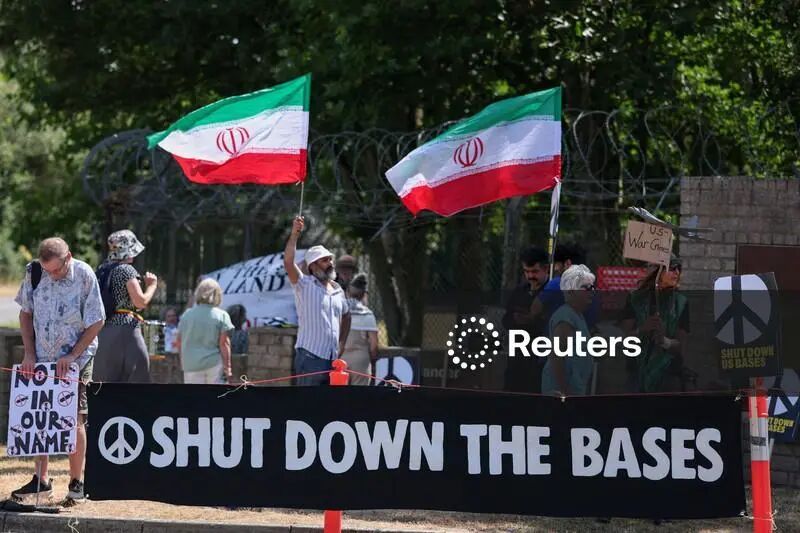
At 06:10 UTC on 15 July 2026, Iran’s Army announced an eighth round of drone strikes against American targets in the region, directed at a US base in Jordan, state-run Press TV reported. The latest phase landed barely three and a half hours after the same outlet described the seventh phase, a sequence Iranian state media has labelled “Until final victory.”
The compression matters. In a little over 24 hours, Tehran has moved from a single retaliatory salvo to a sustained, numbered campaign, each round publicly itemised by Iranian military spokespeople and rebroadcast through Telegram channels aligned with the Islamic Republic. Hebrew-language public broadcaster Kan, citing its own sources, told viewers on 15 July that the region was witnessing an unprecedented military escalation between Iran and the United States, characterised by an exchange of missile and drone strikes (Al Alam Arabic, 05:04 UTC). The framing inside Israel, in other words, already treats this as a structural break, not a tit-for-tat.
What we know from the Iranian readout
Iranian state media’s account is consistent in shape, if not always in detail. Press TV’s morning bulletins name the actor (Iran’s Army, distinct from the Islamic Revolution Guard Corps), the weapon class (heavy drones), the target class (American positions in the region), and the rationale (retaliation). The seventh-round bulletin, timestamped 02:40 UTC on 15 July, used the headline “Until final victory” to describe a continuation of operations that had already cycled through earlier phases. The eighth-round bulletin, four hours later, repeated the formula and added a geographic anchor: a US base in Jordan.
Press TV’s reporting should be read for what it is: a state-aligned channel describing its own armed forces’ operations. The outlet does not publish coalition battle damage assessments, does not name the specific US installation it claims is under fire, and does not disclose the munition types or sortie counts that would let an outside observer verify the claim. Western wire services have not, as of publication, published independent confirmation of the eighth round; the Israeli framing of “unprecedented escalation,” reported by Kan via Al Alam Arabic, is the closest thing to external corroboration in the available feed.
What the Israeli frame adds, and what it leaves out
Kan’s characterisation, relayed by Al Alam Arabic at 05:04 UTC, gives readers the closest available non-Iranian view. The wording is careful: “an unprecedented military escalation … represented by an exchange of missile and drone strikes.” That formulation does two things. It treats the campaign as reciprocal, putting Iranian and US action on the same sentence. It also concedes that the region has crossed a threshold the broadcaster’s sources are willing to name on air.
What the Kan read leaves unaddressed is the asymmetry of disclosure. Iran is releasing numbered rounds through a controlled press channel. The United States, through CENTCOM and the Pentagon, has not published a matching ledger; the Israeli military’s spokespeople have not, in the available thread, confirmed the targets, the defensive outcomes, or the operational tempo inside US Central Command. The result is a public information environment in which one party narrates in detail and the other does not. That asymmetry is itself part of the story.
The structural shift behind the salvos
What looks like a sequence of discrete strikes is, in plain terms, the public face of a longer rebalancing inside the Iranian military. The “Army” framing in Press TV’s bulletins is deliberate: it centres the regular Artesh, not the IRGC, as the operator of the campaign. That choice matters inside Iranian domestic politics, where the Artesh and the Guard compete for budget, prestige, and foreign-policy influence. By wrapping a cross-border drone war under an Army banner and a poetic operational name, Tehran signals that this is not an asymmetric militia operation but a state-on-state action by a uniformed service.
For the United States, the operational question is whether the bases named in Iranian reports are within the defensive envelope Washington has built across Jordan, the Gulf, and the Levant since 2023. For Israel, the framing question is whether the “unprecedented escalation” label is a tactical warning to Tel Aviv to harden its own posture, or a wider alarm that the regional air-defence architecture is being stress-tested in real time. The available sources do not yet let a reader separate those two readings.
What remains contested, and what to watch
Three points of uncertainty sit on top of the bulletins. First, the precise target set: Press TV names a US base in Jordan but does not identify the installation, and no Western wire in the thread has confirmed the location independently. Second, the cumulative effect: Iranian state media counts rounds, not damage equivalence, and a high round count does not by itself establish that any single strike was militarily significant. Third, the political ceiling: the “Until final victory” framing implies an open-ended commitment, but Iran has historically punctuated its escalation cycles with diplomatic openings, often through backchannels in Muscat, Doha, or Beijing, none of which surface in the available feed.
The next useful data points will be a US Central Command statement naming affected positions, a Pentagon readout, and a UN Security Council scheduling notice if any member state requests an emergency session. Until those land, the public record remains an Iranian monologue punctuated by an Israeli adjective.
Desk note
Monexus leads with the Iranian state-aligned read because that is where the operational detail originates, then surfaces the Israeli public broadcaster’s escalation framing as the only non-Iranian external characterisation available in the source thread. No casualty figures, dollar amounts, or specific base names have been asserted; where the Iranian source is silent, this article is silent too.
Wire provenance
This editorial synthesis draws on the following public wire/social posts:
- https://t.me/presstv/
- https://t.me/alalamarabic/
- https://t.me/presstv/