Hormuz in Three Keys: Washington's Transit Fee, Tehran's Red Line, and the Search for a Detour
A 20 percent transit fee, a flat Iranian refusal, and a presidential suggestion to reroute through Texas and Alaska crystallise a confrontation that is no longer just about tankers.
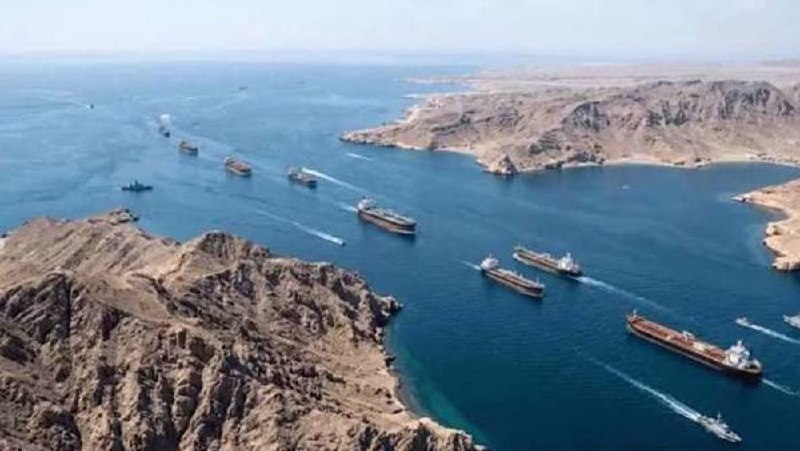
On 15 July 2026, three short statements made clear that the contest over the Strait of Hormuz has stopped being a shipping dispute and become an argument about sovereignty. Reporting carried by Al Jazeera English at 00:38 UTC records that the Trump administration has walked back, or is walking back, a proposed 20 percent transit fee on vessels passing through the strait, even as fighting around Iran's coastline escalates. Reporting on PressTV dated 14 July 23:47 UTC delivers Tehran's answer: the waterway will not be reopened under US military pressure or aggression. Reporting aggregated by Clash Report at 14 July 23:04 UTC catches the President mid-reversal, claiming the strait "is open if people want to go through it" and "only closed for Iran, both in and out," while floating "great alternatives, including Texas and Alaska." A separate post from @unusual_whales at 14 July 17:37 UTC carries the same line verbatim. Three keys, three locks, all dated within hours of each other.
The argument this convergence makes is straightforward: Washington's leverage on the world's most consequential oil corridor is, for the moment, more rhetorical than material. The United States can propose a fee, retract it, then claim the lane is open. Iran can refuse to accept either the fee or the reopening. And shipping, which pays attention to insurance underwriters and re-routing costs rather than presidential posts, has already begun to price the contradiction. The wider test of the rules-based maritime order that the US has underwritten since the Second World War is being conducted in a roughly 33-nautical-mile stretch between Iran and Oman.
A fee, then not a fee
The transit-fee chapter moved faster than the markets could digest. Al Jazeera English's reporting describes the proposal as a 20 percent surcharge on Hormuz transits, framed by Washington as a contribution from beneficiary states to the security the US Navy provides. The proposal raised instant objections from importers who already pay for oil priced against a risk premium, and from exporters in the Gulf who saw it as a tariff on their own customer base. The walkback, in the same report, is presented as a pivot forced by what the piece describes as an "Iran war escalation." The arithmetic matters less than the signal: a fee is a stable instrument, meaning a state with a credible expectation of collecting it over years; a pivot is a one-day headline that erodes the credibility of next week's announcement.
For Gulf monarchies, the volatility is its own kind of damage. A transit fee, even one later withdrawn, registers in the spreadsheets of Indian, Chinese, Japanese and Korean refiners who book voyages months in advance. The dollar premium on Gulf crude for July loading dates will quietly rise not because Iran has acted, but because the US has spoken and un-spoken in the same news cycle.
The red line Tehran has drawn
PressTV's framing of Tehran's position is unsparing and unqualified: the strait will not be reopened through US military pressure or aggression. Read literally, that is not a threat of closure; the lane is, by Iran's account, already constrained. It is a refusal to recognise that a presidential social-media post constitutes operational control. Iranian state-aligned messaging has long distinguished between an "open" Hormuz for neutral commerce and a "closed" Hormuz for the warships and oil tankers of adversaries. The fusion of the two narratives, Strait open in general, Strait closed to specific flags, is what the Clash Report quote captures almost verbatim.
The asymmetry of leverage is the point Iran is making. The US Navy can in principle escort commercial traffic, but cannot escort every tanker through a chokepoint bordered on one shore by anti-ship missiles, fast-attack craft and air defence batteries that have, in past cycles, forced inspections and detentions. Tehran's bet is that the cost of guaranteed safe passage, in blood and hull steel, exceeds any marginal benefit of letting the lane operate on Washington's terms. It is the logic of mutual vulnerability applied to a shipping lane, with the implied consequence that any administration which insists on collecting a fee is also implicitly requesting a guarantee it cannot deliver.
The detour that isn't
The President's "Texas and Alaska" line is either a joke, a negotiating posture, or a description of an emergency strategic-reserve plan being mistyped. Read generously, it gestures at the obvious fact that US Gulf and Pacific ports could in principle absorb additional crude flows if pipelines, refineries and Jones Act tonnage were reconfigured. Read literally, it suggests that the world's busiest oil corridor might be circumvented by state coastline on the other side of the planet. Shipping analysts will note that a barrel lifted from the Arabian Gulf cannot meaningfully be diverted to US shores for export without rewriting every commercial contract, charter party and insurance policy on the books.
What the line does do is expose a deeper problem. The US strategy in the strait is a layered combination of naval presence, sanctions enforcement, and now a threatened fee that was abandoned within a news cycle. Each layer relies on the others. The fee was meant to signal that the US could extract rent from a chokepoint it does not own; its abandonment signals that it cannot. If the next instrument announced is a naval convoy programme, the credibility of that programme will be priced against the credibility of the fee that just vanished.
What the contest is now actually over
Strip the rhetoric and the disagreement is over who sets the price of passage. Washington says it can, by virtue of the Navy and the dollar. Tehran says it can, by virtue of geography and the willingness to bear the cost of resistance. Shipping says both, and prefers insurers. The fee episode is the first time in this cycle that the US has tried a financial instrument in the strait without a corresponding kinetic capability deployed on the ground; the immediate retraction suggests the gap between the two was visible to the administration as well.
The forward calendar is short and crowded. Watch for an Iranian naval exercise announcement in the strait, which historically sets the rhetorical ceiling for any new Western demand. Watch for a Lloyd's Joint War Committee update that adjusts listed hull-war premium zones, which prices the market view in dollars per voyage. Watch for any Gulf monarchy public-silent acceptance or refusal of the now-withdrawn fee proposal, which signals which side of the argument Riyadh and Abu Dhabi think is going to win. The next 72 hours will tell us whether this week ends with the strait quietly de-escalating, or with the transit fee returned to the table, bigger and attached to a navy that has something to actually enforce it with.
The underlying question is whether the era in which the United States could announce, retract, and re-announce an oil-transit regime without consequence has ended. The sources do not settle the question. They do show, with unusual clarity, that the gap between announcement and operational control is now being discussed in real time by every actor in the chain.
Desk note: The four inputs to this piece are Al Jazeera English's 15 July report on the fee pivot, PressTV's 14 July statement from Tehran, the Clash Report aggregation of the President's 14 July remarks, and the @unusual_whales 14 July post carrying the same Hormuz line. This publication reads them as three signals from three seats of power converging on the same chokepoint, and treats the contradiction between announcement and enforcement as the story rather than the noise around it.
Wire provenance
This editorial synthesis draws on the following public wire/social posts:
- https://t.me/aljazeeraglobal
- https://t.me/presstv
- https://t.me/ClashReport