Hormuz on a hair trigger: what Bandar Abbas tells us about the next round
Unconfirmed blasts in Bandar Abbas on 15 July 2026, then a Hormozgan Governorate statement about an American projectile, then a denial. The fog of a single afternoon tells you almost everything about the next escalation.
At 19:24 UTC on 15 July 2026, a pro-Iran open-source channel on Telegram posted two short lines: reports of explosions in the city of Bandar Abbas, on Iran's southern coast. Nine minutes later, a second channel, this one oriented toward battlefield documentation out of the Middle East, carried the same reports of strikes. By 19:42 UTC, the rhythm of the afternoon had changed. Tasnim, the Iranian state-affiliated outlet, reported that the Hormozgan provincial governorate had officially confirmed an American projectile hit a point near Bandar Abbas at 10:45 local time, with a completion report to follow. Seventy-five minutes after that, at 20:57 UTC, the same Tasnim reporter in Bandar Abbas relayed that the governorate was now denying a fresh projectile impact, despite fresh rumours. Four items in ninety-three minutes. None of them conclusive. All of them load-bearing.
What the afternoon of 15 July exposed is not a single event but a seam: the place where an unverified flash, an official Iranian confirmation, an American silence, and an Iranian walk-back sit on top of each other and wait for the next flash. Bandar Abbas is not a random target. It is the mainland port that anchors the Strait of Hormuz, the chokepoint through which a substantial share of seaborne oil moves, and the home base of the Iranian Navy's southern command. When the airspace above it gets loud, the world's insurance markets get louder with it.
The fog, by design
Iranian domestic communications about security incidents follow a recognisable grammar. First, the rumour: open-source channels, often run by analysts sympathetic to Tehran's regional posture, register a flash, an explosion, a plume, a radar return. Second, the official confirmation, framed in the language of defiance: an "American enemy projectile" is named as the proximate cause, and the relevant provincial governorate is put on the record. Third, the close-out: a reporter on the ground is dispatched, sources inside the governorate are consulted, and the narrative is either sealed or softened. Tasnim's three posts inside that single window track the grammar almost beat for beat. The 19:42 UTC confirmation placed the impact at 10:45 local time and put Hormozgan on the hook for a written completion report. The 20:57 UTC item, denial of a fresh impact, shows the second pass: after the first round of claims is digested, the same machinery moves to dampen the next one.
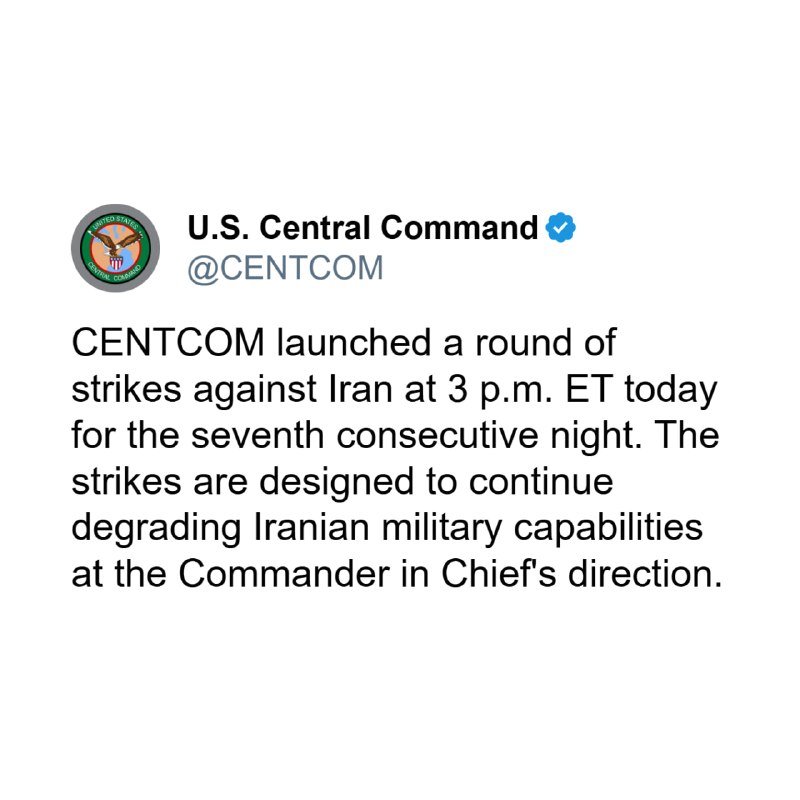
Two features of that machinery are worth naming. One is the speed. The gap between the first Telegram item and the official Iranian statement was eighteen minutes. By Western-press-confirmation standards, that is essentially instantaneous. The other is the asymmetry. The same Iranian channels that confirmed an American strike are now the only authoritative source on whether there was a strike. Independent Western confirmation of what hit what, where, and with what yield does not exist in the public record of this thread. The American side has not, as of the available reporting, put itself on the record at all.
What gets lost when only one side speaks
A strike on or near Bandar Abbas carries an obvious first-order meaning: a direct military action against a target on the Iranian mainland, with all that implies for escalation ladders and for the diplomacy that surrounds them. It carries a second-order meaning, less discussed. The Strait of Hormuz is roughly twenty-one miles wide at its narrowest. Any sustained military activity above the Iranian coastal plain that overlooks it will be priced into freight, insurance, and forward crude curves within hours, whether or not the activity is confirmed. Tehran knows this. Washington knows this. The merchant fleets routing around the Cape of Good Hope right now know this.
Coverage that treats the 15 July events as a single isolated incident misses the structural point. The Strait is the world's most consequential maritime chokepoint, and the city sitting on its northern shore is the operational centre of gravity for the force that nominally controls it. Iranian messaging has spent two decades constructing a posture in which any strike on Bandar Abbas is treated as a strike on the country's strategic deterrent, not merely on a port. The Hormozgan Governorate's willingness to go on the record about an "American enemy projectile," even briefly, is consistent with that posture. The subsequent denial of a fresh impact is consistent with it too: the deterrence message reads cleaner when the strikes are episodic and deniable than when they are cumulative and visible.
The press, the platforms, and the time problem
A second feature of this story sits one layer down from the event itself. The whole 15 July thread was carried on Telegram. The first report came from a channel that aggregates and interprets open-source intelligence for an Iran-aware audience. The second came from a channel whose remit is direct witness documentation from conflict zones. The third and fourth came from Tasnim's English-language wire. Not one of the four items was a wire-confirmable, on-the-record attribution to a named official in Washington. Reuters, the Associated Press, the BBC and the Guardian, the Western apparatus that would normally arbitrate a story like this inside two hours, were nowhere in the thread by 21:00 UTC.
That gap is not an accident of one afternoon. It is a structural feature of how fast-moving Middle East security incidents now break. A Telegram post costs the poster nothing and reaches the relevant audience immediately; a wire confirmation requires a named official to pick up a phone. In the interval, the marketplace of attention runs on Telegram, X, and the WhatsApp groups that republish them. The platforms, not the wires, set the initial frame. Once a frame is set, "Bandar Abbas struck by an American projectile", the burden of proof inverts. Subsequent reporting has to disprove the frame, not confirm it. Western wires that catch up two hours later are reporting into an already-narrated afternoon.
What to watch before the next flash
Three indicators will tell readers whether the 15 July events harden into a pattern or dissolve into noise. First, the Hormozgan Governorate's completion report, which Tasnim said would follow its 19:42 UTC confirmation. If it lands and is consistent with the initial account, Bandar Abbas has just absorbed a confirmed American strike; the escalatory consequences are non-trivial. If it never lands, or lands in softened form, the 19:42 item becomes a domestic-Iranian signalling exercise aimed at an internal audience. Second, the price action in the front-month crude futures and in Persian Gulf war-risk insurance. The market votes continuously; it does not need a wire confirmation to price in a chokepoint scare. Third, any on-record American statement. The longer Washington stays silent about a strike on the Iranian mainland, the more the Iranian version of events, with all its incentives, becomes the working record by default.
What the sources do not yet specify is what was hit, whether there were Iranian casualties, and whether the projectile in question was American-originated or American-allied. None of those four Telegram items establishes the underlying facts; they establish only the shape of the contest over who gets to narrate them. Bandar Abbas sits at the intersection of two coastlines: the Persian Gulf's and the world's oil market's. The afternoon of 15 July did not change that. It just put a punctuation mark under it.
Desk note: this publication is working from a four-item Telegram thread whose first item is a rumour, whose third is an Iranian official confirmation, and whose fourth is an Iranian partial walk-back. No independent confirmation of the underlying strike is yet on the wire from a Western outlet. Where that gap matters, we have said so rather than fill it.
Wire provenance
This editorial synthesis draws on the following public wire/social posts:
- https://t.me/GeoPWatch
- https://t.me/wfwitness
- https://t.me/tasnimnews_en
- https://t.me/tasnimnews_en
- https://en.wikipedia.org/wiki/Bandar_Abbas
- https://en.wikipedia.org/wiki/Strait_of_Hormuz