European banks turn on Linde in Moscow court, demanding compensation for sanctions-driven losses
Deutsche Bank, UniCredit and Commerzbank have filed suit in Russian courts against Linde, the German industrial-gas group, seeking hundreds of millions of euros over assets trapped by the post-2022 sanctions regime.
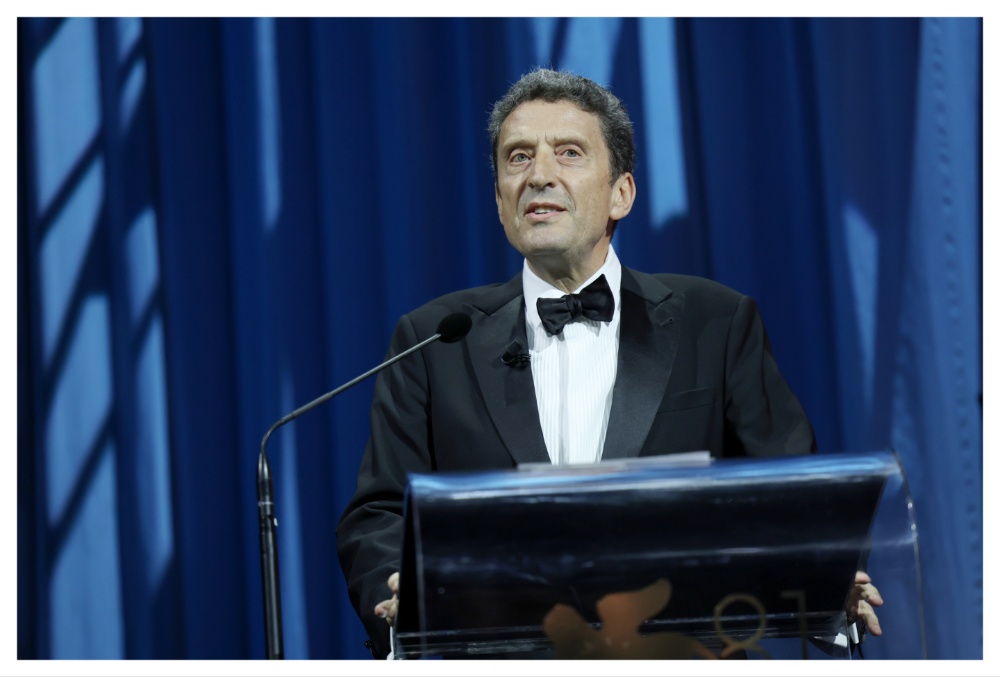
At 12:35 UTC on 15 July 2026, a Telegram channel citing the Financial Times reported that Deutsche Bank, UniCredit and Commerzbank have filed suit in Russia against the German industrial-gas group Linde, seeking hundreds of millions of euros over losses tied to the post-2022 sanctions regime.
The unusual step of European lenders pursuing a European corporate counterparty in a Russian courtroom tells the reader something the political debate around Russia sanctions usually obscures: the cost of the freeze is no longer borne only by Russian counterparties and Western shareholders. It is being redistributed inside the European banking and industrial complex itself, and the contracts drafted before February 2022 are now the battlefield.
What the lawsuit targets
The case, as summarised in the FT reporting referenced by DDGeopolitics on 15 July, concerns Linde's exit from Russia after Berlin's foreign-trade regime and the EU's successive sanctions packages made continued operations untenable. The bank consortium is reportedly seeking compensation on the basis that lending arrangements negotiated before the invasion were disrupted by measures imposed from outside the contractual relationship. The exact contractual basis is not detailed in the Telegram summary, but the architecture of such disputes is familiar: a lender financed assets or working capital tied to a Russian-domiciled subsidiary, the European parent unwound the Russian business, and the residual exposure is now contested in the jurisdiction where the assets sit.
For Linde, the optics are harsh. The company completed the sale of its Russian business in 2024, booking a writedown in the high nine figures as it unwound. It has argued in past filings that it acted in compliance with European law. Being sued in Moscow by three of its own national champions for the consequences of that compliance adds a layer of legal exposure that no board would have priced into the original exit.
Why a Moscow court
The deeper question is jurisdictional. Russia is not a neutral forum for a dispute between German banks and a German corporate. Russian courts have, since 2022, demonstrated a willingness to assert jurisdiction over claims by European parties, particularly where Russian-domiciled assets give Moscow a territorial hook. The banks' decision to file in Russia rather than in Frankfurt or London suggests either that contractual arbitration clauses point there, that enforcement against residual Russian assets requires a Russian judgment, or that the lenders calculate they will be treated as claimants rather than defendants in the Russian legal system.
There is also a defensive reading. By initiating in Moscow, the banks secure a procedural seat at the table for any future restructuring of Linde's residual Russian exposure. A Russian judgment in their favour would be a negotiable instrument in any subsequent settlement with the Russian purchaser of Linde's assets. The filing is, in that sense, less a litigation move than a position-taking exercise in a long-running asset hunt.
The structural frame
What this story actually documents is the second-order cost of sanctions architecture. The first-order cost was borne by the Russian economy and by Western shareholders absorbing writedowns. The second-order cost is now surfacing inside the European financial system, as lenders, corporates and insurers renegotiate who carries the residual loss from contracts that were structured for an integrated European-Russian commercial environment.
The pattern is not unique to Linde. Several European industrials with pre-2022 Russian operations have faced similar disputes, and the insurance market has been quietly repricing political-risk cover for years. What the Linde suit adds is a high-profile instance of European banks themselves using Russian courts as a venue. That is a small but meaningful data point on the slow re-coupling of legal and financial traffic between the EU and Russia, even as the political decoupling continues.
Stakes and what to watch next
For the banks, the immediate stakes are balance-sheet: hundreds of millions of euros across three lenders is material provisioning. For Linde, the suit is a precedent risk; an adverse Moscow ruling would invite similar claims from other European lenders with pre-2022 exposure to Russian-domiciled industrial assets. For Berlin and Brussels, the case is a reminder that the extraterritorial reach of EU sanctions creates contingent liabilities for European firms that were, in many cases, simply complying.
The key date to watch is the first substantive hearing in the Russian court, which the FT reporting does not specify. A second indicator will be whether Linde moves to contest jurisdiction; a refusal to engage would suggest confidence in a Russian forum, while an active jurisdictional challenge would signal that the company views the suit as a serious threat rather than a position-taking exercise. The sources reporting on 15 July do not specify either development.
What remains genuinely uncertain is the contractual basis for the banks' claim. The Telegram summary does not detail whether the dispute turns on loan covenants, on intercompany arrangements, or on guarantees tied to specific Russian assets. The FT's fuller coverage would clarify; based on the source available to this publication, that granular contractual argument is not visible. Readers should treat the headline figure ("hundreds of millions of euros") as the banks' framing of exposure, not an adjudicated amount.
Desk note: Monexus is sourcing this from a 15 July 2026 Telegram summary of Financial Times reporting, with no direct access to the FT's primary text. The reporting chain is short and the article flags where it thins.
Wire provenance
This editorial synthesis draws on the following public wire/social posts:
- https://t.me/DDGeopolitics