Striking a hospital: what the Ahvaz strike says about the rules the US is now operating under
A US strike reportedly hit the Shahid Baghaei cancer children's hospital in Ahvaz on 15 July 2026, with patients and staff evacuated. The targeting of a paediatric oncology facility forces a reckoning with the stated limits of the campaign.
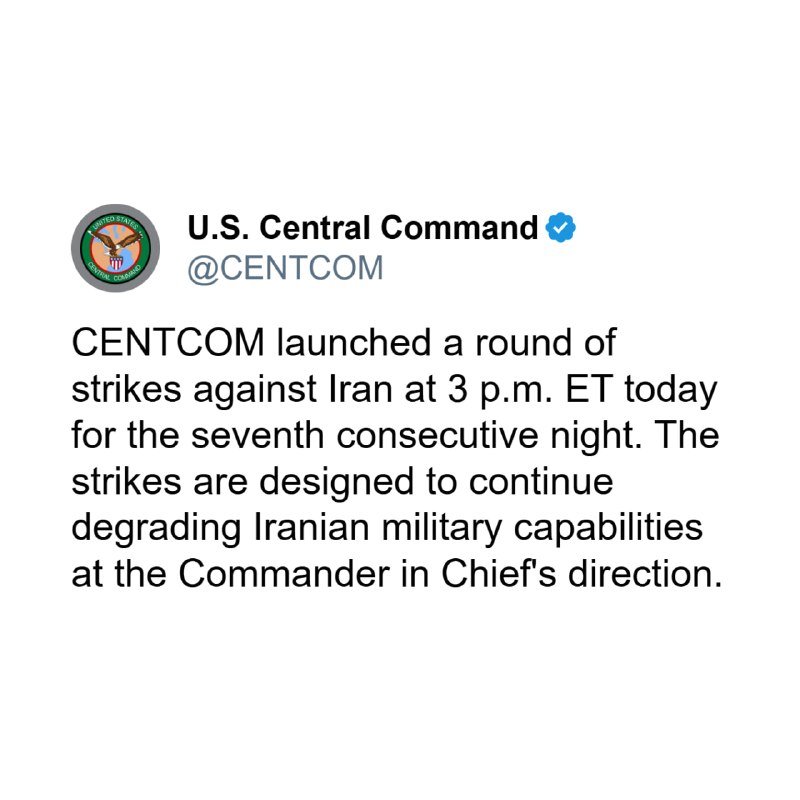
Reports circulating on the evening of 15 July 2026 put a US strike on or near the Shahid Baghaei cancer children's hospital in Ahvaz, the capital of Iran's oil-producing Khuzestan province. Telegram channels aligned with the regional press described the facility as having ordered an immediate evacuation, with patients and personnel moved out as strikes landed within hours of one another.
Three hours on, follow-up accounts from a second channel described the strikes as having hit the hospital itself rather than its vicinity, with the facility actively evacuating personnel and patients to other hospitals. The picture that emerges is not an abstract "kinetic action somewhere in Khuzestan." It is a specific oncology institution serving children, struck during an active evacuation, in a city that sits on top of the hydrocarbons underwriting the Iranian state's day-to-day survival. That specificity is what makes the incident a hinge rather than a headline.
What the two accounts disagree about
The earlier dispatch, carried by The Cradle Media's Telegram channel at 20:45 UTC, placed the attack in the vicinity of the Shahid Baghaei Hospital and stressed that the facility itself had ordered the evacuation. A separate channel, RNIntel, logged the strikes at 22:47 UTC and reported that the hospital had in fact been struck three hours earlier, with staff moving patients out to surrounding facilities as a consequence, not as a precaution.
The distinction matters. A hospital hit as collateral damage to an adjacent military target is one story. A hospital struck as part of a targeting package is another. Both readings are consistent with the limited reporting on the table; neither is independently corroborated by a major Western wire in the source material. Until a wire filing lands, the prudent read is that the facility was struck, that evacuation is ongoing, and that the cause is contested.
Why Ahvaz, and why now
Ahvaz is not a city the US reaches for by accident. It is the administrative centre of Khuzestan, the province that holds the bulk of Iran's onshore oil and gas reserves and the operational core of the state-owned National Iranian Oil Company. A strike package that includes Ahvaz is a strike package aimed at the revenue machine, not at a forward-deployed IRGC command post alone.
That targeting choice sits awkwardly against the public framing of the campaign, which has leaned on the language of strikes against nuclear and military infrastructure. A children's cancer hospital is neither. If a paediatric oncology facility appears inside the targeting set, the working assumption that civilian medical infrastructure is off-limits is no longer operative, whether by deliberate decision or by a failure of intelligence that produced the same outcome. The US has, in past operations, distinguished sharply between a regime's command economy and its civilian services; the line is harder to draw when Khuzestan's oil revenues and Ahvaz's civilian grid are spatially inseparable.
The structural read
The longer arc behind this strike is a familiar one in modern US force posture: a campaign starts with a tightly defined target list tied to a stated objective, then widens in practice as the costs of leaving infrastructure intact become politically intolerable. Each widening step is presented to the public as an extension of the original mission rather than as a mission change. A hospital strike is the kind of step that, once taken, cannot easily be walked back, because the institutional memory of the campaign will treat the precedent as settled.
There is also the question of what an Iranian state hit at its hydrocarbon core is expected to do. Tehran's playbook when its oil economy is under direct pressure has historically been escalation outward, through proxies and through the Strait of Hormuz, rather than concession inward. A strike on Ahvaz does not just raise the human cost of the campaign; it raises the probability that the campaign's costs migrate, through Hormuz freight rates and through the wider energy complex, to the states that decided to mount it.
What is still unknown
The reporting in circulation is regional Telegram-channel material, not wire-confirmed. The two accounts disagree on whether the hospital was struck directly or was the proximate cause of an evacuation triggered by nearby impact. Casualty figures, the operational target list, and any US Central Command statement are not in the source material and should not be inferred. Until a major wire lands on the record, the only claims this publication is prepared to stand behind are narrow ones: that US strikes hit Ahvaz on the evening of 15 July 2026, that the Shahid Baghaei Hospital was either struck or placed under immediate evacuation as a result, and that patients and staff are being moved to other facilities.
The narrower the claim, the more durable the record. The wider the claim, the more it depends on what the next 24 hours of reporting actually shows.
How Monexus framed this: the wire consensus will likely arrive in the next news cycle, and it will almost certainly treat the question of intent as the central one. Monexus is foregrounding the disagreement between the two source accounts and the targeting logic of striking Khuzestan, rather than the rhetoric of either capital.
Wire provenance
This editorial synthesis draws on the following public wire/social posts:
- https://t.me/thecradlemedia
- https://t.me/TheCradleMedia
- https://t.me/rnintel