US bars its citizens in DR Congo from boarding commercial flights out as Ebola outbreak widens
A US order will prevent American citizens in DR Congo from boarding commercial flights home while the country fights a widening Ebola outbreak, in a move Kinshasa is likely to read as sovereign overreach.
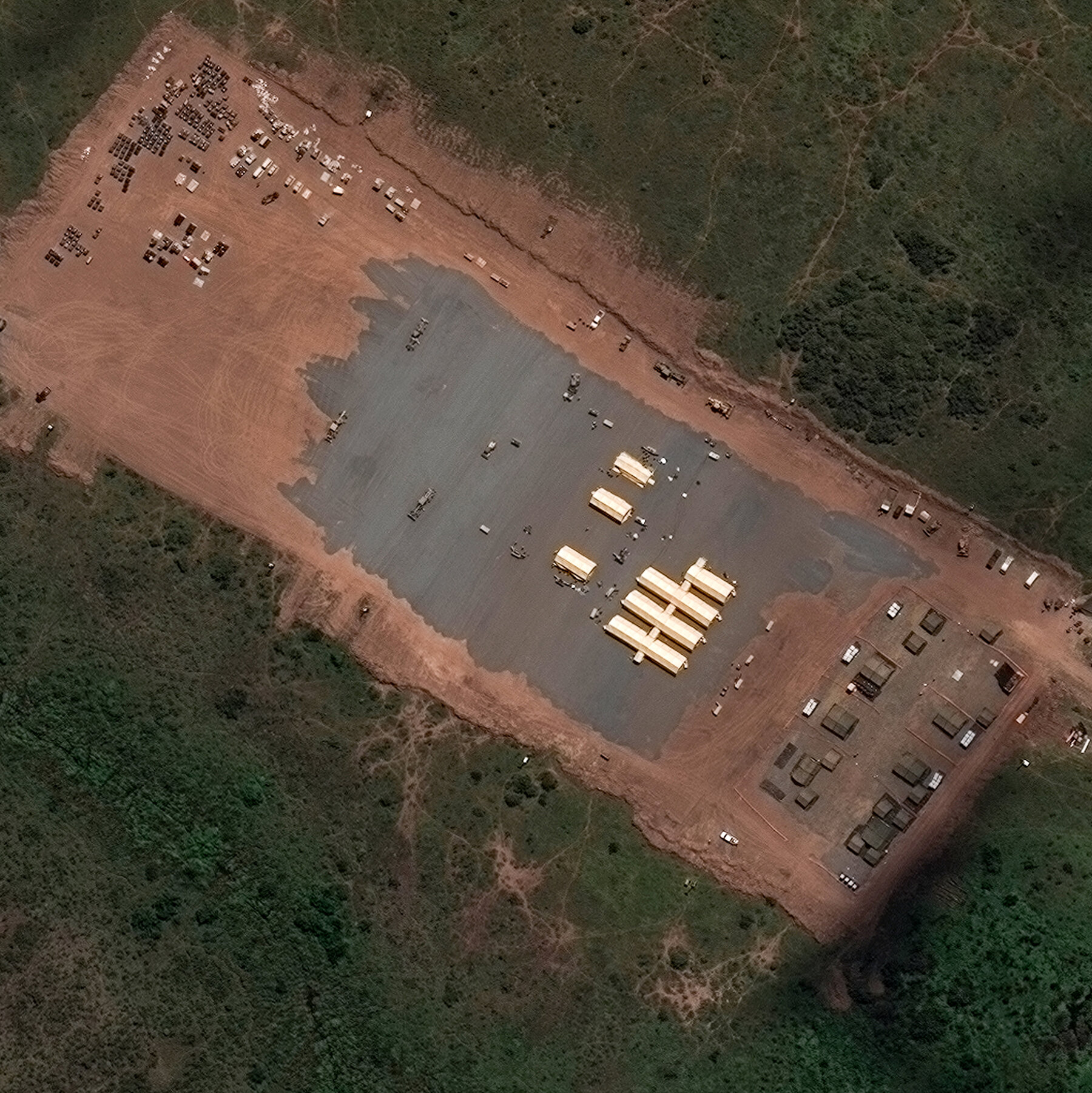
At 02:30 UTC on 14 July 2026, Reuters reported that the United States will prevent its own citizens inside the Democratic Republic of the Congo from boarding commercial flights home, citing the country's widening Ebola outbreak. The order, described as an exclusive by the wire service, amounts to a unilateral travel block against US nationals on Congolese soil at the moment Kinshasa is least equipped to absorb the diplomatic fallout.
The restriction lands in a country that has now lived through more than a dozen Ebola outbreaks since the virus was first identified near the Ebola River in 1976. Health authorities in DR Congo declared the latest flare-up earlier in 2026, and the World Health Organization has tracked rising case counts across at least one eastern province. Reuters' report indicates the US move is framed as a defensive measure to keep an uncontrolled outbreak from boarding transatlantic aviation. It is, in practice, also a foreign-policy signal: Washington is willing to treat its own citizens as a vector risk inside a sovereign African state, rather than coordinate their evacuation with that state's authorities.
What the order actually does
The Reuters exclusive, carried on X at 02:30 UTC, says US citizens currently in DR Congo will be barred from immediately boarding commercial flights back to the United States. The market prediction venue Polymarket reposted the line at 10:06 UTC, confirming the operational reality traders are pricing: a state-side evacuation, not a routine departure. No US official quoted by name in the available reporting is on the record explaining how long the order will run, whether charter flights are an alternative, or which Congolese provinces the restriction applies to.
That silence matters. The standard toolkit for governments facing citizens caught in an outbreak is a layered one: advisory levels, voluntary departure, then chartered evacuation once commercial options close. Reuters' reporting puts the US at the most restrictive end of that range without the accompanying transparency. If charters are quietly being arranged, the public-health case for the ban is weaker than it looks. If they are not, the ban is doing what it says: keeping American passengers on the ground in a country the WHO has documented as an active Ebola zone.
The Congolese vantage
Read from Kinshasa, the framing inverts. DR Congo has run Ebola response before. The 2018 to 2020 outbreak in eastern DRC killed more than 2,200 people and was contained largely by Congolese epidemiologists, community health workers, and partners including the WHO, Médecins Sans Frontières, and the US Centers for Disease Control and Prevention, with a vaccine deployed at scale under an emergency-use framework. The country is not a passive recipient of outside help. It is one of the few places on earth with institutional memory of running an Ebola response under fire, including in conflict zones where armed groups have attacked treatment centres.
A foreign government telling its own citizens they cannot leave, while continuing to operate an embassy and probably still issuing visas to incoming staff, is an unusual posture. It treats DR Congo as a hazard rather than as a partner. For a state that has spent two decades insisting it leads its own outbreak response, that is a hard diplomatic pill. The most plausible Congolese read is straightforward: Washington is protecting its borders, fine; but it is also broadcasting to investors, missionaries, NGO workers, and diplomats that the risk premium on the DRC just went up. Both readings can be true.
Public health versus border politics
The public-health case for the order is real. Ebola virus disease carries case fatality rates that have historically ranged from 25% to 90% depending on the strain and the speed of care, and it transmits through direct contact with bodily fluids, which makes a symptomatic passenger on a 14-hour flight a worst-case scenario for any receiving country. Outbound screening of departing passengers is standard practice in outbreak settings. The unusual element is that the restriction is being imposed by a foreign government on its own nationals inside the affected country, rather than by the affected country on its own territory.
There is also a counter-narrative the Western wire framing leaves thin. The same logic that justifies blocking outbound flights from DRC could justify blocking inbound flights to it, or suspending all diplomatic and humanitarian movement. Neither has been reported. The asymmetry, blocking exit but not entry, suggests the priority is US domestic reassurance rather than regional containment. That is a defensible political choice inside the United States, but it is not the same as a containment strategy.
What to watch next
Three things will determine whether this order is a one-week precaution or the start of a longer rupture. First, any US State Department travel advisory revision: an upgrade from Level 3 to Level 4 would signal the restriction will run. Second, charter flight activity. If chartered evacuation flights begin moving US citizens out through Kinshasa, N'djili, or regional hubs, the ban is doing what its defenders say it is. If no charters materialise, the ban is doing what its critics say it is: holding Americans in place. Third, the Congolese health ministry's case-count cadence. WHO situation reports and the ministry's own bulletins will tell the market when the outbreak is bending.
The Reuters exclusive, confirmed on Polymarket's wire at 10:06 UTC on 14 July 2026, is the only confirmed public reporting so far. The sources do not specify which US agency issued the order, how many US citizens are estimated to be on the ground, or whether the restriction applies nationwide or only to provinces with active transmission. Those gaps are themselves the story.
This article cites two primary inputs: the Reuters exclusive carried via X at 02:30 UTC on 14 July 2026, and Polymarket's wire repost at 10:06 UTC the same day. Background context on the 2018 to 2020 eastern DRC outbreak draws on widely documented figures; the available source items do not name a new case count or province for the current flare-up, and the article does not invent one.
Wire provenance
This editorial synthesis draws on the following public wire/social posts:
- http://reut.rs/4yjQITL
- http://reut.rs/4yjQITL
- http://reut.rs/4yjQITL
- http://reut.rs/4yjQITL