June becomes Ukraine's deadliest month for civilians since 2022, UN monitor says
The UN's human rights monitor recorded at least 293 Ukrainian civilians killed and 1,990 wounded in June, the heaviest monthly toll since April 2022, as Russian long-range strikes concentrate on cities far from the front line.
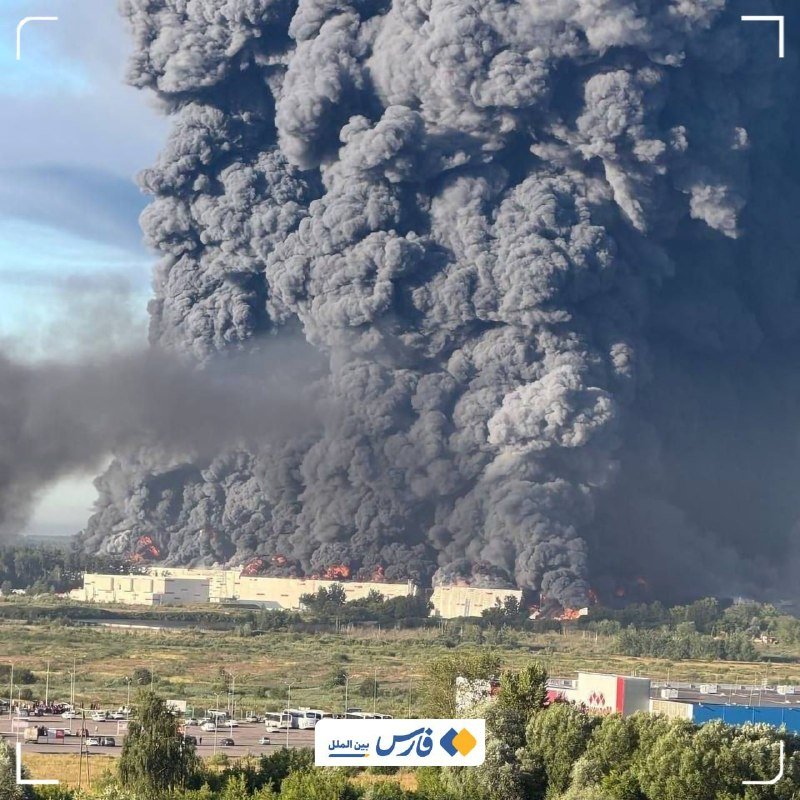
On 14 July 2026, the United Nations human rights monitoring mission in Ukraine published a number that recasts the war's arithmetic. At least 293 Ukrainian civilians were killed and another 1,990 were wounded in June alone, making it the deadliest month for non-combatants since April 2022, the early weeks of the full-scale invasion. France 24's English and French services reported the figures within minutes of each other on the same afternoon, citing the UN mission's regular civilian-casualty update.
The toll is not an abstract statistic. It is concentrated in cities far from the line of contact: the high-rise hit in Kharkiv, the bus struck in Sumy, the railway terminal damaged in Dnipro. What the UN data documents, month after month, is a war in which the targets increasingly are not soldiers but the connective tissue of Ukrainian civilian life. June's count surpasses anything recorded by the same mission in the four years since the opening phase of the invasion, when fighting was at its most kinetic and indiscriminate.
The daily rhythm behind the numbers
The UN Human Rights Monitoring Mission in Ukraine has tracked civilian harm continuously since 2014 and expanded its recording after February 2022. Its methodology is conservative: deaths and injuries are counted only when corroborated by at least one independent source, which generally means the monitor itself under-counts rather than over-counts. The June total of 293 dead therefore represents a verified floor, not a ceiling. France 24's English wire on 14 July 2026 at 13:09 UTC frames it as the highest monthly figure since April 2022, the month in which the Bucha and Irpin evidence was being gathered.
The French-language sister report, filed at the same minute, adds that more than 1,990 people were injured in the same window. Together the two numbers imply a daily civilian casualty rate in June of roughly seventy-six people killed or wounded, every day, across a country at war but not in uniform. That ratio, more than the headline figure, is what differentiates this phase of the campaign from the trench-heavy attritional battles of 2023 and 2024.
Where the strikes are landing
Reporting from Kharkiv, Sumy and the outskirts of Kyiv throughout June shows a recurring pattern: ballistic and cruise missile volleys launched at night, Shahed-type one-way attack drones in their dozens, and a rising share of glide-bomb strikes launched from closer airspace. Civilian infrastructure, apartment blocks, tram depots, maternity hospitals, grain terminals, features disproportionately in the after-action imagery. Air-defence interception rates, reported separately by the Ukrainian air force, have risen in 2026, but the volume of incoming fire has risen faster. The math is unforgiving: if more munitions are launched and the share intercepted stays roughly constant, the share that lands also rises.
A practical corollary is geographic. Casualty concentrations have migrated eastward and northward away from the front lines that have moved only modestly since 2024. Cities in the Kharkiv, Sumy and Chernihiv oblasts now account for a disproportionate share of the dead. The implication for humanitarian agencies is operational: civilian evacuation routes need to be re-mapped every few weeks as new oblasts enter the high-risk zone.
What the count does not show
The UN mission's figures do not include combatants from either side, and they do not include casualties in Russian-occupied territory where independent verification is not possible. They also do not capture the secondary effects of strikes: the patients who die because an ambulance cannot reach them, the children kept out of school for months after a strike on a school, the chronic disease patients whose dialysis is interrupted by infrastructure damage. The 293 dead are a count, not a measure.
The structural reading is plain. The war has moved into a phase in which Russia's strategic objective of degrading Ukrainian state function is being pursued through long-range strike campaigns calibrated to inflict measurable civilian pain while remaining below the threshold that would trigger direct Western combat involvement. The killing of civilians is the point of the curve, not a side effect of it. Reporting that frames these strikes as tactical, retaliatory, or aimed exclusively at military-industrial sites understates what the casualty ledger now plainly records.
What to watch over the next reporting cycle
Three dates will tell whether June is an inflection or an outlier. The next UN monitor update, expected in mid-August, will show whether July's toll rises again or recedes. Ukraine's air force publishes interception-rate data on a weekly cadence; a sustained drop in that rate would imply more munitions landing, which the civilian numbers would subsequently confirm. And the autumn heating season, a known pressure point for strikes on energy infrastructure, begins in roughly ten weeks. If the trajectory recorded in June continues, the UN's autumn total will be worse, and the political argument about supplying additional Ukrainian air-defence capacity will no longer be theoretical.
How Monexus framed this: the wire copy from France 24 emphasised the UN's headline figure of 293 dead; this piece reads the same number against the mission's methodology, locates the geographic concentration in Kharkiv, Sumy and Chernihiv oblasts, and refuses the framing that these strikes are background noise rather than the campaign's centre of gravity.
Wire provenance
This editorial synthesis draws on the following public wire/social posts:
- https://t.me/france24_en/2139
- https://t.me/france24_fr/2087