Trump floats a 20% toll on the Strait of Hormuz. Crypto's Clarity Act gets a Senate shove from the same desk.
A 20% transit fee on a chokepoint carrying roughly a fifth of global petroleum is now a live US negotiating card. Twelve hours later Washington was also selling a US-UK tokenisation pact and pressing the Senate on crypto market-structure.
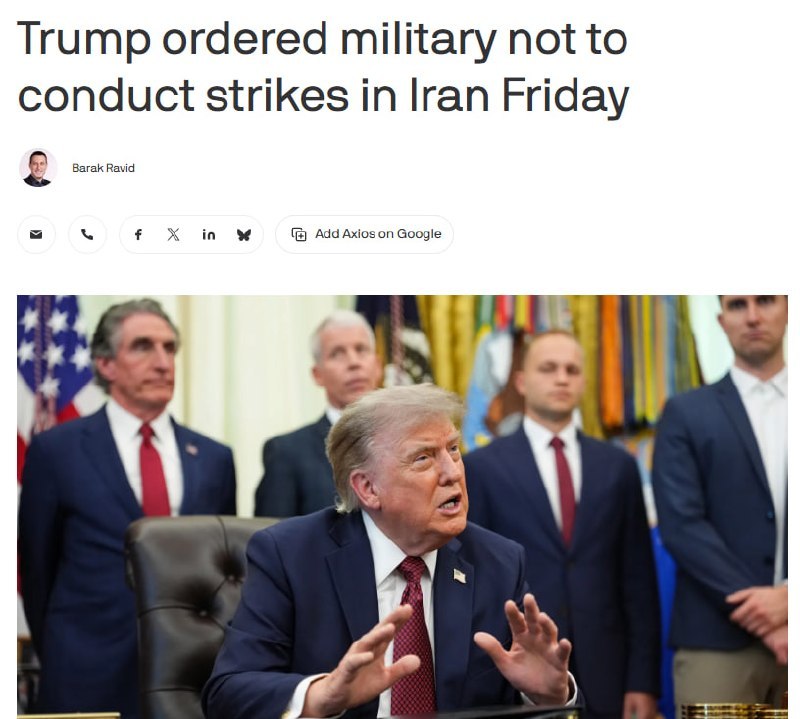
On 13 July 2026, US President Donald Trump publicly declared that "the US is taking over the Strait of Hormuz" and that countries must pay Washington for defending it, framing a 20% transit fee on cargo as a live instrument of US policy. Less than thirty hours later, his administration was pairing that posture with two adjacent moves: a US-UK alignment on cross-border tokenised assets and stablecoins, and a renewed push for the Senate to pass the Crypto Clarity Act. Read as a single news cycle, the three actions sketch a coherent doctrine: monetise the world's most consequential energy corridor while exporting the dollar into the tokenised rails that increasingly settle the trade that flows through it.
The combined picture is harder to read than any one of those stories in isolation. A 20% fee on a chokepoint that handles roughly a fifth of global petroleum is not a tariff; it is a sovereign demand on global trade, levied by the country that has guaranteed the corridor's safety since the 1970s. A US-UK stablecoin pact is not a market-structure technicality; it is the largest financial centres in the world pre-positioning for a settlement layer that does not run through them by default. A push for the Clarity Act is not just a crypto-industry wishlist; it is a legislative hand on the tiller of how that settlement layer is regulated, federalised, and taxed. Something is being bolted together in plain sight.
Twenty percent, billed to the cargo
The Gulf chokepoint is the spine of a great deal of modern industrial civilisation. According to a 13 July 2026 Polymarket post circulating the same day, the proposed 20% transit fee would amount to roughly $30 million per fully loaded oil supertanker. Multiply that across an estimated several thousand laden transits a year and the arithmetic quickly runs into the tens of billions of dollars, before any non-oil cargo is counted. Trump earlier in the same news cycle told reporters he was "very serious" about the toll and later, separately, described a model in which Gulf states compensate Washington through trade and investment deals rather than direct per-ship payments.
The framing is unusual. Sovereign transit fees on maritime chokepoints are not unprecedented, but they have historically been levied by the riparian state (Iran, the principal northern shore) rather than by a foreign navy. The US Fifth Fleet has operated as the de facto guarantor of unhindered passage since the Iran-Iraq tanker war of the 1980s; converting that posture into a billing event is a substantive policy shift, not a rhetorical flourish. By 14 July, reporting also surfaced that the US was advancing a parallel plan for an Iraq-Syria pipeline intended to bypass the Strait entirely, suggesting the toll is paired with a hedge against the very chokepoint the US is now pricing.
The crypto table next to the oil table
Sitting across the same 36-hour news cycle is a coordinated push on digital-asset settlement. On 14 July, Trump and the UK government announced a joint plan to support cross-border tokenised assets and crypto stablecoins. The same afternoon, Trump publicly urged the Senate to pass the Crypto Clarity Act, a market-structure bill that would distribute regulatory authority over digital assets between the SEC and the CFTC and define when tokens fall under securities versus commodities frameworks. A separate item in the same window had Trump claiming that China wants to take "complete and total control" of crypto and AI, a framing that recasts the legislative ask as an element of strategic competition rather than industry housekeeping.
A useful way to read the cluster is as the same doctrine applied in three registers. The Strait fee is the US monetising a hard-asset transit corridor it already polices. The Clarity Act is the US claiming regulatory authority over the rails on which the next generation of trade finance and energy settlement is being built. The US-UK stablecoin pact is the world's two deepest capital markets agreeing on a bilateral interoperability standard before anyone else does. Each piece is intelligible on its own; together they look like a US attempt to retain the privilege of issuing the world's reserve currency at a moment when the underlying trade is migrating onto new rails, and to compound that privilege by pricing the physical trade that has historically underwritten it.
Why the crypto lobby gets nervous
The Clarity Act is the bill the industry wants but has not yet been handed. Multiple draft versions have circulated through the Senate since 2024, with the central fight over which agency writes the rulebook for digital-asset trading. The House has passed versions. The Senate has not. Trump's 13 July public call for Senate passage is the kind of presidential pressure that, in normal legislative weather, moves floor time. It also lands two months after the high-profile collapse of several Senate market-structure talks in spring 2026, and the renewed push is being read in some quarters as an attempt to revive, or supersede, the version that stalled.
The US-UK stablecoin pact is the more novel mechanism. Stablecoins already provide dollar liquidity to crypto markets globally at a scale that exceeds most bilateral central-bank arrangements, a fact widely noted but rarely centred in US trade policy. A bilateral framework between Washington and London on cross-border tokenised assets would entrench this backstop with the two jurisdictions that already write the plumbing, and make it harder for the next generation of tokenised settlement to migrate to alternative issuers in Singapore, the Gulf, or Hong Kong. In industry shorthand, this is the spot the lobbying effort is trying to freeze in place.
What the toll actually does, and what it doesn't
There is a counter-narrative worth holding alongside the picture. The proposed toll on the Strait of Hormuz is, at this stage, a negotiating posture more than an implemented fee. The legal mechanism for a foreign power to charge transit fees in another country's territorial waters is contested at best; the practical mechanism for collecting it from a global merchant fleet is notional. The most credible execution path is the one Trump telegraphed on the same day: Gulf states compensate through trade and investment concessions, the toll becomes a ceiling rather than a charge. Read that way, the headline number is the bargaining anchor and the actual dollar flow is smaller and more diffuse.
There is also a meaningful possibility that the toll is a counter-bid to Iran's own intermittent threats to close the Strait, pricing Iranian leverage downward by signalling that the US has an alternative revenue model for the corridor. The parallel Iraq-Syria pipeline reporting is consistent with that read: the US is naming a backup route before the primary fee is operational, which lowers the perceived cost of a confrontation at sea. A counter-bid is less profitable than a unilateral fee but considerably more enforceable.
The structural read
What we are watching is a hegemonic adjustment expressed in transactional form. The order the United States built in the postwar decades priced its own currency through control of the trade it settled: oil in dollars, dollars at the Fed, recycling through Treasury bills. Each component is now under simultaneous pressure. Energy corridors are diversifying (the Iraq-Syria pipeline is one example among several). Reserve composition is fragmenting. Settlement rails are migrating onto programmable instruments that the legacy infrastructure did not build and does not natively control. Washington's response, in this news cycle, is to openly monetise the corridors, federalise the rails, and lock in bilateral pre-positioning with the one other jurisdiction deep enough to be a credible counter-party. It is one way of answering a structural shift without conceding the franchise.
The stakes for crypto markets are concrete even where the legal text remains thin. A federal market-structure bill changes how crypto is traded in the United States for years after passage, regardless of who holds the executive branch when it lands. A US-UK stablecoin framework changes what a stablecoin issuer needs to look like to operate in the two largest pools of dollar and sterling liquidity. And a 20% toll narrative, in its most aggressive form, sustains a thread of geopolitical risk premium that flows into energy-correlated crypto assets whenever tensions spike, with knock-on effects on derivatives markets and on the cost of collateral. None of these mechanisms is novel on its own. The novelty is the simultaneity.
What remains genuinely uncertain, even after the cluster of announcements, is whether the Senate will move on the Clarity Act during this window and what the US-UK framework commits London to in detail. The toll remains a posture. The Iraq-Syria pipeline is still at the planning stage. The Chinese framing the administration is invoking is, at this point, a strategic claim rather than a documented rival plan. What is firmer is the pattern: the three stories are not independent and they are not being treated as independent at the White House. Readers watching this cycle should read them as one doctrine, applied across energy, payments, and market structure, on the same Tuesday.
Desk note: Monexus clustered three Telegram-flagged stories from 13–14 July 2026 (Strait of Hormuz toll, US-UK crypto pact, Clarity Act push) into a single frame on the doctrine connecting them. The Polymarket-circulated per-tanker fee figure is repeated because no primary wire document is in the thread; treat as a widely echoed estimate rather than a confirmed number.
Wire provenance
This editorial synthesis draws on the following public wire/social posts:
- https://t.me/watcherguru
- https://t.me/watcherguru
- https://t.me/watcherguru
- https://t.me/watcherguru
- https://t.me/watcherguru
- https://t.me/watcherguru
- https://t.me/watcherguru
- https://t.me/watcherguru
- https://t.me/watcherguru