Trump scraps Hormuz toll after 24 hours, pivots to Gulf investment pledges
Twenty-four hours after proposing a 20% transit levy on Strait of Hormuz shipping, the US president reversed course and framed Gulf cash as the replacement currency.
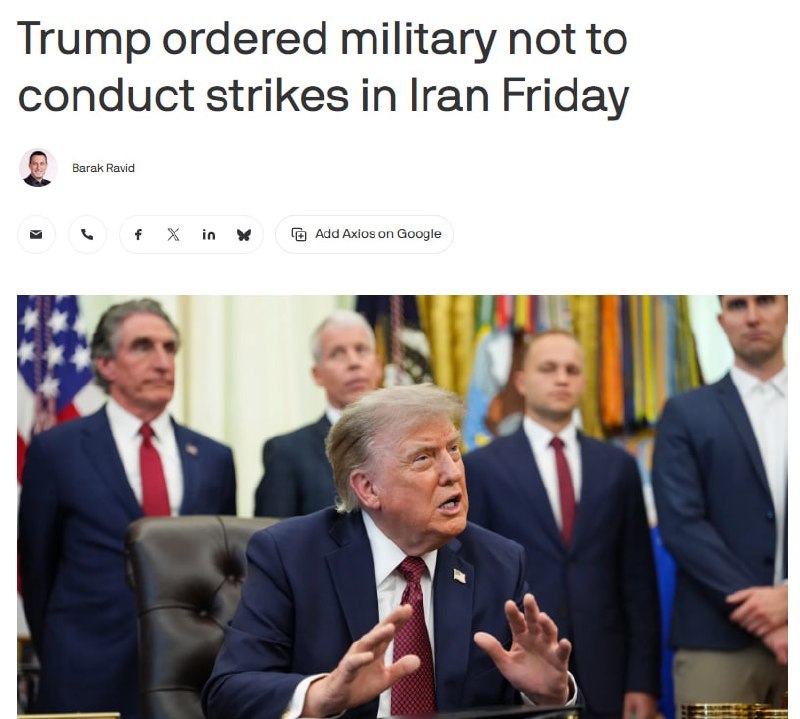
At 18:10 UTC on 14 July 2026, the US president announced he was replacing a 20% transit levy on cargo moving through the Strait of Hormuz with a package of trade and investment commitments that "the various states of the Persian Gulf will make" with the United States. The decision, conveyed via the Ukrainian-language outlet Ukrainska Pravda's Telegram feed, came roughly twenty-four hours after the levy was first floated, and within hours of a Polymarket post in which the same president said Gulf states would invest "a tremendous amount of money" in the United States.
The reversal reads less as a strategic course correction than as a swap of instruments. The proposed toll was always less a maritime policy than a negotiating posture, and the Gulf investment pitch is, on the available evidence, the same posture dressed for a different audience. The administration is asking Gulf sovereigns to underwrite the relationship with capital commitments rather than accept a transactional surcharge on their own export route.
A toll that never sailed
The proposed 20% levy would have applied to cargo transiting Hormuz, the chokepoint between the Persian Gulf and the Gulf of Oman through which the bulk of seaborne crude from Saudi Arabia, the UAE, Iraq, Kuwait, Qatar and Iran reaches global refineries. According to the LiveMint wire on Telegram, the US president framed the levy as a contribution from states that "benefit from passage through the strait," effectively pricing US naval protection into every barrel. Indian refiners, Chinese state buyers, Japanese and Korean importers and European utilities sit on the other side of that equation; all would have absorbed the cost.
By Tuesday evening Kyiv time the proposal was already off the table. The president told reporters he had decided to swap the toll for "trade and investment agreements" with Gulf partners, a formulation carried by Ukrainska Pravda and the Ukrainian TSN network. The Polymarket headline slot at 17:00 UTC gave the policy its commercial frame: Gulf money, not Gulf tolls.
The 24-hour lifespan of the levy is itself the story. Shipping contracts, war-risk premia and refinery feedstock planning do not turn on political weather; a transit levy that exists for one news cycle is functionally a signal, not a tariff. Insurers had no time to reprice. Charterers had no time to reroute. The market read it as an opening bid.
The Gulf side of the table
The proposal landed in Riyadh, Abu Dhabi, Doha and Manama as an unfunded mandate on their single most strategic asset. A 20% surcharge on cargo transiting Hormuz is, in effect, a royalty on Gulf hydrocarbons levied by a foreign government, collected from buyers who could reroute, reduce or litigate. Gulf finance ministries do not sign such checks. What they do sign, increasingly, are sovereign-wealth commitments, defence procurement frameworks and joint investment vehicles that re-anchor the relationship on capital flows the Gulf side controls.
That is the swap the president announced on Monday afternoon US time. "A tremendous amount of money" is a deliberately loose figure. Gulf sovereigns manage roughly $4 trillion in combined assets under management, and their outbound deployment has tilted for years toward US private equity, infrastructure and tech. What is novel is the explicit linkage of that deployment to a cancelled transit levy: in effect, the US has offered to monetise its naval guarantee in Gulf capital rather than in cargo throughput.
The counterpoint is straightforward. Gulf states did not, on the public record available in the cited wires, ask for the toll in the first place, and they have not, on that same record, publicly committed to the specific investment package now described as its replacement. A pledge extracted under the threat of a charge that was withdrawn within a day carries the weight of any such pledge: as much as the relationship can bear, and no more.
Why the strait still matters
The structural fact underneath the policy flip is that the United States remains the principal outside security provider for the waterway, and that fact has not changed with the announcement. The US Fifth Fleet is forward-based in Bahrain. Combined Maritime Forces, the multinational task force, operates out of Manama. Iran sits on the northern shore with anti-ship missiles, fast-attack craft and a documented history of tanker seizures. None of that was renegotiated on Monday or Tuesday.
What was renegotiated is the price tag attached to that posture. A transit levy would have made the security provision legible, billable and contestable in commercial contracts; an investment-pledge framework keeps it in the discretionary, bilateral register where the US has historically preferred to manage Gulf relationships. From the perspective of energy market plumbing, the difference is consequential. From the perspective of great-power signalling to Tehran, Beijing and New Delhi, the difference is mainly cosmetic.
There is also a domestic-audience reading. The investment-pledge framing lands well in US coverage because it converts an offshore military commitment into a balance-of-payments narrative. The toll framing landed less well because it taxed US importers, allies and consumers directly. The pivot is, among other things, a recognition that the political economy of the proposal had shifted against it faster than its strategic logic.
What to watch next
The near-term question is whether the announced "trade and investment agreements" produce signed documents before the news cycle moves on. The cited wires describe the package as a framework the Gulf states "will make," not as a signed memorandum. Without paper, the cancelled toll is the only concrete artefact on the table, and it is the one that has already been withdrawn.
The medium-term question is what precedent the 24-hour levy sets. A US president who can propose and withdraw a transit charge on the world's most important energy corridor inside a day has demonstrated both the willingness to use the instrument and the cost of doing so. The next time the tool is brandished, counterparties will price in the probability of reversal, which weakens the tool in the direction it was meant to apply.
The deeper question is whether the structural arrangement, US naval primacy in the Gulf underwritten by Gulf petrodollar recycling, can survive the erosion visible across both halves of the equation. The cited sources do not resolve that question; they only mark a moment when the price of that arrangement was renegotiated in public and then quietly settled in private.
What remains genuinely uncertain, on the evidence available in the cited thread, is the scale of the Gulf investment commitment. The president's framing is expansive. The Gulf side has, on the public record, offered no dollar figure. The 20% toll existed long enough to move currencies and headlines, and was withdrawn long before any commercial actor had to bind against it. The policy survived the day. Whether it survives the week is the next test.
This publication framed the 14 July reversal as a substitution of negotiating instruments rather than a strategic pivot; the underlying US security commitment to the strait is unchanged on the cited record, even as the price-tag conversation has moved from cargo surcharges to sovereign capital.
Wire provenance
This editorial synthesis draws on the following public wire/social posts:
- https://t.me/LiveMint/
- https://t.me/ukrpravda_news/
- https://t.me/TSN_ua/