Trump Floats 20% Toll at Hormuz and the Shipping Floor Pushes Back
Within a single news cycle on 13 July 2026, a 20% Strait of Hormuz surcharge went from announcement to UN rejection, exposing how thin the legal scaffolding for unilateral corridor tolls really is.
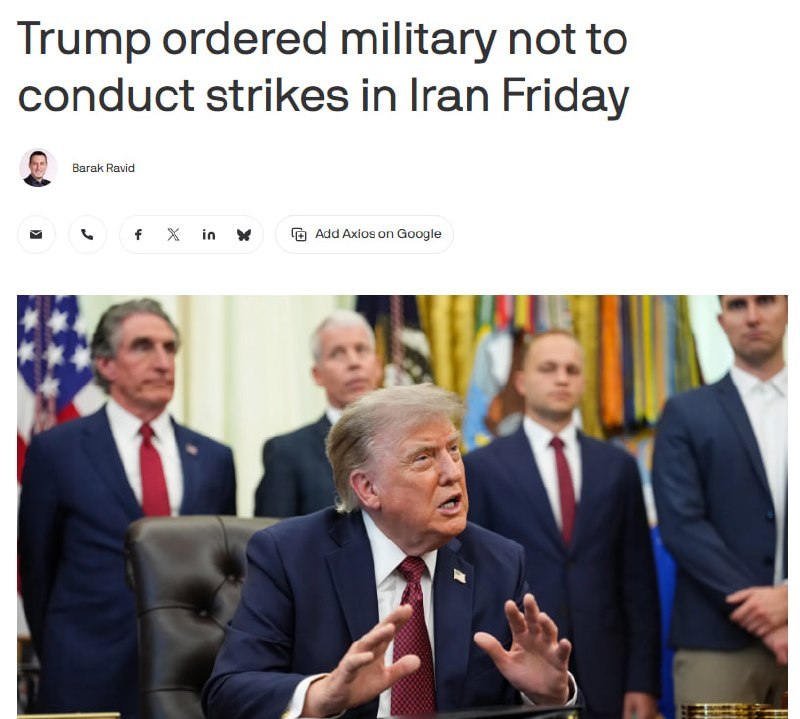
Six vessels cleared the Strait of Hormuz in the 24 hours to 13 July 2026, a near-total collapse of traffic through the chokepoint that carries roughly a fifth of the world's oil. By that afternoon, President Donald Trump had announced a 20% fee on all cargo passing the strait; within hours, the United Nations shipping agency had publicly declared there is "no legal basis" for any such mandatory toll. The gap between the announcement and the rebuttal, in a single news cycle, captures how a corridor that already defines global energy pricing is becoming a testing ground for unilateral American economic policy.
This article tracks the announcement, the industry math, the legal pushback, and what the corridor dispute reveals about the wider contest over who sets the price of moving oil. The administration's move is partly a fiscal reflex, partly a strategic signal, and almost certainly a negotiating posture. Read together with last week's crypto-market and inflation prints, it sketches a White House pressing simultaneously on multiple external revenue rails while the domestic macro picture cools on paper.
The 20% figure, scaled
A 20% surcharge on a fully laden very large crude carrier works out to roughly $30 million per ship, according to a circulating industry estimate tied to the proposal. Two crude VLCCs transit the strait on a typical day under normal conditions; the per-ship number is therefore less informative than the throughput number it would extract from the world's single most important sea lane for seaborne oil. Because no mechanics for collecting the fee were specified in the announcement, the $30 million figure should be read as an upper-bound charge against the cargo, not a confirmed cash transfer.
The unrealism of the announcement shows in the traffic data. Six ships in 24 hours, a number that traders, shipowners and intelligence services have been watching with the same attention they once paid to Suez Canal queues, points to a corridor already running near empty. Imposing a surcharge on a lane that operators are largely avoiding anyway raises an obvious question: what is the policy actually trying to accomplish?
The legal floor the proposal sits on
The clearest constraint came from the UN's International Maritime Organization, which on 13 July rejected the proposed fee, saying there is no legal basis for mandatory tolls on passage through international straits. The IMO's position draws on the long-standing convention that transit passage through a strait used for international navigation must be allowed without impediment, a principle the United States itself has historically invoked to challenge others. That historical posture matters: a US administration now citing corridor control as a basis for a unilateral levy is, in effect, relearning a doctrine its own diplomats spent two decades teaching.
Industry pushback will follow the legal line. Major flag states and shipowners will, in practice, route around any levy they can route around; insurance underwriters, who price war-risk premiums on the strait daily, will price the new uncertainty in. The expected response curve is short and well-rehearsed: incremental changes to navigation, not a confrontation at sea.
What the White House is actually after
The most plausible read is political, not fiscal. Announcing a fee on cargo at Hormuz, while the corridor is functionally throttled by Iran's shadow fleet, regional tensions, and insurance pricing, is a way to project sovereignty over a lane that the United States does not in fact police alone. It is also a way to put Gulf allies on notice that their access to the strait is contingent on bilateral arrangements, not on inherited multilateral arrangements.
For an administration that simultaneously told the Senate to pass a crypto market-structure bill, framed China as attempting "complete and total control" of digital assets and artificial intelligence, and watched US CPI print lower than expected, the corridor announcement reads as a foreign-policy cash register: every external flow is being interrogated as a potential revenue stream.
Counter-view, and a counter-counter-view
The realistic counter-view is that this is a negotiating posture aimed at extracting defence-cost contributions from Gulf partners rather than at collecting fees from cargo at sea, which would be logistically impossible without a coalition maritime operation. Under that reading, the announcement is the opening bid of a burden-sharing negotiation, and the IMO's rejection is not an obstacle but the loud-making move that gives Gulf counterparts something to push against so a deal can be struck privately.
The counter-counter-view, the one this publication finds more persuasive given the simultaneity of the moves, is that the administration is layering an external-revenue narrative on top of a domestic macro that, on Monday's inflation print, looks softer than analysts had pencilled in. Markets are willing to give a White House more runway when the macro is cooling. Layering corridor fees, a crypto market-structure bill, and rhetorical confrontation with Beijing on a single news cycle is the kind of posture a second-term White House adopts when it wants to be seen extracting rent from the world while it still can.
What to watch next
Three indicators will determine whether the policy is operational or theatrical. First, whether Lloyd's and other P&I clubs issue guidance to tanker operators on the levy. Second, whether any IMO member state files a formal protest, not just the agency's secretariat. Third, whether Iran's IRGC Navy adjusts its rhetoric or its posture toward commercial traffic, since a unilateral US levy gives Tehran a propaganda win it does not have to spend deterrence budget on.
For now, the IMO rejection is the day's binding constraint. The legal scaffolding for charging transit passage through an international strait has not been built, and the United States has spent the postwar era arguing against anyone who tried to build it. The administration can walk that back, or it can try to build that scaffolding now. Neither move is cheap.
Desk note: this piece was assembled from Telegram and X wire traffic on 13 July 2026. Monexus does not have an independent read on whether the proposed surcharge is a live policy or a negotiating posture; the available wires report the announcement and the pushback, not the implementation mechanics.
Wire provenance
This editorial synthesis draws on the following public wire/social posts:
- https://t.me/s/WatcherGuru
- https://t.me/s/WatcherGuru
- https://t.me/s/WatcherGuru
- https://t.me/s/WatcherGuru
- https://t.me/s/WatcherGuru
- https://t.me/s/WatcherGuru
- https://x.com/polymarket/status/1951551334251520112
- https://x.com/polymarket/status/1951595144675127382
- https://x.com/polymarket/status/1951671209471987816
- https://x.com/unusual_whales/status/1951578493065625712
- https://t.me/s/WatcherGuru
- https://t.me/s/WatcherGuru
- https://t.me/s/WatcherGuru
- https://t.me/s/WatcherGuru
- https://t.me/s/WatcherGuru
- https://t.me/s/WatcherGuru
- https://x.com/polymarket/status/1951551334251520112
- https://x.com/polymarket/status/1951595144675127382
- https://x.com/polymarket/status/1951671209471987816
- https://x.com/unusual_whales/status/1951578493065625712