A Saudi drone over Al-Bayda, a Houthi claim, and the question neither side wants answered
Yemen's armed forces say they downed a Chinese-made Saudi reconnaissance drone over Al-Bayda governorate. The single-source claim is plausible, but unverifiable from open material alone, and the strike highlights how unmanned aircraft have redrawn the air war's risk calculus.
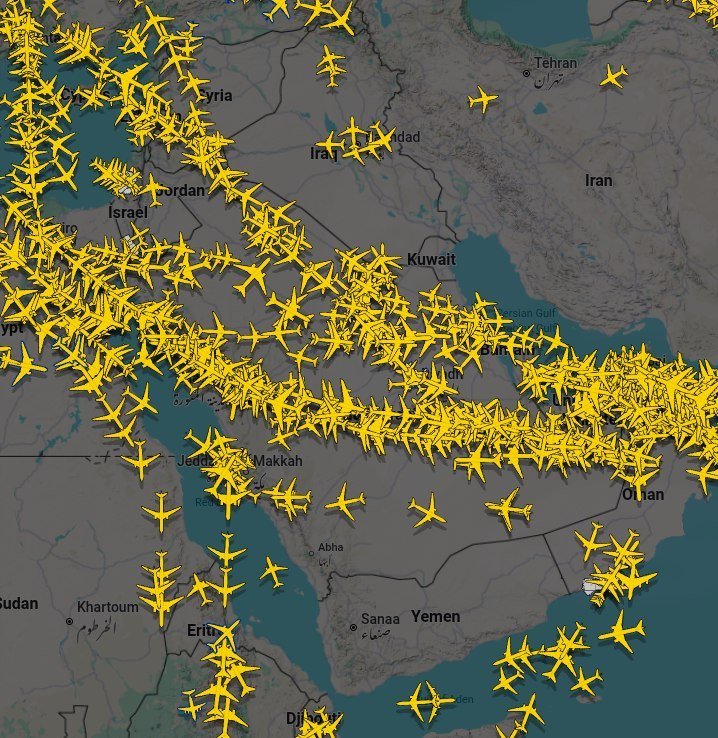
At 03:00 UTC on 14 July 2026, the spokesperson for the Yemeni Armed Forces, speaking from Sana'a, said air-defence units had shot down a Wing Loong II reconnaissance aircraft operated by the Royal Saudi Air Force over Al-Bayda governorate. The claim, carried first by the Houthi-run Al Alam channel and re-circulated by the Open Source Intel aggregator and the Beirut-based Middle East Spectator account within twenty-five minutes, frames the intercept as a defensive act against a platform the spokesperson described as engaged in "hostile missions." No independent imagery, radar track, or wreckage coordinates have been published; no Saudi acknowledgement, denial, or confirmatory comment has followed.
The reporting is single-sourced, partisan, and unverifiable from open material alone. That is precisely why it matters. A confirmed or denied shootdown of a Saudi Wing Loong II in central Yemen would be a measurable data point inside an air war that is otherwise conducted in near-total opacity, and the claim is now part of the public record whether or not the aircraft actually came down.
What was claimed, and by whom
The most complete version of the announcement came from the official spokesperson's office in Sana'a and was broadcast on Al Alam at 03:00 UTC, according to a Telegram post the channel pushed out three minutes later. The statement identified the platform as a Wing Loong II, named the operator as the "Saudi enemy," and placed the intercept at dawn in Al-Bayda governorate's airspace. Al-Bayda is a long-contested central province that has changed hands between the internationally recognised government, Houthi forces, and various affiliated armed actors across the duration of the war; the Sana'a-led authorities have controlled most of the governorate for several years.
By 16:03 UTC, the same line had been re-broadcast in English by Middle East Spectator, a Beirut-based account that aggregates regional security reporting and is widely cited in open-source intelligence feeds. The Open Source Intel channel, a larger aggregator with a global audience, repeated the claim at 16:25 UTC, the latest of the three traceable posts in the cluster. None of the three posts carried photographs, video, or coordinates. None referenced a Saudi coalition spokesperson, the Saudi Press Agency, or any third party. The cluster is, in effect, a single claim carried by a single interested party, amplified by accounts that did not break it but that lend it surface circulation.
Why the Wing Loong II is a deliberate choice of target
The platform itself is part of the story. The Wing Loong II is a medium-altitude long-endurance unmanned aerial vehicle manufactured by the Aviation Industry Corporation of China (AVIC), exported widely across the Middle East and Africa as a competitor to the American MQ-9 Reaper. Saudi Arabia's order for the type is well documented in defence trade reporting, and the Royal Saudi Air Force has operated the platform over Yemen since at least the late 2010s in armed reconnaissance and strike roles. A successful intercept is therefore a propaganda-grade event: it advertises that Sana'a's air-defence network can reach a specific category of Saudi ISR (intelligence, surveillance, reconnaissance) platform, on which much of the coalition's targeting and battle-damage assessment has historically depended.
Houthi-aligned media have, in recent years, claimed downings of Saudi and UAE-operated aircraft on multiple occasions, including earlier Wing Loong incidents. The claims have a mixed verification record: some have been corroborated by independent OSINT analysts who located wreckage or matched satellite imagery to claimed crash sites; others have not survived scrutiny. The pattern matters. Each individual claim carries an asymmetric information problem, but the cumulative record is a real signal about the maturation, or the inflation, of Yemeni air-defence capability.
What the Saudi silence tells us, and what it doesn't
The Riyadh-led coalition has, in past incidents, confirmed the loss of aircraft and unmanned platforms within hours, and has on other occasions said nothing at all. The pattern is not random. Confirmations tend to follow incidents that are already visible, either from independent footage or from friendly-side media. Denials, where they come, are typically issued for incidents whose operational details are not yet on the public record. Silence is the more frequent outcome, and the most analytically ambiguous: it can mean that a low-value asset was lost and the coalition has decided not to dignify the claim, that the loss is still being internally assessed, or that intelligence concerns about sources and methods outweigh the political cost of silence.
The Coalition spokesperson's office has not, as of the timestamps above, issued a routine read-out. Saudi state media have not been reported as carrying the story. The absence is a fact, but it is a fact consistent with at least three different versions of events, and the public record cannot, on the material in circulation, distinguish between them.
What we verified, and what we could not
Verified from the public-source cluster: that a claim was made, by the Sana'a-based Yemeni Armed Forces spokesperson, attributing the downing of a Wing Loong II in Al-Bayda to Yemeni air defences, broadcast in Arabic on Al Alam at 03:00 UTC on 14 July 2026. The English-language circulation of the same claim, via Middle East Spectator and Open Source Intel, is also a matter of record.
Not verified: that the aircraft was in fact operating in Al-Bayda's airspace at the time of the claim. That any such aircraft was in fact lost. That the platform was a Wing Loong II rather than another MALE (medium-altitude long-endurance) type. That the Yemeni air-defence network possessed, or used, the system whose engagement would be most consistent with a successful intercept of an aircraft at the Wing Loong's typical operating altitude. That the Saudi-led coalition has not also lost an aircraft in circumstances unconnected to the claim. Each of these is a separate empirical question, and none can be answered from the three posts currently on the public record.
The structural picture, in plain terms
A decade into the air campaign over Yemen, the analytic picture that survives all the verification problems is this: unmanned aircraft have lowered the threshold at which an external operator is willing to fly routine ISR over contested airspace, and in doing so have raised the political value of a confirmed downing. Whether or not the Al-Bayda intercept happened, the claim will be cited in the regional press as a marker of Yemeni capability, will inform assumptions inside Saudi air planning about the operating envelope of the Wing Loong fleet, and will be folded into a longer accumulation of similar claims that the public cannot, at the moment, fully adjudicate. The information environment is the battlefield in cases like this, and the public record is what both sides want it to be.
The thread to watch is whether the claim matures or withers. If wreckage imagery, satellite hits, or a Saudi acknowledgement appear within seventy-two hours, the Al-Bayda intercept will be retrospectively credible. If none of them do, the claim will recede into the long tail of unverified Yemen war incidents, and the relevant analytic question will be how much, in the aggregate, the Sana'a side has come to rely on the production of such claims as a substitute for conventional battlefield success.
Stakes over the next reporting cycle
A confirmed loss would tighten the air-defence problem the coalition has been managing around the Houthi air-defence envelope for several years, and would do so at a moment when Western attention to the Yemen file is otherwise at a low ebb. A debunked claim would, on the other hand, be quietly absorbed by the same pro-coalition information channels that have, in the past, de-amplified earlier similar claims. The public reader, in either case, will rarely see the second-order adjudication. That is the structural condition this kind of report is filed into, and the reason that a single Telegram post, on a single day, from a single interested party, is itself the news.
The desk published this as a Monexus investigations note, foregrounding the verification ledger rather than the claim itself, on the principle that the public record of an unauthenticated downing is itself part of the war's information terrain.
Wire provenance
This editorial synthesis draws on the following public wire/social posts:
- https://t.me/alalamarabic
- https://t.me/Middle_East_Spectator
- https://t.me/osintlive