Al-Zaidi's three announcements: a sequence, not a doctrine
On a single July afternoon, Iraq's prime minister laid down three lines: foreign troops out, foreign companies in, and a September 30 deadline for every unofficial gun. Read together, they sketch a reorganisation of the Iraqi state, not a rupture with Washington.
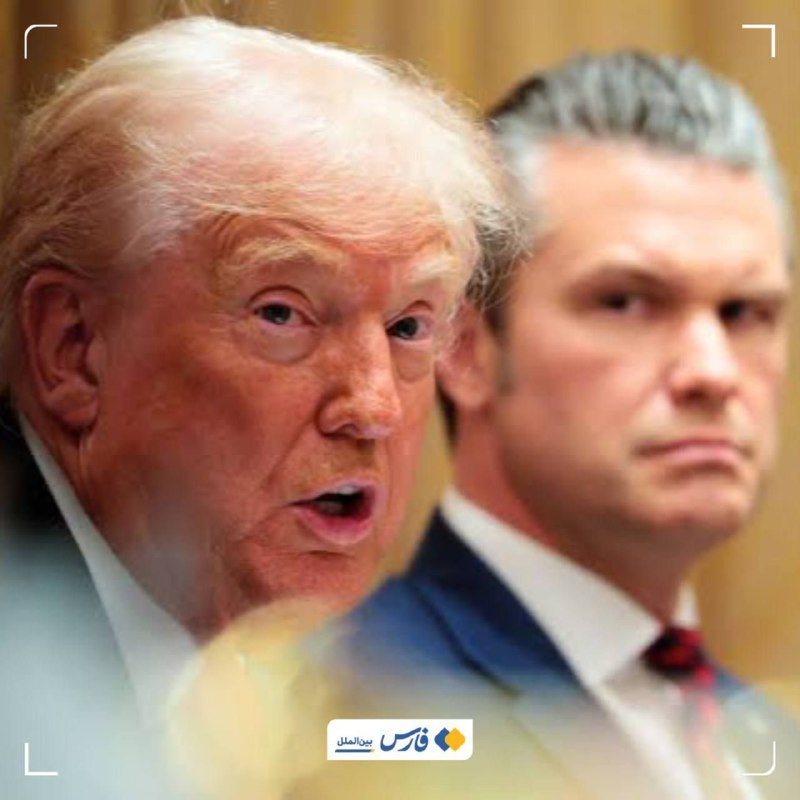
Baghdad delivered three political signals inside two hours on 14 July 2026, and the order in which they came matters. At 16:05 UTC, Al-Alam Arabic carried Prime Minister Ali Al-Zaidi declaring that American forces will leave Iraq and American companies will enter. Twenty-seven minutes later, Way of the Witness relayed a second line: Al-Zaidi described Kurdistan as an important part of Iraq, telling an audience "I look at Iraq as a body. Each part of Iraq is part of my own body." By 17:06 UTC, Tasnim Plus reported the third: after September 30, no group will be allowed to carry weapons unless it is an official member of one of the government institutions. Three statements, one sitting, one prime minister. They map, in sequence, to the three fault lines that have defined Iraqi sovereignty debates since 2003.
What Al-Zaidi is actually proposing
The first statement is about the military footprint of the United States in Iraq. The second is about the territorial integrity of the Iraqi state across the Kurdistan Region. The third is about the legal monopoly of force inside the country, and it lands a deadline. Read in that order, the announcements do not amount to a rupture with Washington or a concession to Tehran. They amount to a programme for the reorganisation of the Iraqi state: foreign combat formations out, foreign capital still welcome, and every armed actor working under a single legal roof by the end of the Iraqi fiscal quarter.
The distinction Al-Zaidi drew between forces and companies is the load-bearing claim. Iraqi policy has, for two decades, framed the American troop presence under the bilateral framework agreement and its successors as a security arrangement, while treating American commercial engagement under oilfield contracts and General Dynamics land-mine remediation work differently. The 14 July formulation retains that asymmetry. Whether the troop side of the equation survives contact with the Iraqi parliament, the Popular Mobilisation Forces headquarters, and the Pentagon's resourcing cycle is a separate question.
What the September 30 deadline covers, and what it does not
Iraq's Prime Minister did not name the groups the weapons ban targets. The phrasing, as relayed by Tasnim, applies to "any group" carrying weapons that is not "an official member" of a government institution. In Iraqi practice, that language reaches the Popular Mobilisation Forces (PMF, or al-Hashd al-Shaabi), whose nominal position inside the state structure exists but whose chains of command run partly outside it. It reaches the Kurdish Peshmerga, who wear state insignia but answer to the Kurdistan Region's two governing parties. It reaches tribal mobilisations in Anbar and Nineveh that were folded into the Iraqi security forces in 2014-17 under irregular arrangements. It reaches, in principle, the cycle of armed groups that emerged after the killing of Qasem Soleimani and Abu Mahdi al-Muhandis in January 2020.
A deadline of this shape was last attempted in October 2019, when the government of Adil Abdul-Mahdi circulated an order bringing the PMF more fully under defence ministry authority. That order produced street protests in Baghdad and was effectively shelved. The September 30 target in Al-Zaidi's announcement is later in the calendar and more categorical in its wording. Whether the political coalitions behind it are stronger than they were six years ago is the empirical question that has not yet been answered.
The Kurdistan frame
The second statement, on Kurdistan, is the one that addresses Iraqi domestic politics most directly. Al-Zaidi's framing of Iraq as a single body, with no cuttable parts, draws the constitutional line that the 2005 text draws: Kurdistan is a federal region within a unitary state, and the federal government's writ extends to its territory on matters of foreign affairs, defence, and currency. That reading has been contested by Erbil for the duration of the post-2003 order. The independent Kurdistan referendum of September 2017, the post-2017 budget standoff, and the disputes over oil-revenue allocations through the Iraq-Turkey Pipeline have all run on the same fault.
Al-Zaidi's body metaphor, as relayed by the Way of the Witness channel, positions the prime minister as the federal executive whose first obligation is territorial wholeness. It is also a signal to Baghdad's regional allies, including Tehran and Ankara, that the federal government will not concede ground on the question of Kurdish secession during a sensitive fiscal and security window. Statements at this register are typically calibrated for multiple audiences. The home audience is Iraqi Arab public opinion. The external audience is the Kurdish political parties. The third audience, less discussed but present, is the negotiating table in Ankara where Kurdish, Turkish, and Iraqi diplomats have been meeting under varying formats since 2024.
A structural view, without the slogan
The 14 July sequence sits inside a wider realignment of Middle Eastern statecraft, in which several governments are recasting the borders between foreign presence, foreign investment, and indigenous armed capacity. Iraq's announcement triages the three categories differently: foreign troops are an arrangement that will end; foreign companies are a relationship that will continue; indigenous armed formations are a category that will be normalised into the formal state. Other governments in the region have moved in similar directions over the past 24 months, with varying degrees of clarity. The framework the Iraqi announcement draws is internally consistent, and it is unusually specific in its use of dates. Specificity is a tell: it suggests the announcement is meant to be read as a programme rather than a posture.
Stakes and uncertainty
The line that is hardest to verify from today's announcements is the operational one. Leaving Iraq on a credible timetable requires coordination with the combined joint task force operating from Al-Asad and Erbil, with the Iraqi defence ministry, and with the political blocs in the Council of Representatives that have staked positions on the US presence since 2020. Bringing armed formations inside a single institutional roof by 30 September requires buy-in from actors whose consent has not been tested in public. And the distinction between American forces and American companies is going to face disputes on cases the prime minister did not name, including the question of private military contractors and the security details attached to US diplomatic missions.
The next concrete test will come at the Iraqi Council of Representatives' next session, where any extension, modification, or termination of the framework agreement has to be ratified. Watch that agenda. The September 30 deadline for the weapons framework will set the political clock for the rest of the calendar year.
How Monexus framed this against the wires: the three statements came together via three distinct Telegram channels rather than a single wire. We treated them as one event because they were issued in a single sitting, by a single actor, and the second and third interpret the first. Sources do not contain figures, casualty counts, or institutional follow-up details, and this piece declines to invent them.
Wire provenance
This editorial synthesis draws on the following public wire/social posts:
- https://t.me/alalamarabic
- https://t.me/wfwitness
- https://t.me/tasnimplus