Six Yemeni missiles reportedly target Saudi Arabia's Abha airport
Press TV reported six missiles fired from Yemen toward Saudi Arabia, with Abha International Airport named as the target, before flight paths remained officially unconfirmed within the hour.
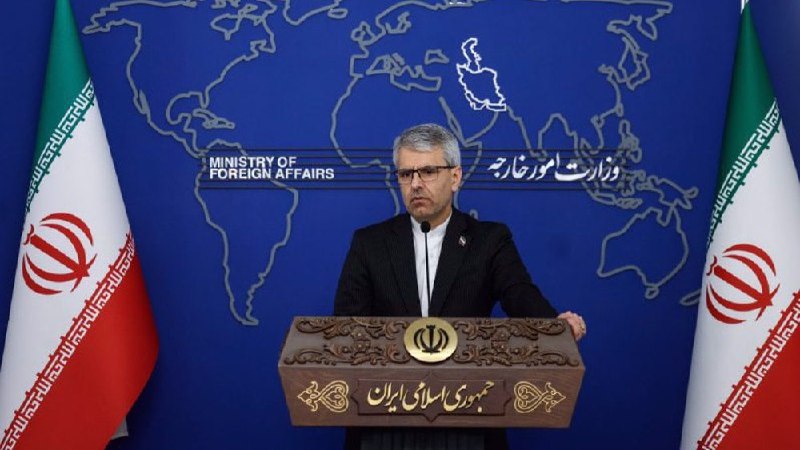
At 17:01 UTC on 13 July 2026, Iran's English-language Press TV feed on Telegram reported that six missiles were fired from Yemen toward Saudi Arabia, with Abha International Airport named as the target. Within four minutes, the same press cycle had twice circled around the same coordinates: by 17:03 UTC, the Farsi service Jahan Tasnim was flagging an attack on Abha airport in southern Saudi Arabia; by 17:05 UTC, Tasnim News English had widened the frame to the surrounding Asir region, citing unofficial sources. The reporting chain was, by that point, self-reinforcing and built almost entirely on Iranian state media and outlets in the Tasnim orbit. The Saudi-led coalition had, at the time of writing, not confirmed an interception, a strike, or a casualty. The picture that reaches readers an hour after the first alert is, accordingly, almost entirely a projection from Tehran's newsroom rather than a verified battlefield read.
What the available reporting does establish is narrow. Press TV said six missiles were fired. Press TV also named Abha International Airport as the target. Tasnim's English and Farsi services converged on Abha and the wider Asir region as the locus of the claimed strike. None of the four items in this cluster carries attribution to a named Houthi military spokesperson, a Saudi coalition briefing, or a flight-tracking data point that would let an outside observer confirm the launch site, the trajectories, or the outcome. Reporting that "Abha International Airport is said to have been the target" is, on the evidentiary record available here, an unverified claim repeated across two Iranian state-aligned desks and a third outlet in the same media family.
What the wire actually shows
Strip the items to the verifiable residue. Four timestamps from three distinct Telegram channels, two of them Tasnim affiliates, one the English feed of Press TV. The earliest item, at 16:50 UTC, frames the episode as a strike on Abha. Eleven minutes later, Press TV upgrades the count to six missiles and keeps Abha as the named target. Two minutes after that, Jahan Tasnim widens the geography to southern Saudi Arabia in general. A further two minutes on, Tasnim English broadens the frame to the Asir region and characterises the reports as coming from unofficial sources. The progression is suggestive. The first datum was specific; the later datums got looser as the same claim travelled further from its unnamed originator. That is exactly the rhythm of a story being amplified inside a single media ecosystem before anyone outside it has shown up to verify.
Why Saudi Arabia, why Abha
Abha sits in the southwestern corner of the kingdom, roughly 200 kilometres inside the Saudi border from Yemen and only marginally further from the Houthi-held north of the country. The airport has been a recurring object of Houthi long-range missile and drone claims for the better part of the last several years, sitting as it does on an arc that runs from Sana'a through Khamer and on into the Asir highlands. The 2019 Abha airport attack, in which a cruise missile wounded multiple passengers, established the facility as a symbolic target in Yemeni missile doctrine. Any future Houthi claim against Saudi civil aviation is, therefore, a deliberate echo of a known playbook: choose a piece of infrastructure that Riyadh cannot abandon without conceding escalation, aim at it in daytime hours when global flight-tracking is densest, and let the global press do the rest of the work.
The corollary matters. A claim of a strike is also a claim of penetration. Even a missile that lands in an open field beyond the airport perimeter permits, in the Houthi framing, the inference that Saudi and US-supplied air defences were either evaded or saturated. A confirmed strike would, on the available trajectory of the war, be the first Houthi missile operation of consequence reported on Saudi soil in the current calendar period and would arrive at a moment when regional diplomacy is in active recomposition. The absence, so far, of any Saudi coalition read of the events is itself a meaningful signal. It points either to Riyadh waiting for technical confirmation that an interception actually occurred, or to the strike never having happened in the form Press TV described.
The information environment
These four items are all that the public record offers as of the time of writing, and they all originate from a narrow band of Iranian state-adjacent media. Press TV is the English-language flagship of Iranian state broadcasting; Tasnim and Jahan Tasnim are outlets operating under the Tasnim News Agency umbrella, which is itself aligned with the Islamic Revolutionary Guard Corps. The pattern is not exotic. State-aligned outlets in any major power frequently carry early claims about kinetic events involving their adversaries before independent verification can catch up. The deficit in the present case is that there is no counterweight wire in the cluster. There is no Reuters flash, no Saudi Press Agency release, no Houthi military spokesperson statement, no FlightRadar24 disruption log. Reporting that circulates only within one national media ecosystem should be reported as exactly that: a single-ecosystem claim, repeated and broadened by affiliates of the same shop.
The journalistic instinct, on a story like this, is to wait. The editorial duty, on a story like this, is to publish what is known, label what is unverified, and resist the temptation to launder an uncorroborated claim into an asserted fact simply because four Telegram items in a row repeat the same geography.
What is still unverified
Several pieces of basic information are missing from the present record and cannot be inferred. The number six comes from Press TV's 17:01 UTC item and has not been independently corroborated. The named target, Abha International Airport, is a Press TV designation. The wider Asir framing in the 17:05 UTC Tasnim English item is attributed to "unofficial sources" without further identification. There is no Houthi claim of responsibility, no coalition confirmation, no aviation disruption data, and no imagery. Anyone reading the Iranian wire as a definitive account of an event is, on this evidence, reading ahead of the facts. Anyone reading it as a single-source projection of a possible event is, conversely, reading what the Iranian wire actually is: the first stage of a news cycle that independent reporting has not yet joined.
The story will resolve into one of three shapes once independent verification arrives. If Saudi civil aviation and coalition air defence log a strike, the Iranian wire's core claim will hold and the divergence from past reporting will be in the count and the targeting. If the Saudi coalition reports an interception with no impact, the original Press TV claim survives as a launch report rather than a strike report. If the coalition, Houthi military spokespeople, and global flight tracking all go silent through the rest of 13 July UTC, the most defensible reading is that the launch did not occur in the form described. The clock starts now.
This article treats Iranian state media claims as first-source reporting on Iranian state media, not as a stand-alone factual basis for events on the ground in Saudi Arabia, in line with Monexus's standing sourcing rules for Iran-regime adjacent outlets.
Wire provenance
This editorial synthesis draws on the following public wire/social posts:
- https://t.me/presstv/131950
- https://t.me/JahanTasnim/116800
- https://t.me/tasnimnews_en/205551
- https://t.me/tasnimnews_en/205554
- https://en.wikipedia.org/wiki/Abha_International_Airport