Trump says the US will "seize" the Strait of Hormuz, and charge a fee for the crossing
In a 13 July 2026 Fox News interview, Donald Trump claimed the United States would take operational control of the Strait of Hormuz and levy transit fees. Tehran rejected the idea within hours; the proposal has not been formally presented to Iran's government or to the Gulf monarchies.
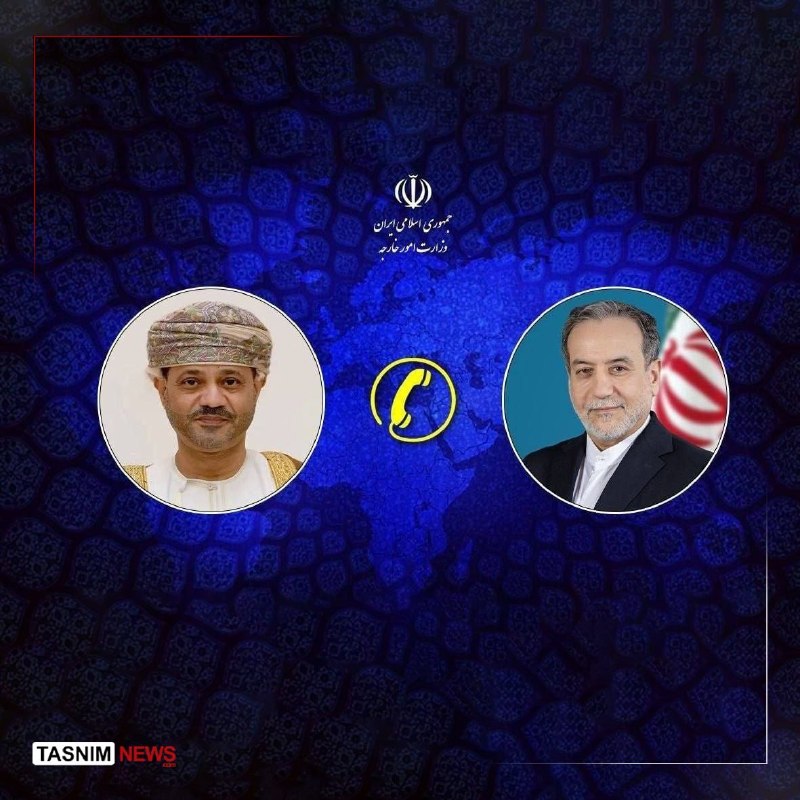
In a Fox News interview aired on 13 July 2026, Donald Trump said the United States would "seize" the Strait of Hormuz and "probably also manage" it, characterising the move as a guardianship that would generate revenue through transit fees on the waterway that carries roughly a fifth of the world's traded oil. The claim was relayed in English and Persian-language summaries of the interview within minutes. By midday UTC, Iranian state outlets had dismissed the statement as a "fantasy" and reaffirmed that any retreat from Iranian management of the strait was unthinkable.
The episode is more than another round of presidential rhetoric. A US assertion of operating control over Hormuz would, if pursued, collide with the doctrine Tehran has built around the chokepoint since the 1980s and would require either the acquiescence or the defeat of the Islamic Revolutionary Guard Corps Navy, the world's densest anti-ship cruise-missile concentration. It also arrives at a moment when Gulf monarchies have spent fifteen years building their own bypass pipelines and have an interest in neither a US takeover nor a unilateral Iranian closure. The bet Trump is making, and the bet he is asking Tehran to call, is whether a unilateral US custodianship of the world's most important energy corridor can be installed without the cooperation of either of the two powers that actually sit on its shores.
What Trump actually said, and to whom
The relevant remarks appear in a 12:29 UTC 13 July summary of the interview carried by the Abu Ali Express channel on Telegram, and in a near-contemporaneous Fars News summary posted at 12:28 UTC on the same day. Trump, in that account, said: "We will seize the Strait. We will probably also manage it. We will become the guardians of the strait, and when we do, we will receive a rew[ard]", the text truncated by the channel. Fars, the outlet operated by Iran's regular-army media apparatus, summarised the same passage as: "We are taking control of the Strait of Hormuz and we will charge a fee for crossing it," and added that Trump claimed there had been an agreement with Iran that the latter had violated. The interviews and the clip circulated on Telegram are the primary record at the time of writing; no official White House transcript had been published as of 13:30 UTC on 13 July 2026.
The critical structural detail is that this was a Fox News sit-down, not a policy rollout. No joint statement from the Pentagon, no notification to the United Arab Emirates or Oman (the two states whose territorial waters define the strait), and no coordination with NATO allies whose navies escort commercial shipping through the Gulf of Oman were visible in the available reporting. That matters because the strait's legal regime is governed by the 1982 UN Convention on the Law of the Sea and by long-standing bilateral arrangements with Muscat and Abu Dhabi; a unilateral US "seizure" is not a recognised category in that body of law.
How Tehran read it
The Iranian response, by contrast, was organised and fast. Tasnim News, the outlet tied to the IRGC, posted two English-language items between 12:16 UTC and 12:21 UTC on 13 July, with an editorial register it reserves for what it treats as existential disputes with Washington. The first called the remarks a "brazen fantasy" and labelled the United States a "terrorist state"; the second cited an unnamed "informant of the senior assistant of [Iran's] leaders" to insist that "withdrawing from the management of the Strait of Hormuz has no place in the mind of any Iran-lover." The Jahan Tasnim sister-channel ran the same line in Persian at 12:16 UTC. The phrasing, Iran-lover rather than Iranian, is itself a tell: the framing positions Hormuz not as a piece of maritime geography but as a national-identity redoubt, comparable in Tehran's self-narrative to the Persian Gulf coastline itself.
This is not new vocabulary. Through every crisis since the 1980s Tanker War, Tehran has paired its anti-ship missile inventory with the doctrinal claim that any attempt to close or substantially interfere with the strait will be answered asymmetrically. The rhetorical signal on 13 July is that the same deterrent doctrine is being reasserted, and that it is being pre-positioned against a US administration that has, in its second term, repeatedly framed Iran as a sub-sovereign problem to be administered rather than a regional actor to be negotiated with.
Why the Gulf monarchies are the silent variable
Any operational plan to "seize" the strait has to land on the shore, and the shore is controlled by the Sultanate of Oman and the United Arab Emirates. Both are US security partners; neither has publicly endorsed the proposal on the available record. Their interest is structurally opposed to a US takeover. Abu Dhabi and Riyadh have spent the better part of a decade and tens of billions of dollars building the Habshan-Fujairah pipeline and the Yanbu and Petroline bypass systems, with the explicit purpose of routing Gulf oil exports around Hormuz altogether. A US-imposed transit fee on the strait would, in effect, subsidise those bypass projects by making the maritime route less attractive, but it would also place Washington in the position of taxing the sovereign waters of two Gulf Cooperation Council members without their consent.
The economic stakes are harder to game out without a price tape, but the volume stakes are clear: roughly one-fifth of seaborne oil and a third of seaborne LNG transits the strait on a typical day. A fee regime on that traffic would, on conservative assumptions, generate a substantial annualised revenue stream; it would also raise insurance and freight rates the moment the policy became credible, and would hand Tehran a permission structure it does not currently need.
Stakes, and what to watch next
The dominant Western reading of the remarks is that they are another in a series of improvisations designed for a domestic audience, with limited operational follow-through. That reading holds only if one assumes the Fox News platform is the ceiling and not the floor; the track record of the second-term administration suggests rather that interviews of this kind function as policy announcements, with implementation following through executive orders and CENTCOM tasking orders in subsequent days. The test cases are identifiable: a formal Pentagon posture statement on Fifth Fleet operations, a State Department note to Muscat and Abu Dhabi, and any movement on the Iran nuclear file, which has been the only sustained diplomatic channel between the two governments.
The Iranian counter-reading, as relayed through Tasnim and Fars, is that the statement is a negotiating escalation rather than a plan, and that Tehran's posture will be calibrated to make any actual US move prohibitively costly. That reading is plausible because it is consistent with how Tehran has priced every previous US naval build-up in the Gulf since 2019. The honest answer at 13:30 UTC on 13 July 2026 is that the sources do not yet establish which reading is correct: the only verified record is a Fox News interview, two Iranian state-media reactions, and the absence of any visible coordination with Gulf partners. The next seventy-two hours, the time it usually takes for an interview like this to harden into either a directive or a memory, will tell which of those readings the US government is actually operating on.
Desk note: Monexus led with the Iranian state media's full English and Persian framing rather than a paraphrased Western wire line, on the grounds that the contested claim is being made by Washington about Iran and the operative counter-position is therefore Tehran's own. We will tighten the analysis if a formal Pentagon posture statement or a Gulf-state reaction appears in the next reporting cycle.
Wire provenance
This editorial synthesis draws on the following public wire/social posts:
- https://t.me/abualiexpress
- https://t.me/farsna
- https://t.me/tasnimnews_en
- https://t.me/tasnimnews_en
- https://t.me/JahanTasnim