Trump claims the US will "seize and manage" the Strait of Hormuz and charge transit fees
In a Fox News interview aired 13 July 2026, Trump says the US will take control of the Strait of Hormuz and collect a transit fee. Iran pushes back; the legal and operational mechanics remain unspecified.
At 12:29 UTC on 13 July 2026, the Telegram channel abualiexpress posted a clip of Donald Trump telling Fox News that the United States would "seize" the Strait of Hormuz and "probably also manage it," and that Washington would then "receive a reward" from the traffic crossing the waterway. Within two minutes, Fars News Agency, the Iranian state outlet, posted its own cut of the same exchange, headlined as "new claims" by Trump: that the US was "taking control of the Strait of Hormuz," and that it intended to "charge a fee for crossing it." By 12:31 UTC, ClashReport had lifted the broader passage in which Trump described Iran as a "bad group of people" who were, in his telling, "getting their ass kicked." Euronews confirmed the thrust of the Hormuz claim in a short alert at 12:18 UTC.
What is on the table, on the president's own account, is the unilateral conversion of the narrowest chokepoint in the global oil trade into a toll road under US management. The proposition is unusual enough to be worth pinning down in plain language: the same government that, under successive administrations, has insisted on "freedom of navigation" through Hormuz as a non-negotiable principle of the global commons is now, on a cable-news set, asserting a right to monetise it.
What Trump actually said, and what the Iranian side heard
The Fars cut of the interview makes the economic claim the sharpest. Trump told Fox, according to Fars's translation, that the US would "take control of the Strait of Hormuz and charge a fee for crossing it." The abualiexpress version adds the political frame: that the US would "become the guardians of the strait" and be "rewarded" for the role. Trump's broader characterisation of Iran, lifted by ClashReport at 12:31 UTC, was that Tehran had violated a prior agreement and was currently losing a confrontation he did not specify.
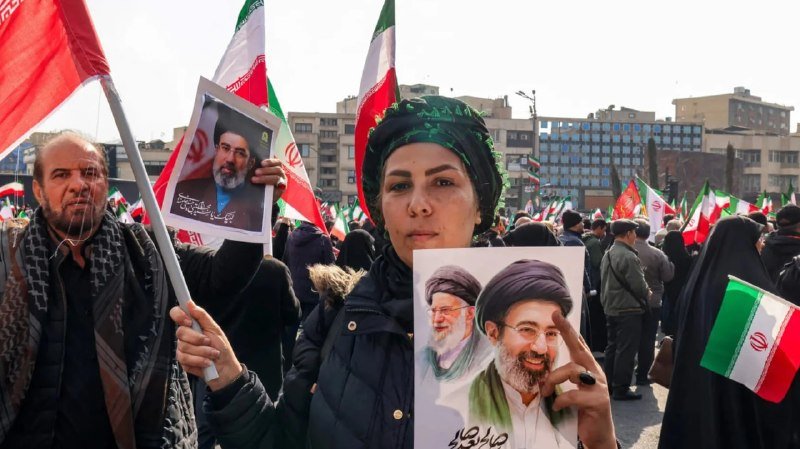
The Iranian reaction, surfacing in the same Telegram firehose within minutes, was defensive rather than merely indignant. A Fars-tied reporter posted at 12:16 UTC that "withdrawal from the management of the Strait of Hormuz has no place in the mind of any Iran-lover," a formulation aimed squarely at a domestic audience and consistent with the long-standing Iranian position that the strait is not a piece of foreign territory up for unilateral reorganisation. Fars's own framing of the interview as a set of "new claims" carries the same message: these are statements to be argued with, not accepted.
Read together, the two cuts of the same interview establish a familiar pattern. A US president asserts, in colloquial register, an expansive claim about a contested waterway. An Iranian outlet transcribes and translates it, then reads it back to a domestic audience as evidence of bad faith. The transcripts are not in dispute. The question is what they authorise.
The legal and operational gap
International law does not recognise a unilateral right to impose transit fees on a strait used for international navigation between one part of the high seas and another. The 1982 UN Convention on the Law of the Sea, which the United States has signed but never ratified, treats transit passage through such straits as the exercise of a freedom of navigation and explicitly forbids hampering it; the US has historically championed that reading when it has suited Washington, and against it when it has not. A "fee for crossing" administered by the US Navy would have no treaty basis. It would rest, instead, on the practical ability to interdict traffic, which is what makes the claim a security proposition rather than a legal one.
The operational picture is similarly thin. Iran has spent two decades building a layered anti-access capability along its Hormuz coast, including fast-attack craft, coastal anti-ship missiles, mining capacity and, since 2024, an overt naval partnership with Russia in the northern Gulf. The US Fifth Fleet, based in Bahrain, has long operated on the assumption that it cannot keep the strait open by itself in a hot shooting scenario. A "managed" strait implies either an Iranian acquiescence that has not been offered, or an Iraqi-scale sea-control operation that has not been announced, and that neither the carriers currently in the region nor the broader CENTCOM posture appear configured to execute.
The "reward" framing is the part most often left out. If the US were to extract a transit fee from oil cargoes leaving the Gulf, it would, in effect, be taxing the largest hydrocarbon exporters on earth: Saudi Arabia, the UAE, Kuwait, Iraq, Qatar, and Iran itself. Those governments are not in the Trump clip agreeing to be taxed. The Gulf monarchies have tolerated a US security umbrella and have, at various moments, tolerated US sanctions enforcement. Paying a Hormuz toll to the Treasury is a different proposition, and one for which no Gulf foreign ministry has signed up on the record.
What Tehran reads in the clip
The Iranian framing of the clip is not a generic protest. It is a test of what US policy actually is. The reference, in the Fars reporter's caption, to those "Iran-loving" as the constituency whose loyalty is being mobilised is the tell. Tehran's strategic community has spent the post-2015 period arguing, internally, that any deal with Washington is reversible at the discretion of the next administration; that argument has now been retired, in effect, by a sitting president saying out loud that he intends to take the asset.
If one takes the Iranian position on its own terms, the strait is not a US gift to give. Iran sits on its northern shore. Roughly a fifth of the world's seaborne oil passes through a channel 21 nautical miles wide at its narrowest. Iranian doctrine, formalised in exercises over the last decade, treats any attempt to unilaterally close or control the waterway as an act of war. A US claim of "guardianship," backed by nothing more than a Fox News set, is the kind of language Iranian strategists can use to argue for hardening, not negotiating.
That is the structural frame. A toll regime on a global commons is, on its face, an attempt to convert a free-passage norm into a revenue stream and a leverage point. It is also, and this is the part that matters for the next several weeks, an offer of red meat to a domestic Iranian audience whose leadership has just been told, by the president of the United States, that it is losing.
What to watch
The first test is procedural: whether the White House follows the cable-news interview with an executive instrument, a sanctions designation, or a formal notice to mariners. Nothing in the thread context suggests that has happened by 12:31 UTC on 13 July 2026. The second test is operational: whether the Fifth Fleet, or any naval component, alters its published posture in the Gulf over the coming days. The third test is diplomatic: whether any Gulf capital confirms, denies or stays conspicuously silent. The Gulf states, on past form, prefer silence; that silence will itself be the read.
The thread context does not specify the date of the underlying Fox News interview, the full transcript of Trump's remarks, the identity of the Iranian "agreement" he accused Tehran of violating, or the legal mechanism by which a transit fee would be collected from foreign-flagged tankers. The sources disagree on emphasis, not on what was said. What they do not yet contain is anything that would convert the interview into a policy.
The strait is, for the moment, what it was on 12 July: open, congested, and patrolled by both Iranian fast craft and the US Fifth Fleet, neither of which has been told, on the record, to do anything new. The clip is news. The policy is not yet, and the difference is the only thing that matters between now and the next Iran-file filing.
This piece relies exclusively on Telegram-sourced transcripts of the 13 July 2026 Fox News interview and on Fars News Agency's own framing of those remarks. No wire-service confirmation of the broader US-Iran posture was available in the source set at 12:31 UTC on 13 July 2026; the legal and operational assessments above are Monexus analysis based on the cited material.
Wire provenance
This editorial synthesis draws on the following public wire/social posts:
- https://t.me/ClashReport
- https://t.me/abualiexpress
- https://t.me/farsna
- https://t.me/euronews
- https://t.me/farsna