Tehran's Hormuz pressure play lands on the eve of an 11-hour deal
Iranian forces say they have hit more 'violating' vessels in the Strait of Hormuz, hours after Donald Trump claimed an 11-hour US-Iran meeting had locked in a deal before Tehran reopened the Hormuz file.
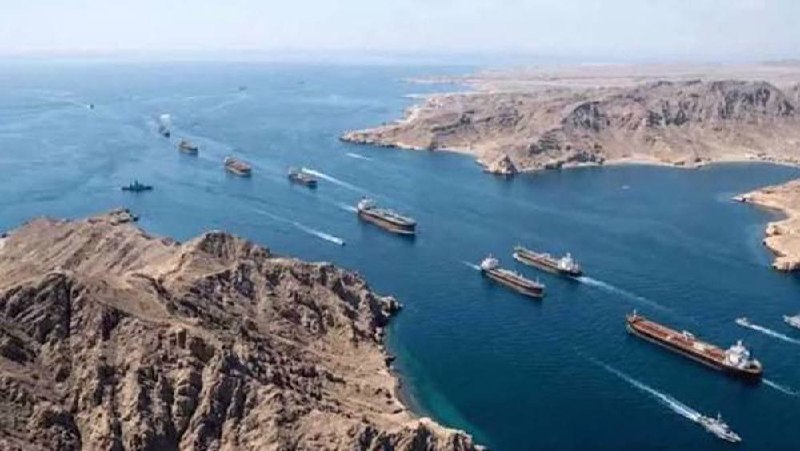
At 19:21 UTC on 13 July 2026, Iranian state-aligned channels reported that Iranian forces had again targeted vessels in the Strait of Hormuz described as 'violating', the latest in a sequence of maritime actions that have turned the world's most consequential oil chokepoint into an active pressure point. The same day, US President Donald Trump told Fox that Washington and Tehran had sat through an 11-hour meeting in which 'everything was agreed to', before Tehran, in his telling, began demanding changes on the Strait of Hormuz file. The juxtaposition is not a coincidence. It is the negotiation.
What is unfolding in the Gulf is a layered coercion campaign dressed in the language of maritime law. Tehran is signalling that the Strait can be made uncomfortable for anyone whose flag, cargo or insurance line the Islamic Republic finds objectionable. Washington is signalling that the diplomatic track is still alive. Muscat is signalling that it intends to stay in the room. None of the three signals cancel each other out; together they describe a slow, calibrated squeeze on a corridor that carries a significant share of seaborne crude, with the terms of any eventual deal being negotiated in the noise between the warnings and the weapons.
The Hormuz file returns
Iranian state-aligned reporting on the 13 July vessel incidents frames the action as enforcement, not aggression: 'violating' ships, in the language of Tehran's outlets, are those that have ignored Islamic Revolutionary Guard Corps instructions on routing, transponder use, or inspection. The framing mirrors the language Iran has used in earlier Strait incidents, where boarding parties, fast-boat escorts and warning fire have preceded the temporary seizure or rerouting of commercial tonnage. The vessels targeted on 13 July were not named in the initial wire; the framing 'several' carries no independent casualty or commercial-disruption count in the source material.
The pattern matters more than the particulars. Each successful boarding or warning shot tightens the corridor's effective insurance and charter rates, even when traffic physically continues. That is the metric Iran can move without firing on a flag of a major power, and it is the metric a deal, if one closes, would have to unwind.
The 11-hour meeting Trump described
On the same day, Trump told Fox that the US and Iran had spent 11 hours in a meeting in which 'everything was agreed to', before Tehran reopened the question of the Strait of Hormuz. The Polymarket wire carrying the quote does not name the venue, the Iranian counterpart, or the date of the meeting itself, only that it preceded a re-opening of demands on the corridor. Without those details, the meeting is best read as a marker: a point at which, by Washington's account, the technical perimeter of a deal was visible, and at which Iran's leadership chose to expand the agenda rather than narrow it.
That move is the standard Iranian negotiating posture in extremis: lock the technical file, then let the geography file re-enter through a different door. The Strait of Hormuz is the door Tehran reliably uses, both because the maritime jurisdiction around it is genuinely contested and because disruption costs are paid first by Gulf producers and Asian importers, not by the United States.
Why Muscat keeps talking
Oman's foreign minister, Sayyid Badr Albusaidi, used the 13 July platform of a Tasnim News English bulletin to frame Muscat's role explicitly: due to the 'common aristocracy with Iran on both sides of the Strait of Hormuz', Oman bears a special responsibility, and Oman's priority in dealing with Tehran is to guarantee freedom of navigation. The phrase 'common aristocracy' reads, in the original Farsi-derived usage carried by Tasnim's English desk, as shared sovereignty over the waters and seabed around the choke point. Oman's position is not neutral in the moral sense; it is structural. Muscat owns the southern shore of the Strait, sits outside OPEC's production-cutting discipline, and has been the consistent back-channel between Washington and Tehran across multiple administrations.
That position gives Oman a unique claim to a seat at any eventual agreement: it is the only Gulf capital that can plausibly guarantee Iranian compliance with a corridor deal in a way that Iran's own forces cannot, because Omani-flagged and Omani-crewed vessels have historically moved through Hormuz without incident even at peak tension.
What the sources leave open
The materials available to this publication do not name the vessels targeted on 13 July, do not name the Iranian counterpart in the alleged 11-hour meeting, do not specify the venue or date of that meeting, and do not record any third-party commercial disruption metric (freight rate move, insurance surcharge, AIS dark-zone count) that would let a reader independently size the pressure. The Iranian vessel-action framing is sourced to state-aligned channels and is, by editorial convention, treated as a Tehran-aligned account rather than an independently verified factual basis. The US account is sourced to a single interview; it is also the side that benefits from the optics of an 'agreement in principle' narrative. Where the two accounts meet, on the question of whether the Strait file is in or out of the deal, they disagree.
The date to watch is the next 72 hours. Either the maritime pressure de-escalates in step with a closed technical text, or the corridor rate signal that shipping markets read so quickly starts to harden, and the 11-hour meeting becomes, retroactively, the high-water mark of a negotiation that did not hold.
This publication framed the day's Hormuz actions as a single, integrated pressure event rather than as a discrete security incident, because the Iranian, Omani and US-language cues are mutually reinforcing rather than contradictory. Wire reporting on the vessel incidents has so far carried Tehran-aligned framing; we treat that framing as one input, not as ground truth.
Wire provenance
This editorial synthesis draws on the following public wire/social posts:
- https://t.me/tasnimnews_en
- https://t.me/bricsnews
- https://x.com/polymarket/status/