Strait of Hormuz becomes the new front line of US-Iran signalling war
Overnight US precision strikes on Iranian targets and Tehran's threat to block the Strait of Hormuz mark a dangerous turn from proxy warfare to direct, on-the-record confrontation over the world's most critical oil chokepoint.
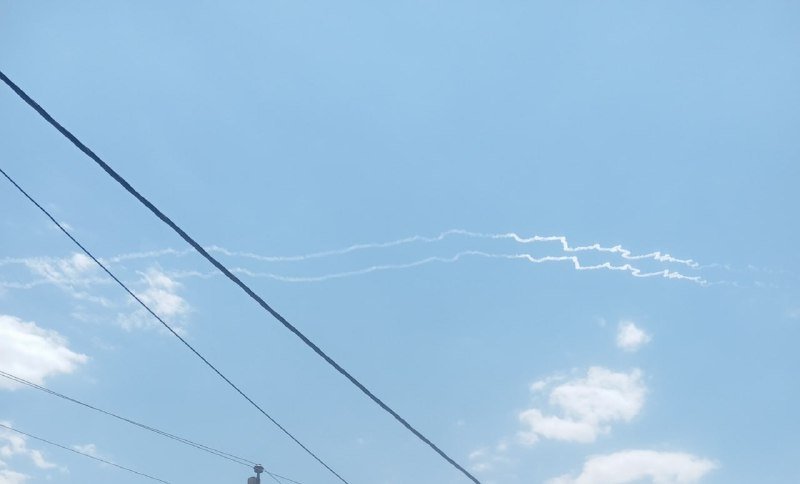
Overnight precision strikes hit "dozens of targets" inside Iran, US Central Command said on 13 July 2026, the latest round of direct American action against the Islamic Republic and a clear break from the proxy-war posture that has defined the confrontation for two decades. By sunrise in Tehran, Foreign Minister Abbas Baqaei was on state television warning that the Strait of Hormuz would not be allowed to become "a place to threaten Iran's national security," a phrase whose freight every oil trader in the world recognised immediately. The escalation is not a surprise. It is the working-out of a logic both sides have chosen: Washington, that Iran's nuclear file must be settled by force if it cannot be settled by sanctions; Tehran, that the only leverage left is the narrow strip of water through which roughly a fifth of global seaborne oil passes.
The story now is not whether the two sides are talking. It is whether the chokepoint itself becomes the battlefield. Baqaei's framing of US naval escort operations in the strait as proof that "America wants to continue making the region unsafe" is the diplomatic lead-in to a much harder threat: that commercial shipping, not just military vessels, will be treated as a legitimate pressure point. If Tehran carries that threat out, even briefly, the price reaction will not be measured in dollars per barrel. It will be measured in insurance premiums, routing decisions, and the political survival of energy ministers from Tokyo to Lisbon.
What was actually struck
US commanders told reporters that overnight operations used precision-guided munitions to "weaken Tehran" across a distributed target set, language notable for what it omits: no mention of nuclear sites, no mention of Revolutionary Guard command centres, no mention of oil infrastructure. The Ruptly alert that surfaced the briefing on 13 July 2026 at 05:40 UTC described a campaign deliberately calibrated to degrade rather than destroy. That calibration is itself a signal. A maximalist strike would have triggered immediate Iranian retaliation against Gulf oil facilities, an outcome the White House is plainly not yet prepared to absorb. The CNN analysis circulated through regional channels the same morning, warning of the military costs a sustained US war with Iran would impose, fits the same picture: an administration preparing the American public for a long, expensive campaign rather than a single decisive blow.
Iranian state-aligned outlets reported the strikes in real time and immediately pivoted to the strategic counter-narrative. The framing across Iranian media is consistent: the strikes prove that diplomacy was always a cover for regime-change intent, and that the only remaining Iranian deterrent is control of the strait. Whether that framing survives contact with the actual damage assessments is a separate question; what matters for now is that Tehran has decided to make the argument on the airwaves rather than in back-channels.
The Hormuz threat, decoded
Baqaei's two appearances on 13 July, on state-aligned al-Alam at 08:11 UTC and on Tasnim's English feed at 07:58 UTC, were not improvised. The language was tightly coordinated: Iran will not allow the strait to become a platform for threatening its national security; US claims of escorting commercial ships amount to an insistence on continued regional instability. The diplomatic message is straightforward. The operational one is heavier.
Iranian forces have disrupted shipping through the strait before, most notably in 2019 when several tankers were damaged in attacks Iran denied but which Western investigators attributed to IRGC-affiliated units. Each time, the disruption was brief, deniable, and calibrated to send a price signal without triggering a full US response. The current threat is qualitatively different because it is being made on the record by the foreign minister, in the immediate aftermath of direct US strikes, with a US naval escort mission operating in the same waters. The escalatory ladder is shorter than it has been at any point since 2019.
The structural point is worth stating plainly. About twenty percent of global seaborne crude transits the strait, as do significant volumes of liquefied natural gas from Qatar. A sustained closure, even a partial one, would not be a regional inconvenience. It would be a global supply event comparable in scale to the 1973 Arab oil embargo, with the difference that the embargo was a coordinated producer decision and a Hormuz closure would be a unilateral act of war. The world's insurance markets, which price war-risk premia for the Persian Gulf on a daily basis, would reprice within hours.
The counter-narrative from Washington
The US framing, as it has been reported in regional channels, treats the strikes as a continuation of an existing campaign and the escort mission as a defensive measure to keep commercial traffic moving. CNN's reporting on the military costs of a sustained campaign is consistent with that framing: the goal is pressure, not invasion, and the bill for that pressure is being prepared for public consumption.
That framing is internally coherent but politically fragile. It assumes that Iran will absorb strikes on its territory and respond with rhetoric rather than action on the strait, an assumption that has held for two decades of pressure but that Baqaei's on-record language on 13 July was specifically designed to test. The counter-narrative from Tehran is that any US action in or near the strait is itself the escalatory move, and that Iran is responding to provocation rather than initiating one. The Western wire line will treat that as deflection. The non-aligned read, especially across the Global South, will treat it as a reasonable description of a situation in which a major power is striking a sovereign state and then demanding safe passage through its waters.
The honest assessment is that both framings have purchase. The strikes are real, and so is the sovereignty claim. The escort mission is defensive in intent and provocative in effect. The question is not which framing is correct but which side moves first in the next seventy-two hours.
What the sources agree on, and what they do not
The reporting available to Monexus on 13 July 2026 converges on a small number of facts. US Central Command conducted overnight strikes against "dozens of targets" inside Iran using precision-guided munitions. Iran's foreign minister publicly warned that the Strait of Hormuz will not be permitted to become a base for threats to Iranian national security. A US naval escort mission for commercial shipping in the strait is operational, and Iranian state media is characterising it as evidence of continued US intent to destabilise the region. CNN's reporting on the costs of a sustained US campaign against Iran is being amplified across the same media ecosystem.
The reporting diverges on almost everything else. The specific target set of the overnight strikes is not disclosed in the public briefings this publication has reviewed. The size, composition, and rules of engagement of the US escort mission are not specified in the Iranian-language reporting. The Iranian damage assessments are not yet public, and the Western damage assessments are not yet consistent. Whether Tehran will move from rhetoric to action on the strait is the central open question, and no source item available at the time of writing resolves it.
The structural frame, stated in plain terms, is that the United States and Iran have spent two decades avoiding direct kinetic contact precisely because the costs of that contact are legible to both sides. The strikes of 12-13 July ended that avoidance. What replaces it is a signalling contest in which the strait is the only card Tehran holds that Washington cannot easily discount, and the only target set where Iranian action would impose costs on the global economy rather than on the Iranian state. Baqaei's language on 13 July is best read not as a threat of imminent closure but as a marker of where the next round of escalation is most likely to land.
The stakes are concrete. A sustained Hormuz disruption would push Brent above one hundred and fifty dollars within days, would trigger emergency reserve releases from the US Strategic Petroleum Reserve and the EU's emergency stocks, and would reignite inflation across energy-importing economies still digesting the shock of the early 2020s. A successful Iranian effort to raise the cost of US naval operations in the strait without closing it would produce a slower, harder-to-price risk premium that would persist for months. Either outcome damages the political position of the White House, which has staked its Iran policy on the claim that pressure works.
The next data points to watch are straightforward. Iranian naval movements in the strait over the coming forty-eight hours will tell us whether Baqaei's language was a negotiating posture or the prelude to action. The daily war-risk premia quoted by Lloyd's and the International Underwriting Association will tell us what the insurance market thinks before the politicians do. And the first US Navy after-action report on the strikes, when it surfaces, will tell us whether the target set was calibrated for pressure or for something larger. Until then, the only honest summary is that the proxy war is over and the direct one has begun, with the world's most important oil chokepoint as its most probable flashpoint.
How Monexus framed this: the wire consensus on 13 July treated the strikes and Baqaei's response as parallel events. This publication reads them as a single signalling sequence in which the strait threat is the substantive content and the strikes are the trigger. Both the Western and Iranian framings are reported in full; the judgment is in the ordering, not the omission.
Wire provenance
This editorial synthesis draws on the following public wire/social posts:
- https://t.me/ruptlyalert
- https://t.me/tasnimnews_en
- https://t.me/alalamfa
- https://t.me/alalamfa