Tankers Burning, Tolls Levied: The Strait of Hormuz Returns to Centre Stage
Two tankers hit by Iranian cruise missiles, a US blockade declared, a 20 percent toll floated, and a former NATO analyst warning of a 'massive force problem', the world's most consequential oil chokepoint is suddenly the most contested water on earth.
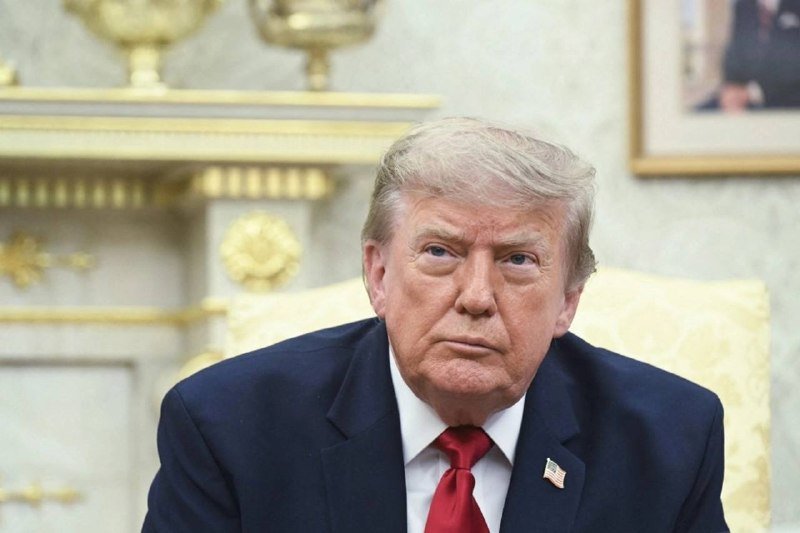
At roughly 22:05 UTC on 13 July 2026, the United Arab Emirates reported that two oil tankers transiting the Strait of Hormuz had been struck by Iranian cruise missiles, with one crew member killed in the attack (Reuters, 13 July 2026, 23:05). Hours earlier, Iranian state-aligned outlets carried Tasnim News Agency claims that "several offending ships" had been targeted in the strait for violating Iranian maritime restrictions (Tasnim News English, Telegram, 19:14 UTC; relayed by @intelslava, 19:15; by @ClashReport, 19:16; and by @wfwitness, 19:16). Within the same trading window, US President Donald Trump announced he was reinstating a naval blockade of Iranian ports and said Washington would charge a 20 percent toll on all cargo shipped through the Strait of Hormuz (BBC News, 19:17 UTC). A former NATO analyst interviewed by Al Jazeera described the undertaking as "a massive force problem," warning that any sustained blockade would require a military operation on a scale rarely attempted in the modern US Navy's experience (Al Jazeera Breaking News, 20:23 UTC).
The Strait of Hormuz is, in physical terms, a few dozen kilometres of water between Iran and Oman. In economic terms it is the single most consequential oil chokepoint on the planet, the pinch point through which a sizeable share of global seaborne crude transits each day. When missiles start landing on tankers and Washington starts levying transit fees on the same stretch of water, the question is no longer whether the corridor is contested. It is who gets to set the rules of passage, and at what price.
A blockade that doubles as a tariff
Trump's announcement, as reported by BBC News, packages two distinct policy moves into one statement. The first is the naval blockade of Iranian ports: a classic maritime-interdiction operation in which US warships would inspect, divert or detain commercial vessels suspected of trading with the Islamic Republic. The second is the 20 percent toll on cargo transiting the strait, a measure more often associated with the Suez Canal Authority than with the United States Navy. Read together, the two moves amount to a unilateral re-pricing of transit through a body of water the US does not own, on terms Washington is unilaterally drafting.
The financial logic is straightforward and the political logic is louder. The toll, if enforced, would generate revenue from every commercial hull forced to choose between paying Washington and risking an encounter with Iranian naval or missile forces. The blockade, if enforced, would do the inverse work: it would attempt to seal Iranian exports inside the Gulf, on the assumption that Tehran's maritime insurance, refining offtakers and shipping registries cannot long absorb the pressure. Two policy instruments, both aimed at the same adversary, both projecting US authority over a corridor most states treat as international commons.
The mechanics, however, are brutal. As the former NATO analyst put it to Al Jazeera, keeping the strait open under those conditions is a "massive force problem," because any US attempt to intercept, inspect and escort traffic through a narrow waterway in range of Iranian anti-ship missiles, cruise-missile batteries and fast-attack craft is the kind of operation that consumes carrier groups, mine-countermeasure vessels and air defence pickets by the dozen.
Iran's language, Iran's rules
Tehran's framing is the mirror image. Tasnim, the news agency affiliated with the Islamic Revolutionary Guard Corps, described the strikes on the tankers as enforcement of "maritime restrictions," a phrase that signals Iran's longstanding claim to exercise authority over certain classes of vessel in the northern Gulf and the strait's approaches. Tasnim's English channel and the pro-Tehran aggregators that relayed the story (@intelslava, @ClashReport, @wfwitness) all framed the attacks as a response to vessels "violating regulations," not as an act of war against foreign-flagged commercial shipping.
The UAE's statement, by contrast, treated the strikes as attacks on civilian vessels in international waters, with one crew member killed and others at risk. The framing gap matters. Iran's preferred vocabulary turns the episode into a law-enforcement matter and hands Tehran a rhetorical case for further action; the UAE's framing pushes the episode into the category of armed attack on third-party shipping, which under international law carries a different set of obligations and escalatory pathways. Both narratives are now in circulation. The corridor itself does not arbitrate between them.
The corridor politics underneath it
What is unfolding is not a single crisis but a collision of three older arguments. The first is the US argument, articulated in increasingly transactional terms by successive administrations, that freedom of navigation in the Gulf is a US security good which Washington is entitled to price. The second is the Iranian argument that the strait is Iran's front door, that any hostile shipping in or near it is a legitimate target, and that the United States is the outside power trying to rewrite the rules. The third is the consumer-state argument, the position held by Japan, South Korea, China, India and the European Union, that the strait must remain a neutral transit zone, priced by markets, policed by international consensus, and not turned into a toll booth by either Washington or Tehran.
The new element is the toll itself. Blockades have a long, ugly history. Transit fees imposed by a single navy on neutral commerce in a shared waterway are rarer, and the legal scaffolding for them is thin. That is precisely why the announcement reads as a pressure campaign aimed not only at Tehran but at every government whose tankers, LNG carriers and container ships would, on the new terms, owe Washington a fifth of the cargo's value for the privilege of passing through. It is a way of telling the rest of the world that the rules of the corridor are being rewritten, and that the United States intends to be the one holding the pen.
Stakes, and what to watch
The immediate stakes are kinetic and commercial at once. Two tankers have already been hit and a crew member has died (Reuters, 23:05 UTC, 13 July 2026). Insurance underwriters for Hormuz transit will reprice war-risk premiums within hours. Shipowners will reroute where they can, slow-steam where they cannot, and queue where they must. Refiners in Asia, already operating on thin margins, will watch the price of crude move before they watch any government statement. The Strait of Hormuz has, on past occasions, absorbed tension and kept moving; it has also, on other occasions, gone from tense to shut inside a news cycle.
What remains genuinely uncertain is whether the toll and the blockade are opening moves in a negotiated sequence, or the new steady state. The sources do not specify whether third-party governments have been consulted, whether the toll has a defined legal basis, or how the US Navy intends to differentiate compliant from non-compliant traffic in a waterway dense with commercial hulls at any given moment. The Al Jazeera segment described the force requirement as daunting; the BBC report framed the toll as already declared; the Iranian-aligned channels framed the strikes as routine enforcement. Each frame is internally coherent. None of them is, on its own, a complete picture.
The Strait of Hormuz has just become the place where the argument about who runs the world's energy corridors is being fought out in real time, with cruise missiles and shipping manifests as exhibits. The next 72 hours will tell whether the toll is collected, whether the blockade is enforced, and whether any third state is prepared to challenge either on the water.
This desk notes how Monexus framed the same wire that other outlets ran as a discrete "US blockade" or "Iran attack" story: as a single collision over the rules of passage through the world's most consequential oil corridor, with both Washington and Tehran claiming authority, and the rest of the world yet to weigh in.
Wire provenance
This editorial synthesis draws on the following public wire/social posts:
- http://reut.rs/4vvPa6H
- https://t.me/wfwitness/49721
- https://t.me/ClashReport/81234
- https://t.me/intelslava/65112
- https://t.me/TasnimNewsEn/9847